Pakistan weather forecasting is set for a major upgrade as the government moves to invest Rs1.6 billion in modernising meteorological services, strengthening early warning systems and improving disaster preparedness under the Annual Plan 2026-27.
The investment comes at a time when Pakistan is facing increasingly severe climate risks, including floods, intense monsoon spells, heatwaves, glacial lake outburst floods and urban flooding. The Pakistan Meteorological Department has been allocated funds for new forecasting infrastructure, rainfall enhancement research and hydrometeorological modernisation, reflecting a wider push to reduce the human and economic cost of disasters.
According to the Annual Plan, the focus is not only on predicting weather more accurately, but also on improving the country’s ability to warn communities, protect agriculture, manage water resources and respond to climate shocks before they turn into full-scale emergencies.
Pakistan Weather Forecasting Upgrade and Key Allocations
The Rs1.6 billion allocation for the Pakistan Meteorological Department covers several major initiatives aimed at improving forecasting capacity and disaster risk management.
A major share, around Rs1 billion, has been earmarked for the modernisation of Hydromet Services in Pakistan. This project is expected to upgrade hydrometeorological infrastructure, improve the accuracy of forecasts and strengthen climate data systems. Hydromet services are crucial because they combine weather, water and climate data to help authorities understand flood risks, rainfall patterns, river flows and extreme weather threats.
The government has also allocated Rs344 million for a proposed National Centre for Rainfall Enhancement. The centre is expected to support water security, climate adaptation and agricultural productivity. In a country where agriculture remains heavily dependent on rainfall and irrigation systems, better rainfall research could help policymakers plan more effectively for dry spells, drought risk and changing monsoon behaviour.
Weather surveillance radar projects in Multan and Sukkur have also been included in the plan. Multan has been allocated Rs195 million, while Sukkur has received Rs5 million. These radars are meant to improve real-time monitoring and early warning capabilities, especially in regions vulnerable to monsoon activity and riverine flooding.
Why Early Warning Systems Pakistan Needs Matter
Early warning systems Pakistan-wide are becoming more important as climate-related disasters grow more frequent and more damaging. Forecasting is not just about knowing whether it will rain. It is about giving authorities, farmers, rescue teams and local communities enough time to act.
A strong warning system can help evacuate people before floods arrive, alert farmers about weather risks, guide reservoir management, support aviation and transport safety and reduce losses from extreme events. In urban centres, better short-term forecasts can help authorities prepare for drainage pressure, traffic disruption and power-related risks during heavy rainfall.
Pakistan’s recent disaster history shows why this matters. Major floods in 2010, 2011, 2014, 2022 and 2025 caused extensive damage to infrastructure, livelihoods, crops and homes. The 2022 floods alone produced losses and damages running into tens of billions of dollars, affected millions of people and highlighted major gaps in preparedness, resilience and local response systems.
The Annual Plan also cites estimates that Pakistan suffers average annual losses of around $2 billion from floods and earthquakes. These losses can rise sharply in major disaster years, particularly when extreme rainfall, weak drainage, river overflows and poor land-use planning combine.
PMD Modernisation and Hydromet Services
PMD modernisation is central to the government’s climate resilience agenda. The Meteorological Department’s role is expanding beyond daily weather forecasts. It now sits at the centre of agriculture planning, water management, disaster response, aviation safety, urban planning and climate adaptation.
Modern Hydromet Services can improve how Pakistan tracks rainfall, river flows, temperature shifts, storms and flood risks. Better equipment and data systems can also help the country produce more localised forecasts. That is especially important because climate impacts vary sharply between regions.
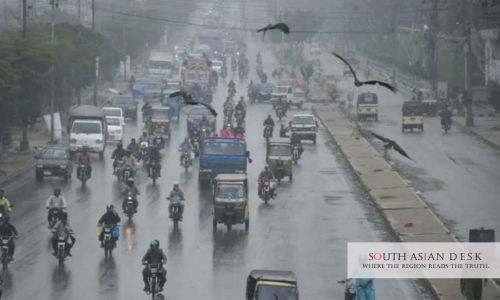
For example, Karachi faces risks from urban flooding during intense monsoon spells. Southern Punjab and Sindh are vulnerable to riverine flooding and heat stress. Gilgit-Baltistan and Khyber Pakhtunkhwa face risks from glacial lake outburst floods, landslides and flash floods. Balochistan faces both drought and sudden flood risks. A more modern forecasting network can help produce warnings that are region-specific rather than broad and generic.
If implemented well, the Rs1 billion Hydromet allocation could improve the quality of data available to disaster management authorities, provincial governments, farmers and emergency responders.
Rainfall Enhancement Centre and Water Security
The proposed National Centre for Rainfall Enhancement is one of the more notable parts of the plan. Its purpose is linked to water security, climate adaptation and agricultural productivity.
Pakistan’s water stress is already a serious concern. Changing rainfall patterns, glacial melt, rising temperatures and inefficient water use are placing pressure on both surface and groundwater resources. A centre focused on rainfall enhancement may support research into weather modification, cloud processes and scientific tools to improve understanding of rainfall behaviour.
However, such initiatives will need careful scientific oversight. Rainfall enhancement is a complex field and should not be treated as a substitute for broader water reforms. Pakistan still needs better storage planning, efficient irrigation, groundwater regulation, floodplain management and climate-resilient agriculture.
The centre could be useful if it is integrated into a larger water and climate strategy rather than treated as a standalone solution.
Climate Resilience Pakistan Needs Beyond Forecasts
Climate resilience Pakistan-wide cannot depend only on improved forecasting equipment. Better weather prediction is essential, but forecasts must be linked to institutions that can act quickly.
That means warnings must reach district administrations, rescue services, farmers, schools, hospitals, transport networks and vulnerable communities in time. Communication systems must be clear, local and trusted. A warning that stays inside a government office or technical bulletin does not save lives.
Pakistan also needs stronger coordination between the PMD, National Disaster Management Authority, provincial disaster management authorities, irrigation departments, local governments and community organisations. Forecasting data must be translated into early action, including evacuation plans, flood barriers, relief stockpiles, drainage clearance and public alerts.
The 2022 floods showed that climate disasters are not only weather events. They become humanitarian and economic crises when exposure, weak infrastructure, poverty and poor planning make people more vulnerable. This is why the government’s climate agenda also includes forestry, biodiversity conservation, afforestation, ecosystem restoration, climate-smart agriculture, efficient water management, green industrialisation and circular economy initiatives.
Ministry of Climate Change Allocation
The Ministry of Climate Change and Environmental Coordination is projected to receive Rs2.5 billion under the plan. Much of this allocation is focused on forestry, biodiversity conservation, afforestation and ecosystem restoration.
Key initiatives include the Pakistan Climate Innovation and Green Growth Initiative, which aims to equip young people with green skills and support entrepreneurship through a Green Innovation Fund. A National Forest and Tree Cover Assessment using remote sensing and machine learning technologies is also planned.
These measures matter because environmental degradation worsens climate vulnerability. Deforestation, encroachment on waterways, poor drainage, unplanned construction and loss of natural ecosystems can intensify floods, landslides and heat stress. Better forecasting can warn of danger, but ecosystem restoration can help reduce the danger itself.
Economic Case for Investing in Forecasting
The economic case for stronger Pakistan weather forecasting is clear. Disasters destroy roads, bridges, crops, schools, homes, power systems and livelihoods. They also force governments to divert funds from development to emergency relief and reconstruction.
The 2022 floods caused more than $30 billion in damages and economic losses, according to international assessments. Recovery and reconstruction needs were estimated at more than $16 billion. Such figures show that climate adaptation is not optional spending. It is a way to avoid far greater losses later.
Even modest improvements in early warnings can produce major savings if they help reduce casualties, protect crops, move livestock, safeguard infrastructure and allow emergency services to deploy in advance.
For farmers, more accurate forecasts can influence sowing, harvesting, irrigation and pest management decisions. For city governments, short-term rainfall alerts can help prepare drainage systems and emergency teams. For water managers, improved Hydromet data can support better reservoir and flood control decisions.
The Challenge Is Implementation
The Rs1.6 billion allocation is an important step, but implementation will determine whether it makes a real difference.
Pakistan has often announced climate and disaster management plans that later suffered from delays, weak coordination or underfunding. Weather radars, data systems and monitoring centres require maintenance, skilled staff, technical training and integration with provincial and district-level response systems.
The government will also need to ensure that new systems are transparent, accessible and useful for public decision-making. Data should be shared with relevant agencies, researchers, farmers, urban planners and disaster responders. Forecasting should become part of everyday governance, not just emergency response.
Another challenge is public communication. Weather warnings need to be understandable for ordinary citizens. Technical terms should be translated into clear advice: which areas are at risk, what people should do, when they should act and where help is available.
A Necessary Step in a Hotter, Wetter and Riskier Future
Pakistan’s new investment in weather forecasting and early warning systems reflects a growing recognition that climate risks are no longer distant threats. They are already affecting lives, livelihoods and public finances.
The Rs1.6 billion allocation for the PMD, including Hydromet modernisation, radar projects and the rainfall enhancement centre, can help improve the country’s ability to anticipate and manage extreme weather. The wider climate-related allocations for forestry, green growth and ecosystem restoration also point towards a broader resilience agenda.
Still, the success of this plan will depend on whether improved forecasts lead to faster action on the ground. Pakistan does not only need better weather data. It needs stronger institutions, better local preparedness and a system that turns warnings into protection.
If implemented properly, the investment could mark a meaningful step towards reducing disaster losses, protecting vulnerable communities and building a more climate-resilient Pakistan.
Published in SouthAsianDesk, July 6, 2026
Follow SouthAsianDesk on X, Instagram and Facebook for insights on business and current affairs from across South Asia