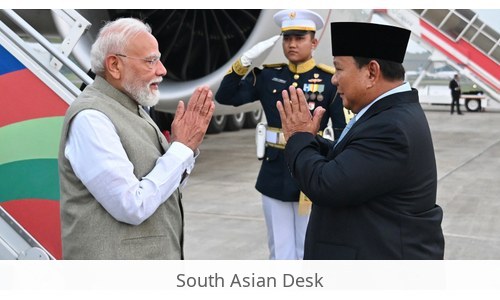
India Indonesia defence cooperation: On July 6, 2026, Prime Minister Narendra Modi began his three-nation tour with Indonesia, focusing on enhancing strategic ties in defence and critical minerals. The discussions aim to bolster India’s geopolitical presence in the Indo-Pacific region amid evolving global dynamics.
India Indonesia defence cooperation: Focus on Defence Cooperation
During his meeting with Indonesian President Joko Widodo, Modi emphasized deepening bilateral defence collaboration. Key areas of discussion included joint production of military equipment, co-development of naval technologies, and enhanced training programs for armed forces. Both nations also explored opportunities for intelligence sharing and counter-terrorism cooperation. These initiatives align with India’s broader goal of strengthening security partnerships in the Indo-Pacific.
The defence dialogue between India and Indonesia has historical roots, dating back to the 1990s when both nations began formalizing military-to-military exchanges. Over the years, these ties have evolved into a framework of mutual trust, with India supplying defence equipment to Indonesia and both countries participating in multilateral exercises such as the Malabar drills. The current discussions reflect a strategic upgrade, with a focus on co-development and co-production to reduce reliance on third-party suppliers. This shift is particularly significant as both nations seek to diversify their defence industrial bases amid global supply chain disruptions and geopolitical tensions.
Critical Minerals Discussion
Critical minerals, essential for advanced defence systems and renewable energy technologies, featured prominently in the talks. Indonesia, a major supplier of nickel and other strategic resources, and India, a growing manufacturer of defense and green energy technologies, identified synergies in securing supply chains. The two countries agreed to establish a joint task force to identify investment opportunities in mineral extraction and processing, ensuring sustainable and equitable resource management.
Indonesia’s role as a global leader in nickel production—accounting for over 50% of the world’s supply—positions it as a key player in the global transition to electric vehicles and renewable energy systems. India, which has been expanding its manufacturing capabilities in defence and green technology, sees Indonesia as a strategic partner to secure raw materials while supporting sustainable extraction practices. The proposed joint task force aims to address challenges such as environmental degradation and geopolitical competition for resources, ensuring that both nations benefit from long-term, mutually advantageous partnerships.
Broader Implications for the Indo-Pacific
Modi’s visit underscores India’s strategic pivot to the Indo-Pacific, reinforcing its commitment to a free and open regional order. By deepening ties with Indonesia, India aims to counterbalance China’s growing influence in Southeast Asia. The tour also includes visits to Australia and New Zealand, where similar discussions on trade, security, and climate resilience are expected. These engagements reflect India’s multi-pronged approach to regional stability and economic cooperation.
The Indo-Pacific has emerged as a focal point of global strategic competition, with China’s Belt and Road Initiative (BRI) and other infrastructure projects reshaping regional trade and security dynamics. India’s engagement with Indonesia, Australia, and New Zealand is part of a broader effort to build a coalition of like-minded nations committed to maritime security, economic interdependence, and democratic values. This approach aligns with India’s “Act East” policy, which seeks to strengthen ties with Southeast and East Asian nations while countering China’s expanding influence.
This strategic upgrade in India Indonesia defence cooperation is part of India’s broader Act East policy, which seeks to strengthen ties with Southeast and East Asian nations while countering China’s expanding influence. The visit also highlights the importance of multilateralism in addressing regional challenges, such as maritime security, climate change, and energy transition. By fostering closer ties with Indonesia, India is positioning itself as a key partner in initiatives such as the Quad (Quadrilateral Security Dialogue), which includes the United States, Japan, and Australia. These partnerships are critical to maintaining a rules-based order in the Indo-Pacific and ensuring that no single power dominates the region.
Follow SouthAsianDesk on X, Instagram and Facebook for insights on business and current affairs from across South Asia.
Image: images.indianexpress.com