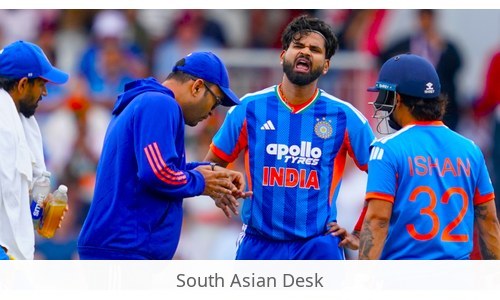
India T20I ranking loss: On July 11, 2026, India lost to England by 56 runs in the fifth T20I match, completing a 4-0 series sweep that resulted in the team relinquishing its No. 1 ICC T20I ranking. The defeat marks a significant downturn in India’s T20I performance, raising questions about the team’s strategy and future competitiveness in the format.
India T20I ranking loss: Implications of Losing the No. 1 Ranking
The India T20I ranking loss has immediate and long-term implications for Indian cricket. Historically, India has dominated the T20I format, holding the No. 1 ranking for over five years prior to this series. Analysts note that the defeat may affect team morale, particularly after a comprehensive series loss. The Indian Cricket Board (ICB) has not yet announced specific changes, but internal reviews are expected to focus on batting strategies and bowling lineups. Fan reactions on social media have been mixed, with some calling for immediate player replacements and others urging patience with the current squad. The decline in ranking also raises questions about India’s ability to maintain its edge in high-stakes tournaments, including the upcoming T20 World Cup in 2027, where the team’s preparation and adaptability will be critical.
Factors Contributing to Poor Performance
India’s struggles against England stemmed from tactical missteps and inconsistent player performances. In the final match, England’s aggressive batting and precise bowling exploited weaknesses in India’s fielding and middle-order resilience. Key players such as Virat Kohli and Ravindra Jadeja faced criticism for their lack of aggression, while the spin bowling unit failed to contain England’s lower-order surge. ESPNcricinfo noted that England’s use of powerplay strategies and targeted bowling against India’s top order disrupted the team’s rhythm. In contrast, India’s coaching staff was criticized for not adapting to England’s aggressive approach, particularly in the death overs. This failure to adjust to opposition tactics has been a recurring theme in India’s recent T20I campaigns, where the team has struggled to counter teams employing high-scoring, fast-paced strategies. The series also highlighted a broader trend of inconsistency in India’s batting lineup, with several key players failing to deliver under pressure in crucial moments.
Future of Indian T20I Cricket
With the T20 World Cup approaching in 2027, the ICB faces pressure to address these shortcomings. Potential changes include integrating young talents like Shubman Gill and Tilak Varma into the main squad, as well as re-evaluating the role of veteran players. The team may also adopt a more flexible batting lineup to counter aggressive opposition. Long-term, this setback underscores the need for a structured T20I development program to maintain India’s competitive edge in the format. The ICB has previously emphasized the importance of nurturing young talent through domestic leagues and youth academies, but the current situation may accelerate efforts to refine these programs. Additionally, the coaching staff is expected to focus on improving fielding efficiency and death-over strategies, which have been identified as critical areas for improvement. The performance against England also serves as a wake-up call for the ICB to reassess its approach to player selection and team dynamics, ensuring that the squad is not only technically sound but also mentally resilient in high-pressure scenarios.
Regional and Global Context
India’s T20I ranking loss has broader implications for South Asian cricket, where the format remains a dominant force. Teams such as Pakistan, Sri Lanka, and Bangladesh have been actively competing for top positions, with Pakistan recently reclaiming the No. 2 spot in the rankings. The decline of India’s T20I prowess could shift the regional balance of power, potentially creating opportunities for rival teams to challenge India’s supremacy in the format. Analysts suggest that the ICB must also consider the evolving strategies of other nations, including the increased use of data analytics and player fitness regimes, to remain competitive. The loss also highlights the importance of maintaining a strong domestic T20 structure, such as the Indian Premier League (IPL), which has historically served as a breeding ground for talent and innovation in the format.
Follow SouthAsianDesk on X, Instagram and Facebook for insights on business and current affairs from across South Asia.
Sources
- India lose No 1 T20I ranking after 56-run loss completes 4-0 sweep at hands of England – indianexpress.com
- England chase 4-0 as India look to halt historic slump – cricinfo.com
Image: images.indianexpress.com