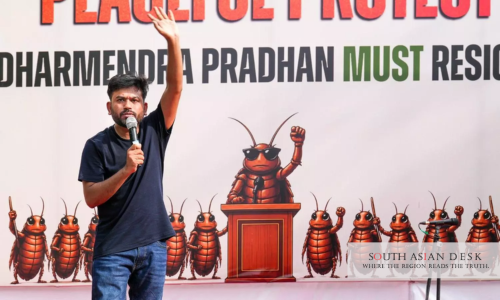
Sonam Wangchuk fast continued at Delhi’s Jantar Mantar as the Cockroach Janta Party announced a march to Parliament on July 20, the opening day of the Monsoon Session, to press its demands over exam paper leaks and alleged examination irregularities.
The youth-led protest has now entered its twenty-third day, while Wangchuk’s hunger strike has continued for 15 days. Protest organisers say there has been no response from the central government despite growing public attention and visits by several opposition leaders.
The planned march is being framed as a peaceful appeal to Members of Parliament to take up the issue during the Monsoon Session. The protesters are demanding the resignation of Union Education Minister Dharmendra Pradhan and compensation of Rs 1 crore for the families of students who allegedly died by suicide after examination irregularities.
Sonam Wangchuk fast continues despite health concerns
Sonam Wangchuk fast has raised health concerns as organisers say he has lost around 7.5 kg since beginning the hunger strike.
Health updates shared by the party said his blood pressure was recorded at 106/74. Wangchuk has said his hunger has stabilised, but he has also acknowledged that he is becoming weaker as the fast continues.
Despite this, he has said the July 20 Parliament march remains on track. In video messages to supporters, he has urged citizens to participate peacefully and said the movement should not depend on one individual.
Wangchuk has also rejected attempts to portray him as a hero or a modern Gandhi, saying he is an ordinary citizen performing his duty.
CJP seeks to take protest to Parliament
The Cockroach Janta Party says the march to Parliament is necessary because the government has not responded to the protest at Jantar Mantar.
The protest began over exam paper leaks and wider concerns about the examination system. Organisers say students and families affected by irregularities have not received adequate accountability or support.
CJP has invited MPs from all political parties, including the ruling BJP, to visit the protest site and raise the issue in Parliament. The group says its demands are not limited to opposition politics and concern students across the country.
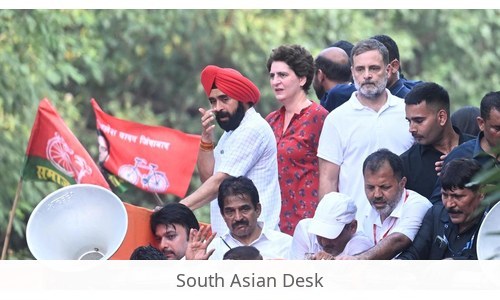
Several opposition leaders have visited the protest site, including TMC MP Mahua Moitra, AAP MP Sanjay Singh, CPI(M) leaders John Brittas, M A Baby and Brinda Karat, and CPI leader D Raja.
Protesters press two main demands
The protesters have placed two main demands before the government.
The first is the resignation of Education Minister Dharmendra Pradhan. The second is compensation of Rs 1 crore for the families of students who allegedly died by suicide following examination irregularities.
The demand for ministerial accountability reflects wider anger over repeated exam-related controversies. Student groups have argued that paper leaks and irregularities damage trust in public examinations and place severe pressure on candidates and their families.
The compensation demand is also intended to highlight the human cost of examination failures. However, any claims linked to individual deaths will require careful official verification and investigation.
Rain adds to Jantar Mantar protest challenges
The protest has also faced difficult weather conditions in Delhi.
During heavy rain at Jantar Mantar, organisers said they sought permission from Delhi Police to put up tents for fasting students. CJP founder Abhijeet Dipke was seen appealing to police officials for shelter arrangements, according to the organisers.
The weather has added pressure on protesters already sitting through a prolonged demonstration. The issue is especially serious for those on fast, as exposure to rain and poor shelter can worsen health risks.
Organisers have said the protest will continue despite the conditions.
July 20 march will test protest momentum
The July 20 Parliament march is now the main focus of the CJP protest.
If large numbers join the march, the issue could gain wider political visibility during the Monsoon Session. If participation remains limited, the protest may struggle to force a formal government response.
For now, Wangchuk’s continuing hunger strike has kept attention on the movement. However, the protest’s next stage will depend on whether it can convert public sympathy into broader mobilisation.
The government has not yet publicly responded to the protesters’ demands. With the Monsoon Session approaching, CJP is seeking to move the issue from Jantar Mantar to Parliament.
The coming days will determine whether the Sonam Wangchuk fast and the planned Parliament march become a larger national flashpoint over examination accountability and student welfare.
Published in SouthAsianDesk, July 13, 2026
Follow SouthAsianDesk on X, Instagram and Facebook for insights on business and current affairs from across South Asia.