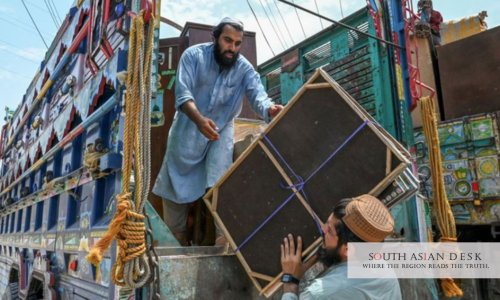
The repatriation of Afghan nationals is gathering pace across Pakistan, with authorities in multiple districts arresting large numbers of Afghans and sending them back to their home country under the Illegal Foreigners’ Repatriation Programme. Official data released on Tuesday night showed that more than 4,400 Afghans crossed into Afghanistan through the Torkham border in a single day, underlining just how quickly the repatriation of Afghan nationals has picked up in recent weeks. Of those who returned, 1,768 held Proof of Registration cards, 616 held Afghan Citizen Cards, and 2,080 were staying in the country illegally.
Scale of the Repatriation of Afghan Nationals in Numbers
The repatriation of Afghan nationals is playing out differently from district to district, though the overall trend points firmly in one direction. In Swabi, the district administration worked with police to arrest 350 Afghans over three days, all of whom were subsequently deported. Officials estimate that around 1,200 Afghans remain in the district, and the deputy commissioner said the remaining Afghan nationals would be traced and sent back as quickly as possible, adding that government policy now leaves no room for Afghans to continue living in the area.
A senior police officer overseeing the crackdown said residents had been warned they risked arrest themselves if they sheltered Afghan nationals or rented housing to them, and that local police stations had been instructed to keep the operation going within their jurisdictions.
In Haripur district, the pace of the repatriation of Afghan nationals has also been significant. Authorities there arrested more than three dozen undocumented Afghans during a recent crackdown, moving them to a holding centre in Peshawar ahead of onward deportation. Over the preceding four days, 46 Afghan individuals were detained under Section 14 of the Foreigners Act, with police confirming that the search for those still living in the district without valid visas was ongoing and would continue until all such cases were resolved.
According to official figures, more than 90 percent of Afghans in Haripur had already returned to their homeland under a voluntary scheme by the end of February, a milestone that reflects the broader momentum behind the repatriation of Afghan nationals nationwide. By the end of last year, three designated refugee camps in the district had housed over 63,500 people, with a further 13,000 living in rented accommodation across the area.
Mohmand district has seen a smaller but no less orderly chapter in the same process. Seven Afghan families, totalling 27 individuals, were repatriated from the Salor Naqi area recently, with officials describing the operation as peaceful and well organised.
The district administration oversaw the necessary arrangements while police maintained security throughout, and the families were escorted to the border for their onward journey. Officials stressed that this stage of the repatriation of Afghan nationals was carried out in a safe and dignified manner, consistent with the government’s ongoing policy on the return of foreign nationals.
A Broader Regional Trend
Figures from a UNHCR-IOM flash update issued on July 9 place the repatriation of Afghan nationals in a wider regional context. Between June 28 and July 4, 19,130 Afghans returned home through crossings including Torkham and Ghulam Khan in Khyber Pakhtunkhwa, as well as Chaman, Badini and Bahramcha in Balochistan. That figure included 1,638 deportations, and represented a 59 percent rise in overall returns and a 299 percent rise in deportations compared with the previous week, when 12,022 people had returned, including 411 deportations. The update attributed the sharp rise largely to renewed fears surrounding a potential July 10 deadline, combined with an intensification of enforcement operations during the period.
Taken together, the figures from Swabi, Haripur, Mohmand and the wider border crossings point to a consistent pattern: the repatriation of Afghan nationals is accelerating across Pakistan, driven by coordinated action between district administrations, police and federal agencies. With enforcement operations continuing in multiple districts and voluntary return numbers already high in some areas, authorities appear set on maintaining the current pace of the repatriation of Afghan nationals in the weeks ahead.
Published in SouthAsianDesk, July 18, 2026
Follow SouthAsianDesk on X, Instagram and Facebook for insights on business and current affairs from across South Asia.