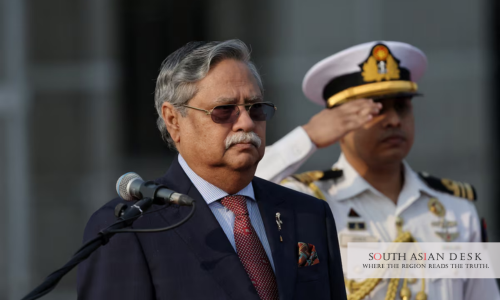
The Bangladesh president resignation is set to take place on Friday, according to three sources familiar with the matter, marking the departure of the last senior official in high office who remains closely tied to ousted Prime Minister Sheikh Hasina. President Mohammed Shahabuddin has informed Prime Minister Tarique Rahman of his decision, the sources said, with a formal announcement expected within days.
A Resignation Tied to Hasina’s Legacy
Shahabuddin, 76, was elected unopposed in 2023 as a nominee of Hasina’s Awami League party, which has since been banned following the student-led uprising that forced her from power in August 2024. Although his spokesperson did not publicly state a reason for the resignation, three people familiar with internal discussions said the government had pressed him to step aside because of his longstanding association with the former prime minister. That pressure intensified after Hasina announced in an interview that she intended to return to Bangladesh and surrender to authorities.
The timing of the Bangladesh president resignation is closely linked to the prospect of Sheikh Hasina’s return from exile. She has been living in New Delhi since fleeing Bangladesh nearly two years ago, and her planned homecoming has placed considerable pressure on Rahman’s government to remove any remaining figures associated with her administration from positions of state authority.
The Role of the Presidency
As head of state and commander-in-chief of the armed forces, Shahabuddin holds a position that is largely ceremonial, with executive authority resting with the prime minister and the cabinet. Even so, his continued presence in office had become a point of political sensitivity, particularly given his earlier remarks questioning whether Hasina had formally resigned before leaving the country in 2024. Those comments previously drew public protests outside Bangabhaban, the presidential residence, and calls for his removal.
Under Articles 50 and 54 of Bangladesh’s constitution, if Shahabuddin formally submits his resignation to the Speaker of Parliament, the Speaker would assume the role of acting president. Parliament would then be required to elect a successor to serve out the remainder of the presidential term within 90 days. Cabinet Secretary Nasimul Gani has been named in local reporting as a potential candidate for the post, though no official nomination has been confirmed.
Sheikh Hasina’s Return From Exile and the Legal Backdrop
Hasina’s planned return from exile follows her conviction last November, when Bangladesh’s International Crimes Tribunal sentenced her to death in absentia for ordering a crackdown on the 2024 student-led uprising. A United Nations report found that nearly 1,400 people were killed during the unrest. Hasina has denied the charges from abroad and is expected to return to Bangladesh, along with senior party colleagues, around December to surrender to the court.
Her Awami League, once Bangladesh’s largest political party, has been dismantled under the interim and successor governments that followed her ouster. Many of its senior leaders and activists have been jailed or gone into hiding, though the party is understood to retain pockets of public support in parts of the country.
Political Stakes for Rahman’s Government
The Bangladesh president resignation removes what analysts describe as the final vestige of Hasina’s influence within formal state institutions, as Rahman’s administration works to consolidate authority following its victory in February’s general election. Shahabuddin had previously indicated, in comments made public in December, that he intended to step down once the election had produced a new government, suggesting his eventual departure had long been anticipated even as its precise timing remained uncertain.
With Sheikh Hasina’s return from exile now looming and legal proceedings against her already concluded, Friday’s expected announcement is likely to be viewed as a significant, if largely symbolic, step in Bangladesh’s broader effort to draw a line under the Hasina era. Attention is now expected to turn toward how Parliament manages the succession process and whether it can do so without reigniting the political tensions that have periodically flared since the 2024 uprising.
Published in SouthAsianDesk, July 24, 2026
Follow SouthAsianDesk on X, Instagram and Facebook for insights on business and current affairs from across South Asia.