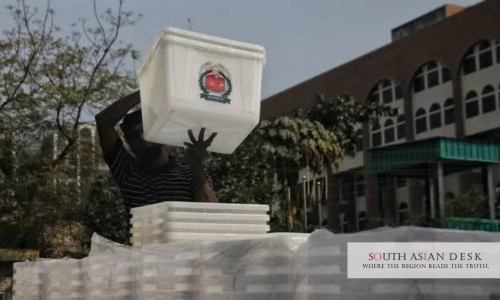
In a major administrative move, 32 officials sent into compulsory retirement have been officially confirmed by the government, closing a long chapter tied to the disputed 2018 Bangladesh parliamentary election. The affected individuals are former deputy commissioners (DCs) who once served as returning officers during that vote, and their retirement has been formalized through a fresh gazette notification.
Background of the Compulsory Retirement Order
The Ministry of Public Administration issued the notification on Monday, confirming that the group of former deputy commissioners had completed 25 years of government service. Under Section 45 of the Government Service Act, 2018, they were retired in the public interest. Officials confirmed that the retired staff will still receive retirement benefits under existing rules, meaning the move is administrative rather than punitive in the traditional sense, though it effectively ends their active careers in government service.
At the time of the order, all 32 individuals were serving as officers on special duty (OSDs) holding the rank of joint secretary. This designation typically applies to government employees who are not assigned to a specific post but remain on the payroll while their status is reviewed.
Why These Former Deputy Commissioners Were Targeted
The connection to the 2018 Bangladesh parliamentary election is central to understanding why this specific group of officials was singled out. On February 20 last year, the then interim government made 33 former DCs, who had served as returning officers during the 2018 polls, OSDs. Since that reassignment, these officials had been placed across various ministries and departments rather than holding regular administrative postings.
The 11th parliamentary election, held on December 30, 2018, saw the Awami League-led alliance win by an overwhelming majority. However, the results were widely disputed at the time, with allegations of irregularities, ballot stuffing, and vote rigging reported both before and during polling. These allegations have shaped years of political and administrative scrutiny surrounding the officials who managed the election process.
Findings From the National Election Investigation Commission
A significant factor behind the government’s decision was the report submitted by the National Election Investigation Commission. This inquiry commission, formed by the then interim government on June 26, 2025, examined three national elections held in 2014, 2018, and 2024. According to its findings, all three elections were coordinated at the highest levels of the state, with elements of the administration, police, Election Commission, and intelligence agencies allegedly mobilized to carry out the plans.
The commission submitted its report to then Chief Adviser Prof Muhammad Yunus on January 12 this year. Regarding the 2018 election specifically, the commission found that ballot stamping occurred overnight in around 80 percent of voting centers to secure a win for the Awami League. The report also noted that voter turnout exceeded 100 percent in some centers, a statistical impossibility that pointed to what the commission described as a form of dishonest competition within the administration to guarantee the ruling party’s victory. It further observed that control over the electoral process shifted away from the Election Commission and into the hands of the administration during that period.
Officials Affected by the Retirement Order
The list of retired officials spans districts across the country, reflecting the scale of the administrative overhaul. Among those named in the notification are former DCs who had been posted in districts including Chandpur, Cumilla, Kushtia, Netrokona, Bandarban, Natore, Shariatpur, Chapainawabganj, Mymensingh, Chittagong, Lakshmipur, Rangamati, Cox’s Bazar, Sunamganj, Pabna, Jhenaidah, Khagrachhari, Feni, Barishal, Bhola, Patuakhali, Nilphamari, Rajshahi, Magura, Habiganj, Kishoreganj, Narsingdi, Khulna, Sherpur, Kurigram, Manikganj, and Chuadanga. Each of these officials had previously held the position of deputy commissioner and returning officer in their respective districts during the 2018 vote.
What This Means Going Forward
The decision to formalize the compulsory retirement of these officials reflects the broader effort by Bangladesh’s administration to address accountability questions tied to past elections. With the National Election Investigation Commission’s findings now on record, the case of the 2018 election, and the officials who oversaw it at the district level, appears to have reached a definitive administrative conclusion. Whether further action follows for other officials implicated in the same or related elections remains to be seen, but this latest gazette notification marks a clear signal that the government intends to hold those tied to the controversial vote accountable through formal administrative channels.
Published in SouthAsianDesk, July 28th, 2026
Follow SouthAsianDesk on X, Instagram and Facebook for insights on business and current affairs from across South Asia.