Nepali products in Oman are set to reach a wider market after a formal understanding was signed between two organisations working to strengthen trade ties between the two countries. The agreement was reached between the Federation of Export Entrepreneurs Nepal and the Oman-based Non-Resident Nepali Social Club, with the shared aim of expanding Nepali goods and services in the Omani market.
A Formal Step Toward Stronger Trade Ties
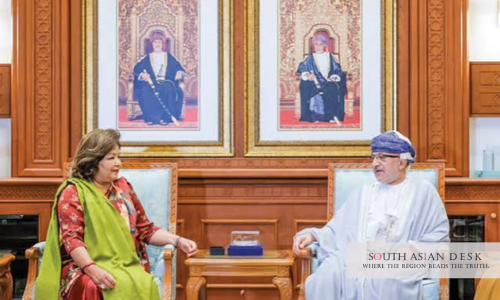
The memorandum of understanding (MoU) was signed on Friday at a programme organised at the Nepali Embassy in Muscat. Federation President Govinda Prasad Ghimire and Club President Suresh Khadka put their signatures on the document in the presence of Chargé d’Affaires Bishesh Kumar Sah, who represented the embassy at the event. The signing marks a fresh institutional effort to formalise and support the movement of Nepali goods into Oman, a country home to a sizeable community of Nepali workers and residents.
How the Agreement Will Support Nepali Exporters
Under the terms of the MoU, both organisations have agreed to act as institutional mediators, linking Nepali exporters with small and medium-scale entrepreneurs, traders, and potential buyers already established in Oman. This kind of on-the-ground coordination is expected to make it easier for Nepali businesses to identify reliable local partners and navigate the Omani market without having to build connections from scratch.
The Federation of Export Entrepreneurs Nepal and the Non-Resident Nepali Social Club will work together to identify demand, arrange introductions, and support the logistics needed to bring Nepali goods to Omani shelves and exhibitions.
Promoting the ‘Made in Nepal’ Identity
A central part of the agreement is the promotion of the ‘Made in Nepal’ label as a mark of quality and authenticity. The two organisations plan to set up stalls and exhibitions dedicated to Nepali products in Oman, giving local buyers direct access to goods such as tea, coffee, cardamom, handicrafts, traditional Nepali mats, herbal products, and traditional attire.
These items are also expected to feature prominently in cultural and community programmes organised in Oman, giving the products visibility beyond conventional retail spaces and tying their promotion to Nepal’s cultural presence in the country.
Why This Matters for Nepal’s Export Sector
Nepal has long looked to Gulf countries as potential markets for its non-timber and cottage industry goods, and Oman’s community of Non-Resident Nepalis is well positioned to support that push. By formalising cooperation between exporters at home and community networks abroad, this MoU creates a structured channel that smaller producers can use, rather than relying on informal or one-off arrangements.
If implemented effectively, the agreement could open a steady pipeline for Nepali exporters, helping niche goods like cardamom, herbal products, and handicrafts find consistent buyers overseas. It also strengthens the broader case for positioning Nepali products in Oman as a reliable, culturally rooted alternative in a market where authenticity and craftsmanship are increasingly valued.
Conclusion
The signing of this MoU represents a practical step rather than just a symbolic one, giving Nepali exporters an institutional partner on the ground in Muscat. As the Federation of Export Entrepreneurs Nepal and the Non-Resident Nepali Social Club begin implementing the agreement, the coming months will show how effectively Nepali products in Oman can move from embassy programmes and cultural events into everyday retail spaces across the country.
Published in SouthAsianDesk, August 8th, 2026
Follow SouthAsianDesk on X, Instagram and Facebook for insights on business and current affairs from across South Asia.