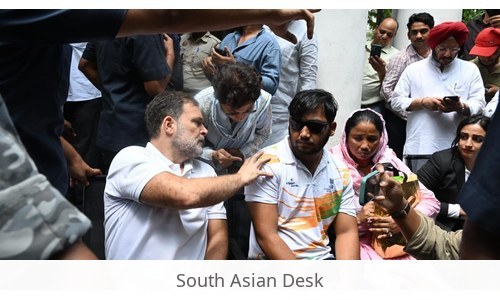
Rahul Gandhi protest: On August 21, 2026, Rahul Gandhi sat on a dharna outside the Parliament Street police station in New Delhi, demanding the filing of a First Information Report (FIR) over the use of pellet guns during a protest on July 20. The protest, which involved Sahil Lochab—a victim of pellet gun injuries—highlighted ongoing tensions regarding police conduct and accountability in India. This incident has reignited debates about the balance between protest rights and public safety, with the Rahul Gandhi protest serving as a focal point for calls for India police accountability.
Rahul Gandhi protest: Context of the July 20 Demonstration and Police Actions
Rahul Gandhi’s sit-in at the police station centered on the alleged use of pellet guns by law enforcement during the July 20 protest. Sahil Lochab, who sustained injuries from the incident, joined Gandhi during the demonstration. The Delhi police pellet gun controversy has become a focal point in discussions about India police accountability, particularly after the July 20 protest. The protest itself was a response to broader political and social issues, with participants advocating for transparency in police actions and the protection of demonstrators’ rights. The FIR demand has since become a central issue, with activists and legal experts emphasizing the need for formal investigations into the use of force by law enforcement.
Government Response
The Delhi Police responded by barricading the area and closing the gates of the police station as Congress party workers attempted to enter. The Rapid Action Force (RAF) was deployed to manage the situation, reflecting the authorities’ approach to handling public dissent. This response came amid growing calls for FIR demand related to the use of pellet guns during the July 20 protest. The deployment of the RAF, known for its role in crowd control, has raised concerns about the proportionality of police actions during demonstrations. Critics argue that the use of force, including pellet guns, may have been excessive and could have endangered the lives of protestors, including Sahil Lochab injuries.
Public Sentiment
Congress party workers and supporters expressed solidarity with Gandhi’s demand for accountability. Public opinion remains divided, with some advocating for stricter oversight of police conduct during protests and others emphasizing the need for law and order. The incident has reignited debates about the balance between protest rights and public safety. The Sahil Lochab injuries have further intensified scrutiny on the Delhi police’s use of force. Social media platforms have been flooded with discussions, with many users condemning the use of pellet guns and calling for India police accountability. Meanwhile, some segments of the public argue that the police actions were necessary to maintain order and prevent potential violence.
Implications for Future Protests
This event may influence future protests and police conduct, potentially prompting policy changes regarding the use of force. Political leaders like Gandhi continue to play a pivotal role in advocating for protestors’ rights, shaping the discourse on India police accountability in India. The Rahul Gandhi protest has sparked discussions on the need for greater transparency in the handling of demonstrations like the July 20 protest. Legal experts suggest that the outcome of this case could set a precedent for how similar incidents are addressed in the future, potentially leading to reforms in police training and the use of non-lethal force.
Conclusion
The Rahul Gandhi protest underscores the growing demand for India police accountability and the need for a balanced approach to managing public demonstrations. As the FIR demand continues to gain traction, the outcome of this case will likely have far-reaching implications for the rights of protestors and the conduct of law enforcement in India. The Delhi police pellet gun controversy and the Sahil Lochab injuries serve as stark reminders of the challenges faced by both demonstrators and police in maintaining order while respecting civil liberties.
Follow SouthAsianDesk on X, Instagram and Facebook for insights on business and current affairs from across South Asia.
Sources
- Rahul Gandhi sits on dharna at police station in New Delhi, demands FIR over pellet gun use during July 20 protest – thehindu.com
- Rahul Gandhi, With Pellet Victim, Sits Outside Senior Cop’s Office Over FIR – ndtv.com
- Rahul Gandhi’s sit-in at Delhi police station, cops call reinforcements – indianexpress.com
Image: th-i.thgim.com