

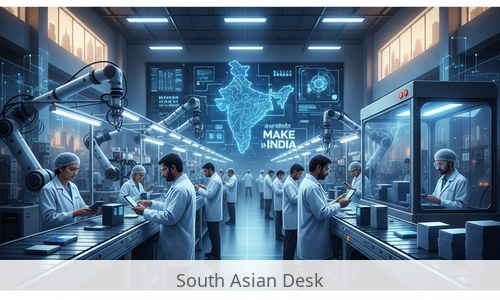
The Indian government has launched the mobile phone manufacturing scheme, aiming to boost local production and provide extra incentives for Indian brands. On August 21, 2026, the government notified this initiative, which builds on the Production-Linked Incentive (PLI) Scheme for Large Scale Electronics Manufacturing, running from 2020 to the last financial year. The scheme targets cumulative mobile-phone production of around Rs 39 lakh crore during the five-year period, aligning with broader goals to enhance domestic manufacturing and reduce import reliance in the electronics market India. This follows the government’s economic policy framework, which emphasizes self-reliance and innovation.
Mobile Phone Manufacturing Scheme: Impact on Global Electronics Market
The mobile phone manufacturing scheme introduces enhanced financial incentives, including tax breaks and R&D subsidies, to attract both local brands manufacturing and foreign companies in India. These measures could influence global players like Apple, which has shown interest in expanding its India-based operations beyond iPhone manufacturing. Analysts suggest that increased domestic production may position India as a more competitive player in the global electronics market, potentially altering supply chain dynamics.
The PLI Scheme, which previously focused on large-scale electronics manufacturing, has already attracted significant investment from global firms, including Samsung, Xiaomi, and Oppo. By extending incentives to mobile phone manufacturing specifically, the government aims to solidify India’s role as a key manufacturing hub for consumer electronics, leveraging its growing domestic market and skilled labor force.
India’s electronics sector has seen steady growth over the past decade, driven by policies such as the Make in India initiative and the PLI Scheme. The new mobile phone manufacturing scheme is expected to accelerate this trend by offering targeted support to both domestic and foreign manufacturers. For instance, the tax breaks and R&D subsidies could encourage companies to set up advanced manufacturing units in India, which would not only reduce import dependency but also create a more resilient supply chain. This shift could have ripple effects on global electronics markets, as India’s increased production capacity may lead to lower costs for manufacturers and more competitive pricing for consumers worldwide.
Local Economic Growth and Employment
The result is expected to create thousands of jobs in manufacturing hubs across the country, particularly in states with existing electronics clusters. By reducing reliance on imports, the policy could stimulate local economies and encourage investment in infrastructure and technology. Regions hosting manufacturing facilities may see a surge in related industries, from logistics to component supply chains.
For example, states like Tamil Nadu, Maharashtra, and Karnataka, which already host significant electronics manufacturing units, are likely to benefit from the scheme’s incentives. These regions could witness a multiplier effect, with ancillary industries such as packaging, transportation, and software development expanding to meet the needs of the growing sector.
The government’s emphasis on local production aligns with its broader economic goals of self-reliance (Atmanirbhar Bharat) and reducing the trade deficit. By encouraging domestic manufacturers to scale up operations, the scheme could also foster innovation and competition within the Indian market. This, in turn, may lead to the emergence of more Indian smartphone brands capable of competing globally.
Additionally, the scheme’s focus on R&D subsidies could spur technological advancements in areas such as 5G, AI, and IoT, positioning India as a leader in next-generation electronics. The economic growth India driven by this initiative could also strengthen the country’s position in the global electronics market, as local brands manufacturing gain traction and foreign companies in India expand their footprint.
The potential for job creation extends beyond direct manufacturing roles. Ancillary sectors such as education, training, and vocational programs are likely to expand to meet the demand for skilled labor. This could have long-term benefits for India’s workforce, particularly in regions with high unemployment rates. Furthermore, the scheme’s emphasis on local production may encourage the development of a robust domestic supply chain, reducing the need for imported components and fostering the growth of small and medium enterprises (SMEs) in the electronics sector. The Indian government incentives embedded in the scheme are designed to ensure that both established and emerging players can thrive, contributing to sustainable economic growth India.
Follow SouthAsianDesk on X, Instagram and Facebook for insights on business and current affairs from across South Asia.
