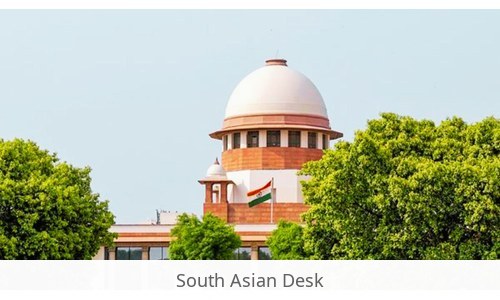
CBI probe Jharkhand exam irregularities: On August 24, 2026, the Supreme Court issued notices to the Centre and the Jharkhand government regarding a plea for a Central Bureau of Investigation (CBI) probe into alleged irregularities in the Jharkhand Public Service Commission (JPSC) exam 2025. The writ petition, filed under Article 32 of the Constitution of India, alleges serious concerns about the integrity, fairness, transparency, and credibility of the examination process. This development has reignited discussions on government recruitment transparency and the role of public interest litigation in safeguarding administrative processes.
CBI probe Jharkhand exam irregularities: Implications for JPSC Exam Integrity
The allegations against the JPSC exam process have raised significant concerns about the fairness of public service recruitment in the state. The petition highlights potential procedural lapses that could undermine trust in the selection of civil servants, a cornerstone of administrative governance. Historical precedents of examination irregularities across India, including instances of leaks, biased grading, and procedural non-compliance, underscore the need for rigorous oversight.
The Supreme Court’s intervention signals a critical juncture for Jharkhand’s administrative credibility. Public service commissions are entrusted with ensuring merit-based recruitment, and any perceived or actual deviation from this principle risks eroding public confidence. The CBI’s involvement, if confirmed, would represent a high-level scrutiny of the process, potentially leading to reforms in examination conduct and oversight mechanisms. This probe into exam integrity issues could set a precedent for similar cases across India.
The Role of the CBI in Investigating Exam Irregularities
The Central Bureau of Investigation (CBI) is India’s premier investigating agency, tasked with probing cases of corruption, fraud, and misconduct involving public officials. Its involvement in this case underscores the gravity of the allegations, as such probes are typically reserved for matters with significant public interest and systemic implications. Previous CBI investigations into examination irregularities have included cases of question paper leaks, unauthorized access to answer sheets, and collusion between examiners and candidates. These cases often reveal vulnerabilities in administrative protocols, prompting calls for stricter safeguards and transparency measures.
In the context of the JPSC exam, the CBI’s mandate would extend to examining whether there were lapses in the conduct of the examination, such as irregularities in the setting or distribution of question papers, discrepancies in the evaluation process, or potential collusion among officials. The agency’s findings could lead to disciplinary action against individuals found guilty of misconduct, as well as recommendations for institutional reforms to prevent recurrence. This CBI probe Jharkhand exam irregularities is a critical step in addressing exam integrity issues and restoring government recruitment transparency.
Political Ramifications and Governance Challenges
The Supreme Court’s notice to the Centre and Jharkhand government may have broader political implications. For the Jharkhand administration, the probe could expose vulnerabilities in its governance framework, particularly in managing high-stakes examinations. The Centre’s response, as a federal authority, will also be scrutinized for its commitment to upholding transparency in state-level recruitment processes.
Public trust in government institutions is closely tied to the perceived fairness of administrative procedures. If the probe uncovers systemic issues, it could prompt policy revisions at both state and national levels to prevent recurrence. Conversely, if no wrongdoing is found, the process may reinforce existing protocols but also highlight the importance of continuous vigilance.
The political ramifications extend beyond administrative governance. The Centre’s involvement in the probe could signal a shift in federal-state dynamics, particularly if the investigation reveals lapses in the state’s administrative framework. Such cases often become focal points for debates on decentralization of power, the role of central oversight in state-level processes, and the need for standardized protocols across public service commissions.
Historical Context of Examination Irregularities in India
Examination irregularities are not isolated to Jharkhand. Across India, public service commissions have faced scrutiny over the years, with allegations ranging from procedural lapses to outright fraud. For instance, in 2019, the CBI probed allegations of question paper leaks in the UPSC civil services exam, leading to the suspension of several officials. Similarly, in 2021, the Punjab Public Service Commission faced allegations of biased grading, prompting an independent review of its evaluation process.
These cases highlight a recurring challenge in maintaining the integrity of competitive examinations, particularly in high-stakes recruitment processes. The root causes often include inadequate oversight, lack of transparency in procedural guidelines, and potential collusion among stakeholders. Addressing these issues requires a multi-pronged approach, including technological interventions such as digital monitoring systems, stricter adherence to procedural norms, and enhanced accountability mechanisms.
Follow SouthAsianDesk on X, Instagram and Facebook for insights on business and current affairs from across South Asia.
Sources
- Supreme Court notice to Centre, Jharkhand on CBI probe plea over exam ‘irregularities’ – indianexpress.com
- Supreme Court issues notice to Centre, CBI on plea for CBI probe into JPSC exam ‘irregularities’ – thehindu.com
Image: images.indianexpress.com