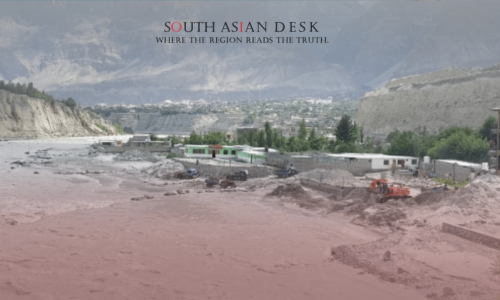
At least 10 people have died in Gilgit-Baltistan floods and devastating landslides as of July 27, 2025, triggered by heavy monsoon rains and glacial lake outburst floods (GLOFs). The worst-hit regions include Diamer and Astore, where flooding and debris flow have isolated communities and blocked critical access routes.
Details of Gilgit-Baltistan Floods
According to Chief Secretary Abrar Ahmed Mirza, 10 to 12 people are still missing. The floods claimed seven lives in Babusar, two in Thore Valley, and one in Astore. Continuous landslides are hindering rescue teams from reaching affected areas.
Over 500 homes, 27 bridges, and 12 km of roads have been destroyed. Vital infrastructure — including power lines, water channels, crops, and livestock — has also been severely damaged.
Rescue efforts are underway, led by the Pakistan Army, GB Scouts, and Rescue 1122. So far, 1,000 stranded tourists have been rescued, with 135 airlifted from Skardu to Islamabad on C-130 aircraft. The Karakoram Highway, which was blocked by landslides, reopened on July 26, helping to speed up aid delivery.
Chief Minister Haji Gulbar Khan has declared the affected regions as disaster zones and requested Rs 7 billion in federal assistance, noting that damage estimates are nearing Rs 20 billion.
Experts say the floods reflect the growing threat of climate change, with glacial melts and erratic rainfall intensifying across northern Pakistan. The Pakistan Meteorological Department has warned of continued heavy rainfall in the coming days, raising concerns of more floods and landslides.
What’s Next
In the face of disaster, local communities have stepped up. In Sadpara village, residents opened homes and community halls to shelter tourists. Relief agencies are now distributing tents, food, and medicines, but limited regional resources are straining under the crisis.
Published in SouthAsianDesk, July 27th, 2025
Follow SouthAsianDesk on X, Instagram, and Facebook for insights on business and current affairs from across South Asia.