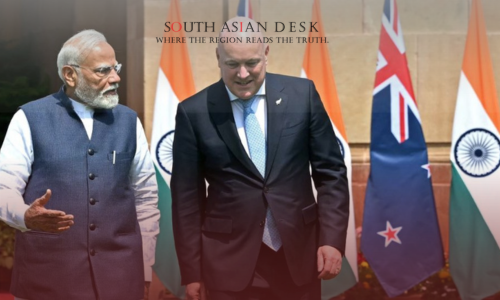
India and New Zealand have concluded the second round of negotiations for a Swift Free Trade Agreement (FTA) in New Delhi, marking steady progress toward a comprehensive deal to bolster economic ties. The talks, held from July 14 to July 25, 2025, focused on key areas such as trade in goods and services, investment, rules of origin, customs procedures, trade facilitation, technical barriers to trade, sanitary and phytosanitary measures, and economic cooperation. Both nations are committed to finalizing a balanced agreement, with the third round of discussions scheduled for September 2025 in New Zealand.
Details of Swift Free Trade Agreement
The negotiations, relaunched in March 2025 during a meeting between India’s Commerce Minister Piyush Goyal and New Zealand’s Trade Minister Todd McClay, aim to address tariff disparities and enhance market access. India’s bilateral merchandise trade with New Zealand reached $1.3 billion in FY 2024-25, reflecting a 48.6% growth over the previous year, with Indian exports including pharmaceuticals, textiles, and machinery, and New Zealand’s exports featuring agricultural products like apples and kiwifruit. However, challenges remain, particularly New Zealand’s push for access to India’s dairy market, which India has historically protected to support its farmers.
Posts on X highlight enthusiasm for the FTA’s potential to boost trade tenfold over the next decade, with sectors like renewable energy, tourism, and critical minerals identified as areas of mutual interest. The agreement is expected to streamline supply chains, foster investment, and create a predictable business environment. Virtual intersessional meetings will continue to maintain momentum ahead of the September talks, as both countries work to navigate sensitive issues like dairy and agriculture while building a robust economic partnership.
Published in SouthAsianDesk, July 29th, 2025
Follow SouthAsianDesk on X, Instagram, and Facebook for insights on business and current affairs from across South Asia.