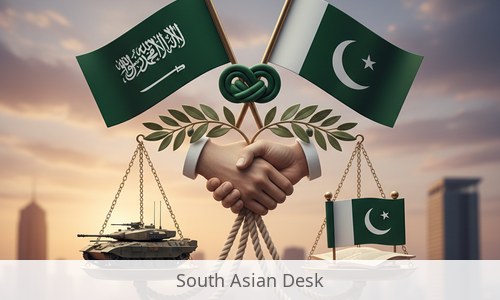
Pakistan Iran diplomatic relations are at a crossroads as the country navigates complex diplomatic pressures amid escalating tensions between the Houthi movement and Saudi Arabia. On September 11, 2026, Pakistan’s External Affairs Ministry confirmed that the nation is under mounting expectations to uphold its defense commitments to Saudi Arabia while maintaining open channels with Iran.
Al Jazeera reports that this balancing act is central to Pakistan’s foreign policy, as it seeks to manage its regional alliances in the context of the Houthi Saudi conflict and broader regional geopolitics. Ariana News states that Pakistan has explicitly warned Iran to rein in the Houthi group amid escalating conflict, emphasizing the significance of its defense pact with Saudi Arabia and Turkey.
Pakistan Iran diplomatic relations: Pakistan’s Diplomatic Position
Pakistan’s strategic position in the region requires careful navigation of its commitments to both Saudi Arabia and Iran. According to Al Jazeera, the country is under pressure to honor its defense obligations to Saudi Arabia, which includes potential military coordination in the ongoing conflict with the Houthi movement. However, Pakistan has simultaneously maintained diplomatic engagement with Iran, reflecting its longstanding bilateral ties and regional balancing act.
Ariana News highlights that Pakistan’s warnings to Iran come as Riyadh intensifies its military campaign against Houthi targets in Yemen. The defense pact between Pakistan, Saudi Arabia, and Turkey, signed in 2025, has added a layer of complexity to Pakistan’s foreign policy calculus. This tripartite agreement, which includes joint military exercises and intelligence sharing, has been cited as a key factor in Pakistan’s alignment with Saudi interests.
The historical relationship between Pakistan and Iran dates back to the 1950s, marked by periods of cooperation and rivalry. The 2012 Strategic Depth Agreement, which formalized military and security collaboration between the two nations, remains a cornerstone of their bilateral ties. However, Pakistan’s recent alignment with Saudi Arabia through the 2025 defense pact has introduced new dynamics, requiring careful calibration to avoid straining relations with Iran. Pakistan Iran diplomatic relations are further strained by the competing demands of its defense commitments to Saudi Arabia and its historical ties to Iran.
Implications for Regional Alliances
The evolving situation has significant implications for Pakistan’s regional alliances. As tensions between Saudi Arabia and Iran escalate, Pakistan’s ability to maintain neutrality could influence broader geopolitical dynamics. Analysts note that Pakistan’s balancing act may affect its relationships with other regional powers, including China and the United States, which have their own strategic interests in the Middle East.
China, a key economic partner for Pakistan through the China-Pakistan Economic Corridor (CPEC), has long maintained a policy of non-interference in regional conflicts. However, Pakistan’s alignment with Saudi Arabia could indirectly impact CPEC, given Iran’s role as a regional counterweight to Saudi influence. The U.S., which has historically sought to mediate between Saudi Arabia and Iran, may view Pakistan’s stance as a potential lever in its broader Middle East strategy.
The Houthi Saudi conflict has also raised questions about Pakistan’s role in regional security frameworks. With its defense commitments to Saudi Arabia and its historical ties to Iran, Pakistan’s foreign policy decisions could shape the trajectory of regional alliances in the coming months. The country’s ability to navigate these tensions without alienating either side will be critical to maintaining its strategic autonomy.
The 2025 defense pact with Saudi Arabia and Turkey has introduced new layers of complexity. While the agreement strengthens Pakistan’s military ties with Saudi Arabia, it also places Pakistan in a position where it must avoid actions that could be perceived as favoring one regional power over another. This is particularly challenging given the deep historical and cultural ties between Pakistan and Iran, which have often been a source of mutual support in regional matters.
In South Asia diplomacy, Pakistan’s balancing act between Saudi Arabia and Iran reflects broader regional geopolitics. The country’s strategic location makes it a key player in shaping the dynamics between major powers, including its neighbors and global actors. As Iran Saudi tensions continue to evolve, Pakistan’s role in mediating or navigating these conflicts will remain a focal point of South Asia diplomacy.
Follow SouthAsianDesk on X, Instagram and Facebook for insights on business and current affairs from across South Asia.
Sources
- Why Pakistan is talking to Iran as the Houthi-Saudi fight escalates – aljazeera.com
- Pakistan warns Iran to rein in Houthis as Riyadh strikes back – ariananews.af