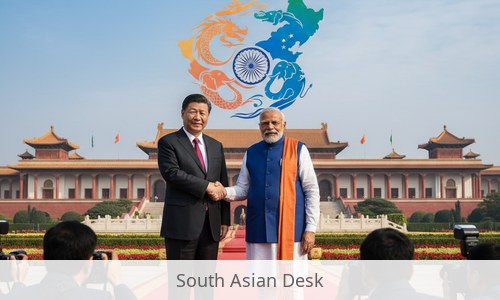
Xi Jinping visit India marks the first trip by Chinese President Xi Jinping to India in seven years, coinciding with heightened China India tensions and a critical juncture for regional stability in South Asia. The meeting between Xi and Indian Prime Minister Narendra Modi occurs during the BRICS Summit 2026 in New Delhi, a pivotal moment for Sino-Indian relations and global geopolitical dynamics.
Xi Jinping visit India: Implications for Sino-Indian Relations
The Xi Jinping visit India comes amid ongoing border disputes and trade imbalances, which have strained Sino-Indian relations. According to NDTV, the meeting may address these issues, emphasizing the need for stability in Sino-Indian relations.
The historical context of Sino-Indian relations is complex, shaped by both cooperation and competition. The two nations share a 4,000-kilometer border, which has been a flashpoint for territorial disputes, particularly in regions like Aksai Chin and Arunachal Pradesh. These disputes have led to periodic standoffs, such as the 2020 Galwan Valley clash, which resulted in significant casualties on both sides. Despite these tensions, both countries have maintained a strategic dialogue framework, including the Working Group on Border Affairs and the China-India Trade and Investment Forum, aimed at resolving differences through diplomatic channels.
The current trade imbalance between China and India further complicates Sino-Indian relations. India has long been concerned about its growing trade deficit with China, which reached over $70 billion in 2025. This deficit is driven by China’s dominance in manufacturing and electronics, sectors in which India seeks to build domestic capacity. However, India’s recent economic reforms, including the easing of import restrictions on certain Chinese goods, have signaled a willingness to engage in more balanced trade relations. The meeting between Xi and Modi could provide an opportunity to address these trade concerns and explore avenues for mutual economic benefit, including trade negotiations.
BRICS Summit Outcomes
The BRICS Summit 2026, held in New Delhi from September 12-13, 2026, brings together leaders from Brazil, Russia, India, China, and South Africa. As reported by The Hindu, the summit focuses on trade, technology, and global governance reforms. During the summit, BRICS nations called for “maximum restraint” in West Asia, reflecting concerns over escalating regional tensions, as noted by OnlineKhabar.
The BRICS Summit 2026 has emerged as a significant counterweight to Western-dominated institutions such as the International Monetary Fund and the World Bank. The summit’s emphasis on trade and technology underscores the bloc’s ambition to reshape global economic and technological governance. For India, the summit provides an opportunity to strengthen its position as a regional leader and to advocate for greater inclusion of developing economies in global decision-making processes.
The call for “maximum restraint” in West Asia highlights the collective concerns of BRICS nations regarding the potential for conflict in the region. This statement is particularly significant given the ongoing tensions between Iran and Saudi Arabia, as well as the broader geopolitical rivalries involving the United States and China. The BRICS Summit 2026‘s stance on restraint could signal a shift in global power dynamics, with emerging economies seeking to mediate conflicts and promote stability through multilateral dialogue.
Stakeholder Perspectives
The Xi Jinping visit India is viewed as an opportunity for dialogue among various stakeholders. The historical context of Sino-Indian relations, marked by both cooperation and competition, influences current perceptions. Potential for future collaborations in trade and security remains a key area of interest, as highlighted by Khaama Press.
From the perspective of regional stakeholders, the meeting between Xi and Modi is seen as a critical step toward stabilizing South Asia. The South Asian region has long been a hotspot for geopolitical tensions, with issues such as Pakistan’s nuclear capabilities, the Kashmir dispute, and the influence of external powers like the United States and China. The BRICS Summit 2026 provides a platform for India and China to address these concerns collectively, reinforcing their commitment to regional stability.
For the business community, the meeting could lead to new opportunities for trade and investment between the two nations. Both India and China are major players in the global economy, and their ability to resolve trade disputes and enhance cooperation could have significant implications for regional and global markets. The BRICS Summit 2026‘s focus on technology and innovation also presents opportunities for collaboration in areas such as renewable energy, digital infrastructure, and artificial intelligence.
Follow SouthAsianDesk on X, Instagram and Facebook for insights on business and current affairs from across South Asia.
Sources
- “China Needs Stability With India”: Ex-Government Adviser To NDTV On Xi-PM Modi Meet – ndtv.com
- BRICS Summit 2026 LIVE updates: India focused on four pillars: resilience, innovation, cooperation, sustainability, says PM Modi – thehindu.com
- BRICS nations call for ‘maximum restraint’ in West Asia – english.onlinekhabar.com
- BRICS Summit Kicks Off in New Delhi With Leaders of 11-Nation Bloc – khaama.com