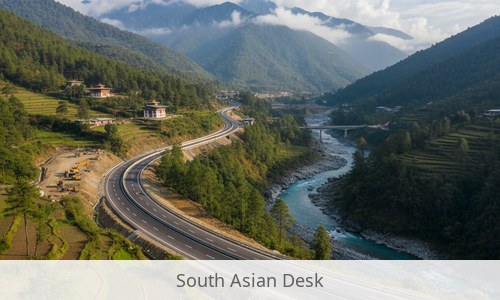
The Gelephu-Taraythang Highway, a critical Bhutan infrastructure project, has seen its planned route reduced to 12.6 kilometers, marking a significant step toward construction. This development signals the project’s progression into an advanced stage of planning, with detailed design work nearing completion and contractors currently being prequalified for the construction phase. Targeted to begin in June 2027, the highway is expected to enhance regional connectivity, impacting local communities and supporting economic development in Bhutan.
Gelephu-Taraythang Highway: Impact on Local Communities
The project involves the acquisition of 223 land plots for the highway’s alignment, as reported by Business Bhutan. This has raised concerns among local residents regarding land ownership and compensation. Officials have emphasized that the new route aims to minimize displacement while ensuring efficient connectivity between Gelephu and Taraythang. Community consultations are ongoing to address grievances and ensure transparency in the acquisition process. The Gelephu-Taraythang Highway’s design also incorporates measures to mitigate local community impact, including fair compensation and alternative land provisions. These efforts reflect a commitment to balancing infrastructure development with the needs of the people living along the route.
Economic Implications
The Gelephu-Taraythang Highway is anticipated to facilitate trade and travel, crucial for Bhutan’s economic development. By improving regional connectivity, the project could unlock new trade routes and reduce transportation costs for goods moving between Bhutan and neighboring regions. This infrastructure upgrade may also attract foreign investment, aligning with Bhutan’s broader economic diversification goals. The highway’s completion is expected to boost local economies by creating jobs and stimulating business activity along its route. Additionally, the Gelephu-Taraythang Highway will serve as a vital link for transporting agricultural products and handicrafts, further supporting Bhutan’s economic growth.
Environmental Considerations
Environmental assessments have been conducted to evaluate the result’s ecological impact. Measures to mitigate deforestation, habitat disruption, and carbon emissions are being integrated into the design. The Bhutanese government has emphasized sustainable practices, including reforestation initiatives and the use of eco-friendly construction materials, to ensure the project aligns with the country’s commitment to environmental conservation. These efforts reflect a balance between infrastructure development and environmental considerations, ensuring that the result contributes to both economic progress and ecological preservation.
Regional Connectivity and Strategic Importance
The result is not just a local project but a strategic component of Bhutan’s regional connectivity plans. By linking key towns and improving access to remote areas, the highway will enhance mobility for residents and facilitate the movement of goods and services. This improved connectivity is expected to strengthen Bhutan’s ties with neighboring countries, promoting cross-border trade and collaboration. The project also aligns with broader South Asian infrastructure initiatives, positioning Bhutan as a more integrated player in the region.
Community Engagement and Transparency
To address concerns about the result’s impact on local communities, the government has prioritized transparency and stakeholder engagement. Regular consultations with affected residents, local leaders, and environmental experts have been held to ensure that the project’s benefits are equitably distributed. Compensation packages and alternative land provisions are being tailored to meet the specific needs of displaced families, reflecting a commitment to minimizing local community impact. These measures aim to build trust and ensure the project’s long-term success.
Future Outlook and Challenges
While the result represents a major milestone for Bhutan’s infrastructure, its implementation faces challenges such as environmental compliance, funding, and community acceptance. The government has pledged to address these issues through rigorous planning and stakeholder collaboration. Once completed, the highway is expected to become a cornerstone of Bhutan’s economic development in Bhutan, fostering growth and improving the quality of life for residents in the region.
Follow SouthAsianDesk on X, Instagram and Facebook for insights on business and current affairs from across South Asia.
Sources
- Gelephu-Taraythang Highway moves closer to construction – bbs.bt
- 223 Land Plots to Be Acquired for Gelephu–Tareythang Road – businessbhutan.bt