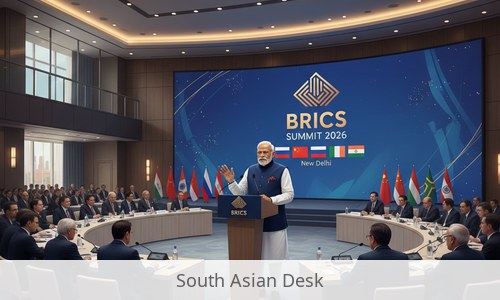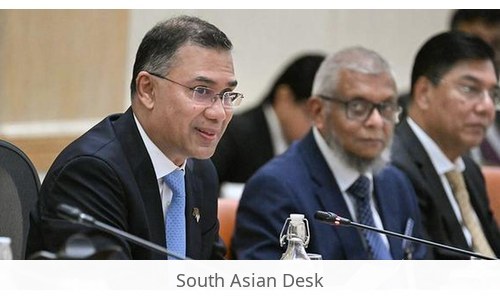
Bangladesh India relations are at a crossroads as State Minister for Foreign Affairs Humaiun Kobir emphasized the need for a “balanced approach” to India-Bangladesh ties. On September 13, 2026, Kobir stated that the country should move beyond an “excessive preoccupation” with India, a remark made two days after Bangladesh announced that Prime Minister Tarique Rahman would not attend the BRICS Summit. This development signals a potential shift in diplomatic priorities, reflecting broader strategic recalibrations in South Asia geopolitics.
Bangladesh India relations: Implications for Regional Geopolitics
Kobir’s emphasis on a “balanced approach” to Bangladesh India relations reflects broader strategic considerations. While India remains Bangladesh’s largest trading partner and a key regional actor, the call for recalibration suggests a desire to diversify diplomatic engagement. This could influence Bangladesh’s posture in multilateral forums like SAARC and its interactions with other South Asian nations, including Pakistan and Nepal.
The BRICS Summit absence of Prime Minister Tarique Rahman underscores a strategic recalibration. BRICS, comprising Brazil, Russia, India, China, and South Africa, has grown in influence as a counterweight to Western-dominated institutions. Bangladesh’s decision not to attend may signal a strategic pivot toward other multilateral platforms or a recalibration of priorities in light of evolving regional dynamics. This move could also reflect a desire to avoid entanglements in geopolitical rivalries, particularly as China’s Belt and Road Initiative (BRI) expands its footprint in South Asia.
The push for a balanced approach may also be influenced by Bangladesh’s evolving relationships with other regional players. For instance, Bangladesh has been strengthening ties with Nepal through infrastructure projects and trade agreements, while also engaging with Pakistan on cross-border security issues. These efforts suggest a broader strategy to avoid over-reliance on any single power, ensuring that Bangladesh’s foreign policy remains flexible and adaptive to changing circumstances.
Historical Context of Bangladesh-India Relations
Bangladesh India relations are rooted in a complex history marked by both cooperation and tension. The 1971 Liberation War established a foundational relationship, but subsequent decades saw periodic friction over border disputes, water-sharing agreements, and cross-border terrorism. Recent years have seen efforts to normalize ties, including high-level visits and economic collaborations, though strategic autonomy remains a priority for Dhaka.
The 1971 Liberation War, in which India played a pivotal role in Bangladesh’s independence, created a legacy of gratitude and mutual support. However, this relationship has been tested by issues such as the contentious 1965 border agreement, which led to the creation of the Bangladesh-India Land Boundary Agreement (LBA) in 2015. This agreement resolved long-standing disputes over enclaves and territories, but it also highlighted the need for continuous dialogue and cooperation.
Water-sharing agreements, particularly regarding the Ganges River, have been another point of contention. The Farakka Barrage, constructed by India in 1975, has been a source of tension for Bangladesh, as it affects the flow of water and sediment to the country. Over the years, both nations have engaged in negotiations to manage these resources sustainably, reflecting a commitment to resolving disputes through dialogue.
Cross-border terrorism has also been a significant issue, with Bangladesh accusing India of harboring groups like the United Liberation Front of Assam (ULFA) and the National Democratic Front of Bodoland (NDFB). These tensions have occasionally strained bilateral relations, but both countries have made efforts to address these concerns through joint operations and intelligence sharing.
Conclusion
Humaiun Kobir’s statements underscore Bangladesh’s pursuit of a more nuanced foreign policy framework. While India remains central to Bangladesh’s security and economic calculus, the push for balance may reflect broader regional dynamics, including evolving ties with China and the Quad. As the BRICS Summit approaches, the absence of Prime Minister Tarique Rahman highlights the strategic recalibration underway.
Bangladesh India relations are a microcosm of the broader geopolitical shifts in South Asia. As both nations navigate their respective domestic and international challenges, the need for a balanced approach will likely remain a key component of their diplomatic ties. This recalibration not only affects regional stability but also has implications for trade, security, and multilateral cooperation in the region.
Follow SouthAsianDesk on X, Instagram and Facebook for insights on business and current affairs from across South Asia.
Sources
- Want to ‘reset’ ties with India, should be done through bilateral discussions: Bangladesh – thehindu.com
- “Move Towards New Relationship”: Bangladesh Wants To Reset India Ties – ndtv.com
Image: th-i.thgim.com