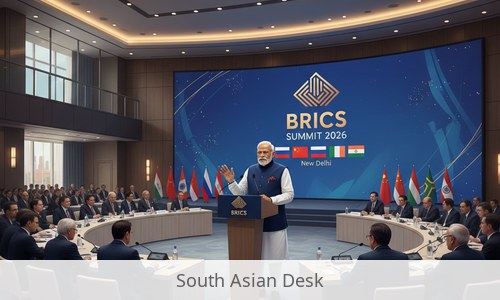
The BRICS Summit 2026, held in New Delhi on September 12, 2026, marked a significant milestone in global economic diplomacy. The event highlighted the potential for South Asia economic cooperation and set the stage for transformative trade policies in the region. As the 18th BRICS Summit, it brought together leaders from Brazil, Russia, India, China, and South Africa, along with newer members and partners, under the theme ‘Building for Resilience, Innovation, Cooperation and Sustainability.’
BRICS Summit 2026: Key Outcomes of the Summit
The New Delhi Declaration, adopted during the summit, emphasized a united front on economic issues, including criticism of tariffs and sanctions imposed by Western nations. This declaration underscores BRICS’ growing influence as a counterbalance to Western economic policies. According to The Hindu, the summit highlighted India’s leadership in fostering consensus among member nations on trade and investment frameworks.
The declaration also called for enhanced cooperation in technology and infrastructure development, with specific mentions of digital connectivity projects and green energy transitions. These initiatives aim to strengthen economic resilience among BRICS nations, particularly in the context of global supply chain disruptions. India’s BRICS leadership was evident in its ability to rally support for these ambitious goals, reinforcing its position as a key architect of the bloc’s future.
Implications for South Asia
The BRICS Summit 2026’s outcomes could reshape trade policies in South Asia, with potential impacts on regional economic integration. The New Delhi Declaration’s focus on reducing trade barriers may benefit South Asian nations by facilitating smoother cross-border commerce. However, the absence of Nepal from the summit has raised questions about its diplomatic relations with India and its alignment with regional economic initiatives.
OnlineKhabar English — Nepal reported that Nepal’s non-participation in the summit may affect its access to BRICS-led infrastructure projects and trade agreements. This absence highlights the complexities of regional diplomacy, where geopolitical considerations often influence participation in multilateral forums. The Nepal absence BRICS underscores the need for inclusive dialogue to ensure all South Asian nations can benefit from the bloc’s economic initiatives.
The summit also emphasized the importance of South Asia economic cooperation, with India advocating for deeper integration among regional partners. By leveraging its BRICS leadership, India aims to position South Asia as a hub for innovation and sustainable development, aligning with the summit’s overarching goals.
Regional Economic Integration and BRICS Influence
The BRICS Summit 2026 has catalyzed discussions on how South Asia can leverage its strategic position to enhance economic cooperation. India’s role as a BRICS leader has been pivotal in pushing for initiatives that could bridge the economic divide between South Asian nations. The summit’s focus on trade policies South Asia has sparked interest in creating a more unified approach to regional trade, which could potentially reduce dependency on Western markets.
India’s BRICS leadership has also been instrumental in promoting the New Delhi Declaration’s vision of a more interconnected South Asia. By emphasizing the need for collaborative infrastructure projects, the summit has laid the groundwork for future economic partnerships that could benefit all regional players. This includes the development of digital connectivity projects that aim to streamline trade and improve economic efficiency across the region.
The Role of Nepal in South Asian Economic Cooperation
The Nepal absence BRICS has sparked discussions about the country’s strategic positioning in the region. While Nepal’s non-participation in the summit may be attributed to various geopolitical factors, it raises concerns about its ability to fully engage in the economic initiatives being discussed. The summit’s outcomes highlight the importance of inclusive participation to ensure that all South Asian nations can benefit from the economic opportunities presented by BRICS.
Nepal’s absence from the summit underscores the need for a more inclusive approach to regional economic cooperation. As South Asia continues to evolve economically, it is crucial that all nations, including Nepal, are actively involved in shaping the future of the region’s economic landscape. This includes participating in trade policies South Asia that could foster greater economic integration and mutual benefit.
Future Prospects for South Asia
Looking ahead, the BRICS Summit 2026 has set the stage for a more integrated South Asia. The New Delhi Declaration’s emphasis on economic cooperation and innovation could lead to the development of new trade policies that benefit the entire region. As India continues to assert its BRICS leadership, it is likely that South Asia will see increased collaboration on issues ranging from infrastructure development to technological advancement.
The summit’s outcomes also highlight the potential for South Asia to become a more influential player in global economic discussions. By leveraging the BRICS platform, South Asian nations can work together to address common challenges and opportunities, ensuring that the region’s voice is heard on the global stage.
Published in SouthAsianDesk, 2026-09-15.
Follow SouthAsianDesk on X, Instagram and Facebook for insights on business and current affairs from across South Asia.
Sources
- Watch: BRICS Summit: Deals, divisions and diplomacy | Worldview – thehindu.com
- The Delhi BRICS Summit and what Nepal lost by staying away – english.onlinekhabar.com
Image: th-i.thgim.com