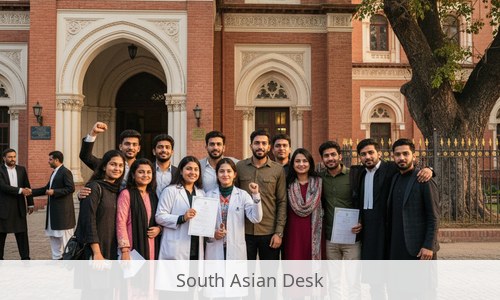
Lahore High Court Afghan students have received a temporary reprieve as the Lahore High Court issued an order on September 15, 2026, halting the expulsion of 13 Afghan medical students. This decision allows them to remain in Pakistan while their petitions are reviewed, addressing concerns about the educational rights in Pakistan for Afghan nationals. The ruling highlights the ongoing legal and administrative challenges faced by Afghan students in Pakistan, particularly in the medical field.
Lahore High Court Afghan students: Background on Afghan Medical Students in Pakistan
Afghan medical students have long faced regulatory hurdles in Pakistan, particularly under directives from the Pakistan Medical and Dental Council (PMDC). In recent months, the PMDC had mandated that Afghan students return to Afghanistan before completing their studies, a policy that sparked legal and humanitarian concerns. The students, many of whom are in their final years of training, argued that such a directive would disrupt their education and career prospects.
The Lahore High Court’s intervention underscores the broader issue of cross-border educational access for Afghan nationals. With Pakistan hosting a significant number of Afghan students in Pakistan, particularly in medical fields, the legal and administrative frameworks governing their status have remained contentious. The PMDC’s policy, while aimed at regulating foreign student enrollment, has been criticized for lacking clarity and flexibility. This has led to growing tensions between regulatory bodies and students, who often rely on Pakistani institutions for advanced medical training due to limited opportunities in Afghanistan.
Legal Implications of the Court’s Decision
The Lahore High Court’s ruling has immediate legal significance for the 13 students involved, granting them temporary relief from expulsion of Afghan medical students. However, the decision also raises questions about the enforceability of the PMDC’s directives and the broader regulatory landscape for international students in Pakistan.
Legal experts note that the court’s order may set a precedent for future cases involving legal implications for Afghan students. It could prompt a reevaluation of the PMDC’s policies, particularly regarding the treatment of Afghan nationals. The ruling may also influence discussions on bilateral agreements between Pakistan and Afghanistan regarding educational cooperation.
The court has directed the PMDC to provide a detailed response to the students’ petitions, which are expected to be reviewed in the coming weeks. Until then, the students will remain in Pakistan, continuing their studies under the current legal framework. This development reflects the Lahore High Court’s recognition of the educational rights in Pakistan for Afghan students, ensuring they can complete their medical training without undue disruption.
The Broader Context of Cross-Border Education
The case of the 13 Afghan medical students is emblematic of the complex dynamics surrounding cross-border education in South Asia. Pakistan has long been a destination for Afghan students seeking higher education, particularly in fields like medicine, engineering, and law. However, the regulatory environment for international students has often been inconsistent, leading to periodic crises over enrollment policies and visa regulations.
The PMDC’s directive to expel Afghan students before completing their studies has drawn criticism from both students and advocacy groups. They argue that such a policy not only violates the principles of educational equity but also undermines the long-term relationship between Pakistan and Afghanistan. The Lahore High Court’s intervention has been seen as a critical step in balancing regulatory oversight with the rights of international students.
Impact on Future Policies and Bilateral Relations
The ruling by the Lahore High Court could have far-reaching implications for the policies governing international students in Pakistan. It may compel the PMDC to revisit its approach to foreign student enrollment, potentially leading to more transparent and flexible regulations. This could also open the door for renewed dialogue between Pakistan and Afghanistan on educational cooperation, including the establishment of formal agreements to facilitate student mobility.
Moreover, the decision highlights the importance of legal recourse for students facing administrative challenges. It sets a precedent that could be cited in future cases involving the rights of international students in Pakistan. Legal scholars suggest that this ruling may encourage similar legal actions by other groups of international students, further pressuring regulatory bodies to adopt more inclusive policies.
Conclusion
The Lahore High Court’s decision to halt the expulsion of 13 Afghan medical students is a significant development in the ongoing discourse on educational rights and cross-border student policies. It underscores the need for a balanced approach that respects both regulatory requirements and the rights of international students. As the court reviews the students’ petitions, the outcome will likely shape the future of educational policies in Pakistan and their impact on bilateral relations with Afghanistan.
Follow SouthAsianDesk on X, Instagram and Facebook for insights on business and current affairs from across South Asia.
This report focuses on Lahore High Court Afghan students and the verified developments surrounding it.