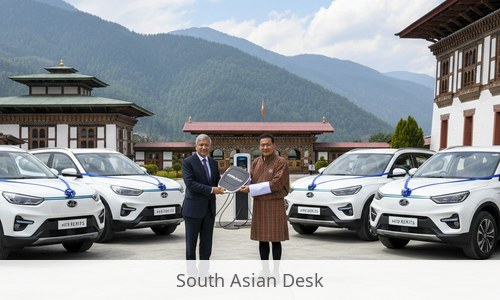
On September 17, 2026, India’s External Affairs Minister, S. Jaishankar, handed over Mahindra electric vehicles to Bhutan’s Prime Minister Tshering Tobgay in Thimphu. This significant event marked the launch of the second phase of the Unified Payments Interface (UPI) and the exchange of a Memorandum of Understanding (MoU) between the two nations. This collaboration underscores growing regional partnerships aimed at enhancing economic resilience and technological advancement in South Asia. The initiative reflects a strategic alignment between Bhutan and India, with Bhutan-India cooperation serving as a model for sustainable development and digital integration in the region.
Bhutan-India Cooperation: Implications for Bhutan’s Energy Policy
Bhutan’s adoption of electric vehicles aligns with its commitment to sustainable development and environmental preservation. The shift from conventional vehicles to electric ones is expected to reduce carbon emissions significantly, supporting Bhutan’s goal of maintaining its carbon-negative status. The MoU also includes provisions for infrastructure development, such as the installation of new EV charging stations, which will facilitate the integration of electric vehicles into Bhutan’s transportation network. This initiative is part of Bhutan-India cooperation that emphasizes electric vehicles as a cornerstone of regional sustainability efforts. By leveraging India’s expertise in renewable energy and EV manufacturing, Bhutan aims to accelerate its transition to a low-carbon economy while ensuring energy security.
The transition to electric vehicles is not just an environmental initiative; it is also a strategic move to enhance Bhutan’s energy independence. By investing in electric vehicle infrastructure, Bhutan is positioning itself to reduce its reliance on imported fossil fuels, which is crucial for its energy security. This shift is expected to create new job opportunities in the renewable energy sector, further contributing to the country’s economic development.
Economic Impact of UPI Expansion
The expansion of the Unified Payments Interface (UPI) between Bhutan and India is poised to streamline cross-border transactions, making trade and economic interactions more efficient. This digital payment system will reduce reliance on cash transactions, promoting financial inclusion and ease of doing business. The initiative is expected to enhance trade relations and contribute to Bhutan’s economic growth by facilitating smoother financial flows between the two nations. As part of Bhutan-India cooperation, the UPI expansion complements India’s broader regional integration goals.
The integration of UPI into Bhutan’s financial ecosystem is likely to spur entrepreneurship, particularly among small and medium enterprises (SMEs), by enabling seamless access to digital banking services and reducing transaction costs. This digital transformation is expected to empower local businesses, allowing them to participate more actively in the regional economy. As Bhutan embraces digital payments, it is also enhancing its financial literacy and technological capabilities, which are essential for sustainable economic growth.
Future Collaborations in Technology
The Memorandum of Understanding exchanged during the event opens avenues for joint ventures in technology and infrastructure development. Potential collaborations could include advancements in renewable energy, smart grid technologies, and digital governance solutions. These initiatives are likely to yield long-term benefits for Bhutan’s infrastructure, positioning it as a regional hub for sustainable technology and innovation through Bhutan-India cooperation. The partnership also highlights the role of Bhutan Prime Minister Tshering Tobgay and S. Jaishankar in shaping this strategic alliance.
By fostering knowledge-sharing and capacity-building programs, the two nations aim to address challenges such as digital literacy, cybersecurity, and the adoption of emerging technologies like artificial intelligence and blockchain. These collaborations are expected to enhance Bhutan’s technological landscape and improve the quality of life for its citizens.
Regional Stability and Strategic Alliances
The deepening of the result extends beyond economic and technological collaboration to include broader strategic and security dimensions. Both nations have emphasized the importance of regional stability, with India’s support playing a critical role in Bhutan’s defense and infrastructure development. The MoU also includes provisions for joint research and development in areas such as climate resilience and disaster management, reflecting a shared commitment to addressing transboundary challenges. This multifaceted partnership underscores the growing interdependence between Bhutan and India, with both nations recognizing the value of sustained dialogue and cooperation in navigating the complexities of the 21st century.
In conclusion, the strengthening of Bhutan-India ties through electric vehicles and digital payments marks a significant step in regional cooperation and economic development. This partnership not only enhances Bhutan’s energy policy and economic landscape but also sets a precedent for future collaborations in technology and infrastructure.
Follow SouthAsianDesk on X, Instagram and Facebook for insights on business and current affairs from across South Asia.