

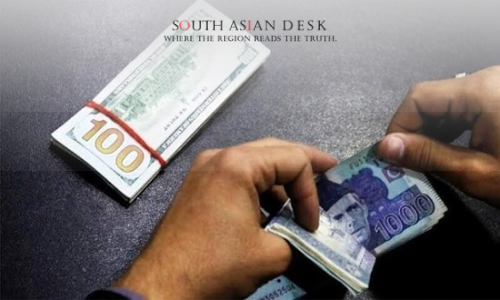
A resurgent illegal forex market in Pakistan is undermining official dollar sales, risking exchange rate volatility. On Sunday, August 24, 2025, currency dealers in Karachi reported a 50 per cent drop in dollar sales by money changers, attributing the decline to a re-emerging illegal forex market offering higher rates, which could destabilise Pakistan’s exchange, according to banking sector sources.
Why This Matters
The rate stability is critical in South Asia, where economies like Pakistan rely heavily on remittances and foreign trade to bolster reserves. The resurgence of an illicit forex market threatens Pakistan’s economic stability, potentially increasing inflation and affecting regional trade dynamics, as other South Asian nations face similar challenges with unregulated financial activities.
Sharp Decline in Official Dollar Sales
Currency dealers in Pakistan’s banking market noted a significant reduction in open market dollar sales, with money changers reporting a 50 per cent drop in August 2025, down to approximately USD 115 million from USD 300 million in July 2025. This decline contrasts with the average monthly sales of USD 350 million in the fiscal year 2025. “The open market is running low on dollars. They are only selling what they receive from the public, which suggests that someone is purchasing dollars before selling them to money changers,” an anonymous money changer told Dawn News.
The State Bank of Pakistan (SBP) reported robust remittance inflows of USD 3.2 billion in July 2025, indicating that the drop in sales is not due to reduced foreign currency inflows but rather to market dynamics.
Illegal Forex Market Fuels Volatility
The resurgence of an illegal forex market in major cities like Karachi, Lahore, and Islamabad has been linked to stricter documentation requirements for dollar purchases, which limit transactions above USD 500 without scrutiny. This has driven individuals and businesses to the grey market, where exchange rates range from PKR 287 to PKR 292 per dollar, compared to the official open market rate of PKR 284.50 as of August 24, 2025. These higher rates attract sellers and buyers, including those seeking dollars for legitimate purposes like tuition fees or medical expenses abroad, exacerbating the strain on official channels.
Impact of Regulatory Measures
The SBP’s crackdown on smugglers and illicit operators, launched earlier in 2025, initially strengthened the Pakistani rupee, reducing the dollar’s open market value from PKR 288.50 on July 22 to PKR 284.50 by August 24. However, bankers noted that price controls and documentation rules have inadvertently fueled the illegal forex market, allowing unregulated players to exploit demand. “Price controls could be allowing illicit market players to offer higher rates, which could destabilise the rate,” a banker told Dawn News.
Economic Implications
The decline in open market dollar sales threatens Pakistan’s exchange price stability, potentially increasing import costs and inflation. With Pakistan’s foreign exchange reserves at USD 16,371.5 million as of December 20, 2024, analysts suggest that sustained remittance inflows and higher reserves could mitigate volatility. Improved economic ties with the United States and China may also bolster stability, but large-scale dollar purchases by the SBP could strain market liquidity, as seen in fiscal year 2025.
The illegal forex market’s resurgence continues to raise concerns about money laundering and tax evasion. These issues were highlighted during a 2023 crackdown that resulted in the closure of over 45 illicit exchange shops in Peshawar, according to Radio Free Europe/Radio Liberty.
Background
Pakistan’s foreign exchange market has long faced challenges from illegal operations, such as the hundi-hawala system, which bypasses regulated channels. The SBP and Securities and Exchange Commission of Pakistan (SECP) regulate legal forex trading, requiring authorised dealers to comply with anti-money laundering protocols. The 2023 crackdown strengthened the rupee by nearly 10 per cent in a week, but the re-emergence of grey markets indicates persistent regulatory gaps. Pakistan’s economy, heavily reliant on remittances (USD 30 billion annually in recent years), is sensitive to exchange price fluctuations, impacting inflation and purchasing power.
What’s Next
Analysts urge the SBP to maintain adequate market liquidity and avoid large-scale dollar purchases to support exchange price stability. Continued enforcement against illegal forex markets, coupled with streamlined documentation for legitimate transactions, could curb grey market activity. Strengthening foreign exchange reserves and fostering international economic partnerships will be key to sustaining Pakistan’s exchange stability.
Published in SouthAsianDesk, August 24th, 2025
Follow SouthAsianDesk on X, Instagram, and Facebook for insights on business and current affairs from across South Asia.
