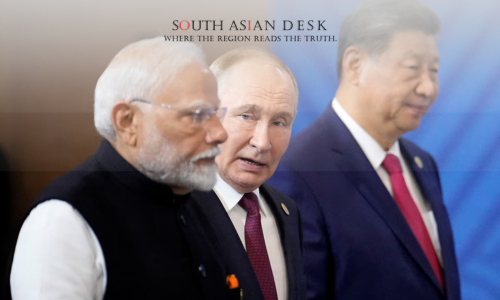
Chinese President Xi Jinping will convene over 20 world leaders, including Russian President Vladimir Putin and Indian Prime Minister Narendra Modi, at the Shanghai Cooperation Organisation (SCO) summit in Tianjin from Saturday, August 31, to Sunday, September 1, 2025, to project Global South unity in a shifting geopolitical landscape. The event aims to counter Western influence, particularly in light of U.S. policies under President Donald Trump, while fostering regional cooperation.
Why This Matters for South Asia
The SCO summit holds significant implications for South Asia, where India and Pakistan, both members, navigate complex relations with China and Russia. Modi’s first visit to China in over seven years signals a thaw in Sino-Indian ties, strained since deadly border clashes in 2020. With U.S. tariffs pressuring India’s economy, New Delhi’s engagement with Beijing and Moscow could reshape regional alliances, impacting trade, security, and diplomatic leverage.
Summit Highlights: A Platform for Solidarity
The SCO, founded in 2001, has grown from six to 10 permanent members, with 16 dialogue and observer states, covering roughly a quarter of the globe. This year’s summit, the largest since its inception, will feature leaders from Central Asia, the Middle East, South Asia, and Southeast Asia. A Chinese foreign ministry official described the bloc as an “important force in building a new type of international relations” on Tuesday, August 19, 2025, during a press briefing.
The summit will conclude with the Tianjin Declaration, outlining plans to deepen ties in counterterrorism, renewable energy, and digital economy cooperation, building on agreements from the 2024 SCO summit in Astana, Kazakhstan. However, analysts note the SCO’s limited success in delivering substantial outcomes, with its primary value lying in projecting unity against Western dominance.
Xi, Putin, and Modi: A Strategic Alignment
Xi’s hosting of Putin and Modi underscores China’s ambition to lead a counter-narrative to the U.S.-led global order. Eric Olander, editor-in-chief of The China-Global South Project, stated, “Xi will use the summit to showcase what a post-American-led international order begins to look like.” Putin, facing Western sanctions over Ukraine, will leverage the summit for diplomatic legitimacy, staying on for a World War II military parade in Beijing post-summit.
Modi’s participation, his first in China since 2018, reflects India’s pragmatic shift. Recent détente with China, coupled with U.S. tariffs of 25% on Indian goods for purchasing Russian oil, has pushed New Delhi closer to Beijing and Moscow. A government source in New Delhi confirmed Modi’s attendance on Wednesday, August 6, 2025, noting discussions on border de-escalation and trade.
India-China Relations: A New Chapter?
The summit offers a platform for Modi and Xi to advance bilateral ties. Analysts expect announcements on incremental border measures, such as troop withdrawals, and easing trade and visa restrictions. Cooperation in climate and people-to-people engagement is also anticipated. Olander noted, “New Delhi will likely prioritise détente with China, a key Modi agenda.”
However, tensions persist within the SCO. Frictions between India and Pakistan, highlighted by India’s objections at the June 2025 SCO defence ministers’ meeting over a missing reference to a deadly attack in Indian Kashmir on April 22, 2025, underscore the bloc’s challenges in cohesive action.
Background
The SCO, initially focused on security and counterterrorism, has expanded to economic and military cooperation. India and Pakistan joined as full members in 2017, but their rivalry often hampers joint efforts. The 2020 India-China border clashes, which killed 20 Indians, froze relations until recent de-escalation efforts. China’s growing influence, coupled with Russia’s pivot to Asia amid Western sanctions, has elevated the SCO’s geopolitical significance.
What’s Next
The Tianjin summit’s outcomes, particularly the Tianjin Declaration, will signal the SCO’s direction in fostering Global South solidarity. For South Asia, Modi’s engagements with Xi and Putin could pave the way for stronger economic ties with China and Russia, potentially offsetting U.S. trade pressures. The region will closely watch India’s balancing act as it navigates relations with both Western and Eastern powers.
Published in SouthAsianDesk, August 26th, 2025
Follow SouthAsianDesk on X, Instagram, and Facebook for insights on business and current affairs from across South Asia.