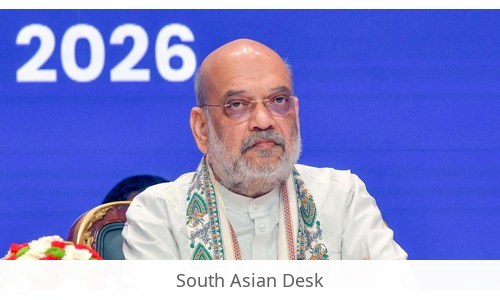
drug trade eradication India: On September 22, 2026, Union Home Minister Amit Shah announced a firm deadline of 2029 to eliminate the drug trade in India during a national conference. This directive is framed as a comprehensive overhaul of enforcement strategies, emphasizing the dismantling of trafficking networks through financial investigations, digital surveillance, and inter-agency coordination.
drug trade eradication India: Enforcement Strategies
Shah instructed enforcement agencies to focus on breaking entire trafficking chains by targeting the profits generated by drug cartels. Financial investigations will play a central role in disrupting these networks, alongside collaboration between federal and state authorities. The approach includes tracing digital links and leveraging inter-agency cooperation to dismantle operations at their core. This aligns with drug trafficking enforcement India strategies that now prioritize economic and digital tools over traditional interdiction methods. Specific measures include mapping illicit financial flows, seizing assets linked to cartels, and using advanced analytics to identify key players. The directive also mandates real-time data sharing between agencies such as the Narcotics Control Bureau (NCB), Central Bureau of Investigation (CBI), and state-level police forces to ensure seamless coordination.
Historical Context
India has long grappled with drug trafficking, with previous policies focusing primarily on border checks and interdiction. However, these initiatives often lacked a unified framework, leading to fragmented enforcement and limited long-term success. Shah’s directive marks a significant shift toward systemic disruption of cartels through economic and digital means. While past policies emphasized physical seizures and arrests, the 2029 deadline introduces a unified timeline for eradication, emphasizing financial investigations drug cartels as a key tool. This evolution reflects the broader Amit Shah drug policy framework, which integrates financial tracking with digital surveillance, including AI-driven monitoring of cryptocurrency transactions and dark web activity.
Implications for States
State governments are expected to align their enforcement strategies with the 2029 drug trade deadline, prioritizing financial investigations and inter-agency coordination. Challenges may arise in ensuring compliance and resource allocation, though the directive underscores the central government’s commitment to shifting from reactive to proactive measures. Financial tracking of cartels is positioned as a critical lever for state-level action, reinforcing the drug trafficking enforcement India mandate. States like Maharashtra and Uttar Pradesh, which have historically faced high drug trafficking rates, are likely to adopt specialized units for financial intelligence. Additionally, the directive mandates the establishment of regional task forces to address cross-border trafficking, particularly along the India-Bangladesh and India-Nepal borders, where smuggling routes are well-established.
The emphasis on financial investigations is particularly noteworthy, as it represents a departure from traditional enforcement methods that often focused solely on physical drug seizures. By targeting the financial underpinnings of drug cartels, the government aims to disrupt their operations more effectively. This approach is expected to enhance the overall efficacy of drug enforcement efforts across the country.
Conclusion
Amit Shah’s directive to eradicate the drug trade in India by 2029 signifies a pivotal moment in the country’s approach to combating drug trafficking. By integrating financial investigations and digital surveillance into enforcement strategies, the government aims to dismantle the complex networks that facilitate drug trade. The success of this initiative will depend on the cooperation between various enforcement agencies and the commitment of state governments to align their strategies with the central directive. As India moves forward, the focus on a comprehensive, coordinated approach may pave the way for significant advancements in the fight against drug trafficking.
Related Posts
- India’s Border Security Upgrades: A New Era of Surveillance
- Digital Governance in South Asia: Trends and Challenges
- Amit Shah’s Policy Reforms: A Comprehensive Overview
Follow SouthAsianDesk on X, Instagram and Facebook for insights on business and current affairs from across South Asia.
This report focuses on drug trade eradication India and the verified developments surrounding it.
Sources
- Drug trade to be uprooted from country by end of 2029: Amit Shah – thehindu.com
- “Not A Gram To Enter India”: Amit Shah Sets 2029 Deadline For War Against Drugs – ndtv.com
Image: th-i.thgim.com