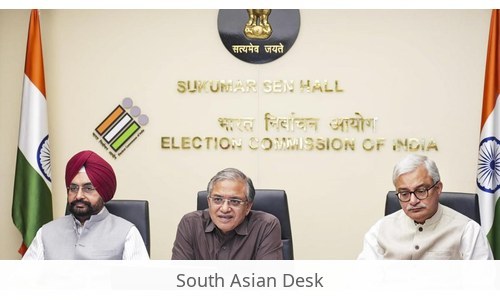
The Election Commission of India dissent report has sparked renewed discussions about the role of internal dissent in electoral bodies and its implications for public trust in elections. The statement comes amid scrutiny of the commission’s decision-making processes and internal dynamics, with the ECI emphasizing that focusing on specific internal notes over a 10-month period while ignoring broader decisions presents an incomplete picture.
Election Commission of India dissent report: Understanding Internal Dissent
The ECI’s remarks were made in response to reports suggesting internal friction within the commission, as noted by The Hindu. Historical instances of dissent within the ECI are not unprecedented, though such discussions typically remain internal and are not publicly disclosed. The ECI’s statement aims to contextualize internal deliberations as part of standard institutional functioning. However, concerns about transparency persist, particularly in light of recent elections and their implications for democratic processes. The Hindu highlighted that the ECI’s focus on broader decisions over isolated notes is intended to counter narratives that may misrepresent its operational integrity. This approach aligns with the broader goal of maintaining electoral integrity India through structured decision-making.
The ECI’s acknowledgment of dissent as a routine aspect of governance reflects a broader institutional norm. In democratic systems, differing opinions are often part of the decision-making process, even if they are not always made public. The commission’s emphasis on consensus-driven decisions underscores its commitment to ensuring that electoral processes remain impartial and free from internal bias. However, the challenge lies in balancing this internal deliberation with the need for external accountability, which is crucial for maintaining public trust in elections.
Implications for Electoral Trust
Public perception of the ECI remains a critical factor in maintaining electoral legitimacy. The commission’s response to dissent reports seeks to reinforce its credibility, though the effectiveness of this approach depends on sustained transparency. Analysts note that while institutional dissent is inevitable, the ECI’s ability to manage such dynamics without public scrutiny could influence public trust in elections. As South Asia electoral processes evolve, the ECI’s handling of dissent will remain a focal point for observers of democratic governance. The commission’s statement on dissent, as outlined in the ECI statement on dissent, underscores its commitment to balancing internal deliberations with external accountability. This balance is crucial for preserving the ECI’s role as a cornerstone of India’s electoral framework.
The challenge lies in ensuring that the Election Commission of India dissent report does not overshadow the broader context of the ECI’s work. While internal dissent is a natural part of any institution, its visibility in public discourse could either strengthen or weaken the perception of the ECI’s independence. The commission’s ability to address these concerns transparently will be key to maintaining electoral integrity India and fostering public trust in elections.
The ECI’s emphasis on institutional norms highlights the importance of internal dissent in electoral bodies as a routine aspect of governance. However, the public’s right to understand the mechanisms behind electoral decisions cannot be ignored. This tension between internal deliberation and external accountability is a recurring theme in South Asia electoral processes, where the ECI’s actions are closely watched by both domestic and international observers.
The ECI’s response to the dissent report also reflects broader challenges in maintaining electoral integrity India. While the commission asserts that its decisions are made through consensus, the existence of dissenting views raises questions about the transparency of its decision-making. This is particularly relevant in the context of public trust in elections, where even the perception of impropriety can erode confidence in the electoral system.
As the ECI continues to navigate these complexities, its handling of dissent will serve as a litmus test for the health of India’s democratic institutions. The ECI statement on dissent provides a framework for addressing these issues, but its implementation will determine whether the ECI can maintain its reputation as an impartial arbiter of electoral processes.
Follow SouthAsianDesk on X, Instagram and Facebook for insights on business and current affairs from across South Asia.
Sources
- Differing views, observations are normal part of deliberation in any institution: ECI on reports of internal friction – thehindu.com
- “Unanimous Decisions Of Full Commission”: Election Body On ‘Dissent’ Report – ndtv.com
Image: th-i.thgim.com