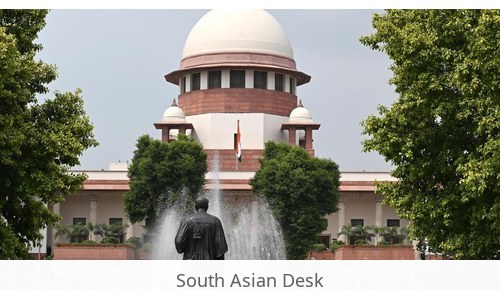
The Supreme Court NSA case has taken a significant turn as the Supreme Court of India temporarily stayed a High Court order requiring Noida District Magistrate Medha Roopam to pay ₹5 lakh in compensation related to a National Security Act (NSA) detention case. This decision comes amid ongoing debates about public official accountability and the legal implications NSA in India’s legal framework.
Supreme Court NSA case: Legal Context of the National Security Act
The National Security Act India, enacted in 1980, grants authorities the power to detain individuals suspected of activities threatening national security for up to 12 months without trial. While designed to address security threats, its application has sparked controversy, with critics arguing it enables arbitrary detention. This case underscores the tension between national security and civil liberties, particularly in light of the Supreme Court NSA case‘s broader implications for judicial oversight. The National Security Act India has been invoked in numerous high-profile cases, often raising concerns about the balance between state power and individual rights. Legal experts have long debated whether the Act’s provisions align with constitutional protections, making this ruling a pivotal moment in its interpretation.
Arguments Presented in Court
Senior advocate Mukul Rohatgi, representing Medha Roopam, argued that the High Court’s directive to recover ₹5 lakh from her salary was unjust. He emphasized that public official accountability should not come at the expense of due process, especially given the multi-layered judicial review involved in this Supreme Court NSA case. The opposing side contended that accountability mechanisms are vital to prevent misuse of power and uphold legal standards. The Medha Roopam compensation issue has become a focal point in discussions about the responsibilities of public servants in NSA-related cases. Rohatgi highlighted that the High Court’s order could set a precedent for penalizing officials without sufficient evidence of wrongdoing, potentially chilling judicial discretion in sensitive matters.
Implications of the Supreme Court’s Decision
The Supreme Court’s stay in the the result could reshape future accountability measures for public officials involved in NSA-related cases. By pausing the High Court’s order, the ruling highlights the need for careful judicial scrutiny in cases involving public servants. This decision may also prompt broader discussions on reforming the National Security Act India to align with constitutional principles and protect individual rights. The legal implications NSA of this ruling extend beyond this case, potentially influencing how similar disputes are handled in the future. The High Court order stay has provided a temporary reprieve for Medha Roopam, but it also raises questions about the adequacy of current legal safeguards for public officials.
Broader Legal and Social Impact
The the result has reignited conversations about the role of the judiciary in balancing national security with civil liberties. Legal scholars argue that the ruling underscores the importance of procedural fairness in cases involving the National Security Act India. The Medha Roopam compensation dispute has also drawn attention to the challenges faced by public officials who must navigate complex legal frameworks while fulfilling their duties. This case may serve as a catalyst for legislative reforms aimed at ensuring transparency and accountability in the application of the NSA. The public official accountability debate is likely to continue as courts and lawmakers grapple with the fine line between security and individual rights.
The Supreme Court’s decision to stay the High Court’s order is not just a legal maneuver; it reflects a deeper concern regarding the implications of punitive measures against public officials in sensitive cases. As the judiciary navigates these complex waters, the outcome of this case could set important precedents for how similar cases are treated in the future, particularly regarding the balance between national security and individual rights.
Follow SouthAsianDesk on X, Instagram and Facebook for insights on business and current affairs from across South Asia.
Sources
- Supreme Court stays High Court order to recover ₹5 lakh from Noida DM in NSA detention case – thehindu.com
- Noida District Magistrate Gets Relief, Supreme Court Pauses Rs 5 Lakh Compensation – ndtv.com
Image: th-i.thgim.com