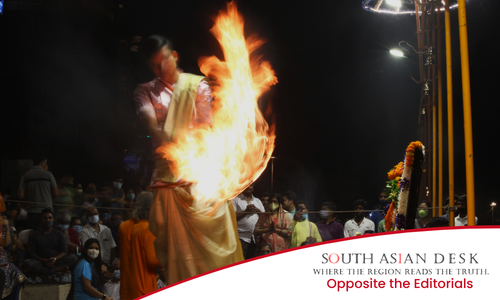
“Banaras is older than history, older than tradition, older even than legend, and looks twice as old as all of them put together”. – Mark Twain
Varanasi doesn’t need any introduction. As one of the oldest living cities in the world, its ancient streets and river breeze echo with millennia of devotion, ritual, and spiritual seeking—interwoven with the exquisite craftsmanship and heritage of its world-renowned Banarasi silk sarees. In modern times, it also holds immense political prominence as the parliamentary constituency of Prime Minister Narendra Modi. It is a city where every day is a living theatre—so historically rich that modern popular narratives, such as the web series The Revolutionaries (Amazon Prime), dedicate entire segments to its sacred geography. It was here, in the narrow alleys of Kashi, that early 20th-century Ghadr revolutionaries like Abani Mukherji and Sachindra Nath Sanyal organised clandestine networks during the height of the Indian independence movement. This continuous tradition of extraordinary anti-colonial resistance across India’s freedom struggle—highlighting lesser-known acts of courage alongside major uprisings—is also richly explored in modern historical compilations such as Robinhood of Kathiawar and Other Extraordinary Stories from India’s Freedom Movement (The Paperclip, 2026).
Yet beneath its iconic spiritual surface lies another enduring legacy: a history of rebellion, bloody defiance, and quiet reinvention. Long before the 20th-century freedom fighters or even the revolt of 1857, three distinct historical moments unfolded on both banks of the Ganges. Though largely overshadowed by the city’s religious fame, these three chapters—the royal defiance of Maharaja Chait Singh, the urban insurgency of Wazir Ali Khan, and the tragic exodus of indentured labourers—form an unforgettable arc of anti-colonial struggle.
Act I: Chait Singh’s Glory (1781)
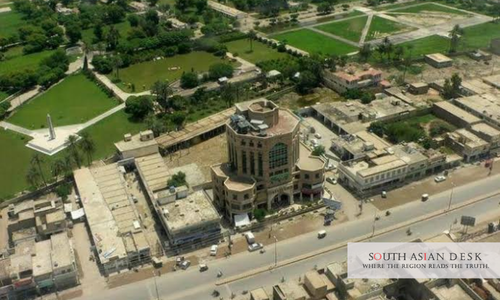
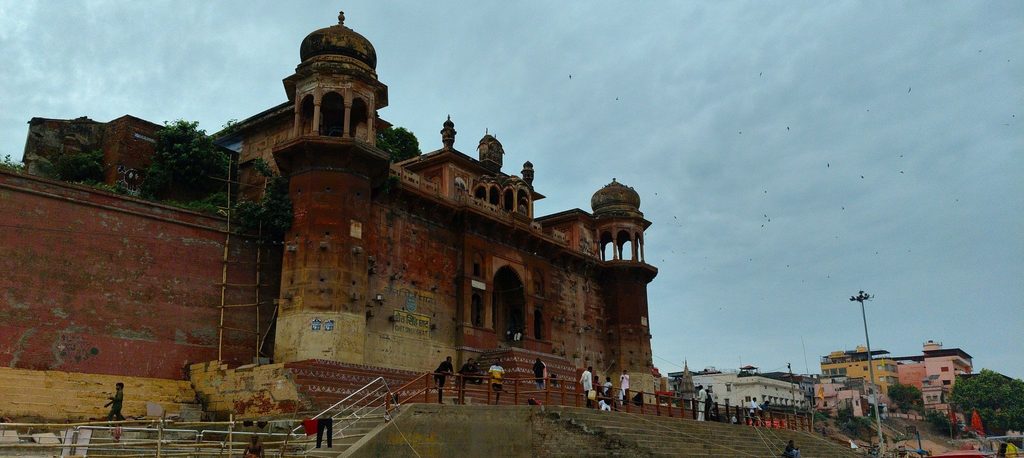
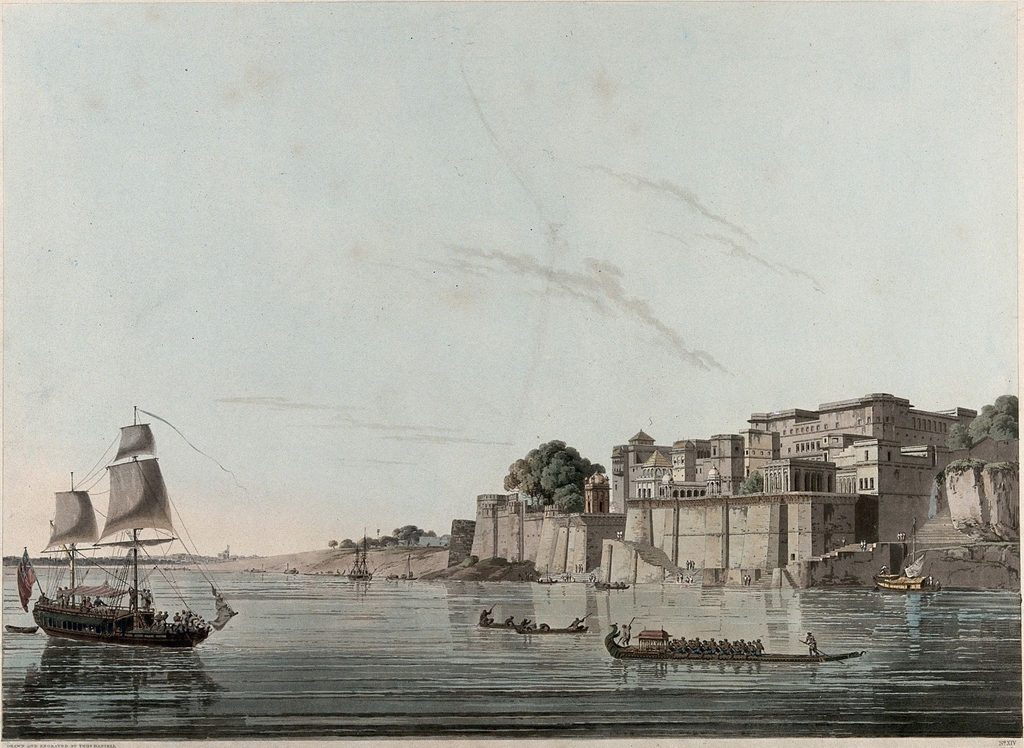
As you walk along the stone steps of the Varanasi Ghats, your eyes are drawn to a grand, fortress-like red structure rising directly from the waters of the Ganges—today known as Chait Singh Ghat.
Following the death of his father, Raja Balwant Singh, Raja Chait Singh (or Chet Singh) assumed the throne of Benares in 1770. His accession was formalised through financial negotiations involving Governor-General Warren Hastings and Nawab Asaf-ud-Daula of Awadh. Official dispatches preserved in the India Office Records (such as those from British Resident Fowke) record the intricate court ceremonies, khelat honours, and oaths sworn during Chait Singh’s formal installation. Under the Treaty of Allahabad (1765), the East India Company had secured the Diwani (revenue-collecting rights) over Bengal, Bihar, and Odisha, placing regional rulers under immense fiscal strain.
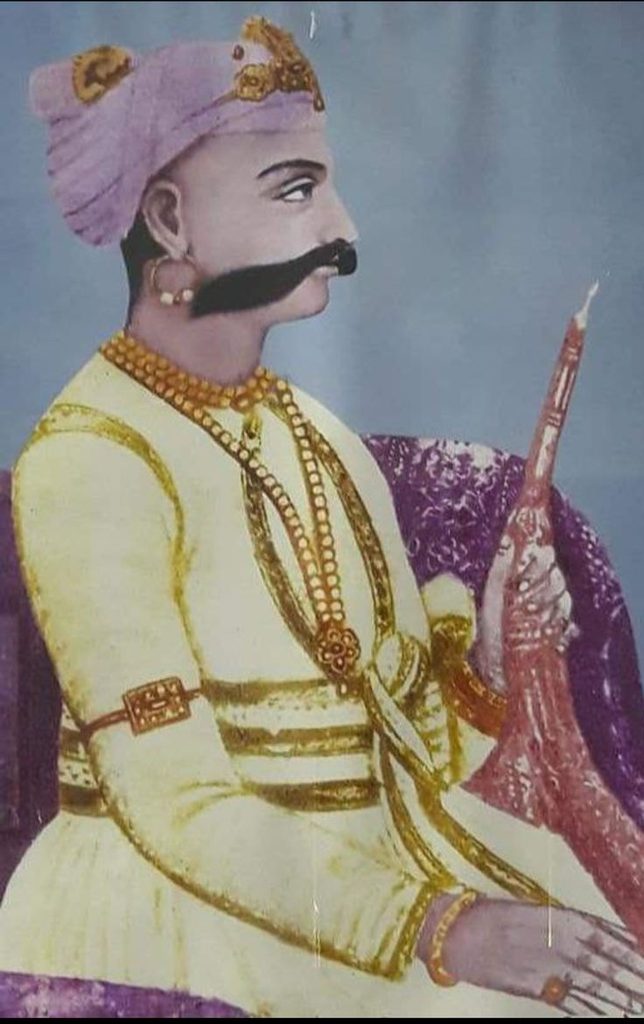
By the late 1770s, as the British faced escalating military costs against Hyder Ali of Mysore and French forces, Warren Hastings demanded an extraordinary war subsidy of 5 lakh rupees and 2,000 cavalry contingents from Chait Singh. When the Raja could only provide a partial sum on short notice, an enraged Hastings imposed a staggering fine of 50 lakh rupees. In June 1781, Hastings personally arrived in Varanasi and, on 16 August 1781, dispatched his Resident and sepoys to place Chait Singh under arrest inside his Shivala Ghat palace.
Hastings severely underestimated both the Raja and the fierce loyalty of the people of Kashi. By a fatal tactical error, the British sepoys surrounding the palace had arrived without live ammunition.
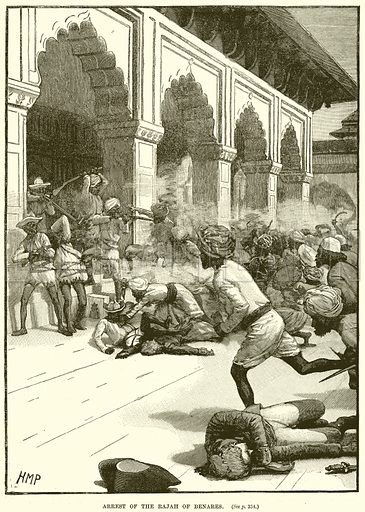
Hearing of their ruler’s arrest, a massive armed force crossed the river from Ramnagar Fort, while thousands of armed citizens of Varanasi swarmed the narrow alleys leading to the palace. A fierce battle erupted inside and outside the red fortress. Over 200 British sepoys and key officers—including Lieutenant J. Stalker (Resident’s bodyguard), Lieutenant Arch Scott (1st Battalion Sepoys), and Lieutenant Jer Symes (2nd Battalion Sepoys)—were cut down.
Panic struck the British camp. Terrified for his life, Warren Hastings fled Varanasi under cover of night, taking refuge in Chunar Fort across the river. During this crisis, Hastings wrote anxious dispatches to his “beloved Marian” (his wife staying at Bhagalpur), warning her that postal communications (dak) had been entirely severed by insurgents and advising her to move to the safety of Murshidabad or Calcutta because she was not safe in Bhagalpur. Hastings’s humiliating flight gave birth to a famous folk couplet that still echoes along the ghats today:
घोड़े पे हौदा, हाथी पे जीन, ऐसे भागा वॉरेन हेस्टिंग्स!
(“Howdah on horse, saddle on elephant, Warren Hastings fled from Kashi!”)
As Revenue Chief Ross at Patna and Deputy Collector J. Reginald Hand later documented, Chait Singh’s revolt was not an isolated event but a major political movement that ignited anti-British insurrections across Eastern Uttar Pradesh and Bihar.
Principal among Chait Singh’s allies was Maharaja Fateh Bahadur Shahi of Husseypur (Saran district, Bihar), a Bhumihar chieftain who had been waging a guerrilla war against British revenue collectors since 1767. Bound by kinship and political alliance, Fateh Shahi and Chait Singh coordinated operations across Bihar and Purvanchal. In October 1781, Fateh Shahi raised an army of 12,000 men at Munjoora, capturing the Company’s military station at Baragaon.
Across Bihar and Purvanchal, refractory zamindars joined the conflagration: Pitamber Singh of the Tekari Raj, Raza Quli Khan (Sasaram), Narain Singh (Zamindar of Siris and Kutumba, Aurangabad), Raja Akbar (Iqbal) Ali Khan of Narhat and Samai (Nawada), Jugal Kishore of Bettiah, and Jagannath Deo of Tappa Chandauli (Varanasi). On the other hand, British officer Colonel Hannay reported from Faizabad (present-day Ayodhya) on 18 September, 1781, that Sheikh Chaan had marched to Varanasi with 1,000 horse and foot raised with the support of Jowar Ali Khan and Bahar Ali Khan (the chief eunuchs of the Begums of Awadh).
Though Major Popham eventually arrived with heavy British reinforcements in November 1781 to retake Varanasi, Chait Singh managed to escape. He found asylum in Gwalior under the Maratha statesman Mahadaji Shinde, living out his remaining years in honourable exile until he died in 1810. Today, near Shivala Ghat, a weathered stone tablet erected near the British-style stairs preserves the names of Lieutenants Stalker, Scott, and Symes who fell on that fateful August day.
Act II: The Massacre of Benares (1799)
Eighteen years after Hastings’ flight, Varanasi became the backdrop for another explosive uprising—this time led by an eighteen-year-old deposed ruler, Mirza Wazir Ali Khan.
In September 1797, following the death of his adoptive father Nawab Asaf-ud-Daula, young Wazir Ali ascended the throne of Awadh with British assent. However, his fierce independence, dismissal of pro-British ministers, and refusal to submit to Company dictates alarmed Governor-General Sir John Shore. After just four months on the throne, Wazir Ali was deposed in favour of his uncle, Saadat Ali Khan II, who accepted the restrictive Subsidiary Alliance system.
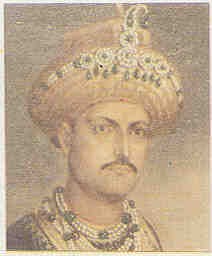
Wazir Ali was exiled under house arrest to Varanasi (Ramnagar) on a pension. Chafing under British surveillance, his breaking point came in early January 1799 when the East India Company ordered him to be permanently relocated further away to Kolkata. Refusing to be banished deeper into Company territory, Wazir Ali secretly assembled a loyal cadre of 200 fighters led by Izzat Ali and Waris Ali.
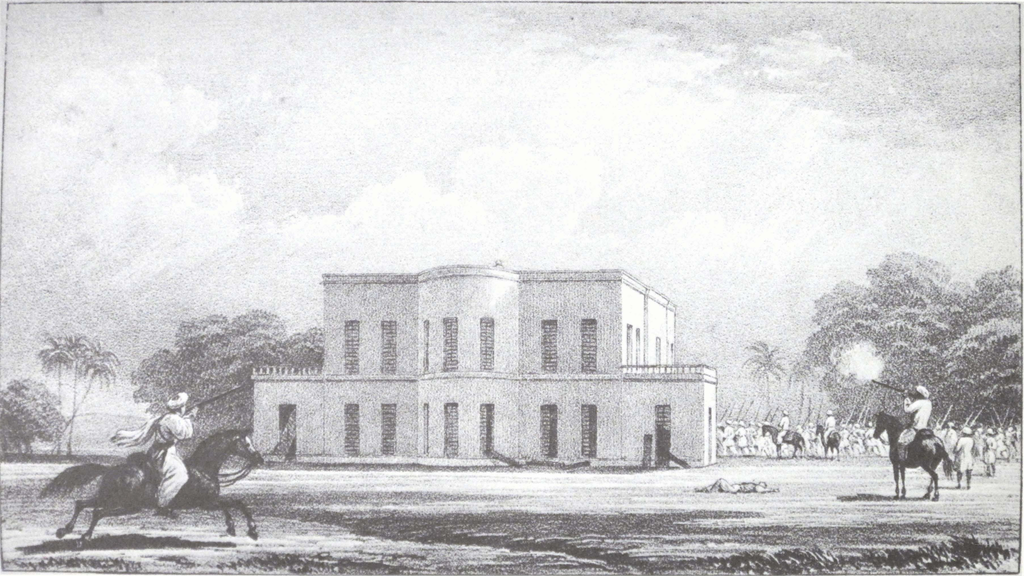
On the morning of 14 January 1799, Wazir Ali requested a formal meeting with the British Political Resident, George Frederick Cherry, at his residence—the Mint House in Nadesar (which later became the now-demolished Taksal Talkies). Wazir Ali arrived with his retainers under the guise of paying a farewell courtesy call.
During conversation inside the house, Wazir Ali passionately protested his forced removal to Calcutta. When Cherry dismissed his grievances, Wazir Ali suddenly leapt up and struck Cherry down. His attendants joined the assault, killing Cherry, Captain Conway, Robert Graham, Richard Evans, and three other British officials.
Flushed with blood, Wazir Ali’s force rode straight to the nearby residence of the Benares Magistrate, Samuel Davis, in Nadesar. (Samuel Davis was an accomplished artist and former Bengal civilian who had accompanied Samuel Turner’s 1783 diplomatic mission to Bhutan). Warned just in time, Davis rushed his family to the top of a narrow spiral staircase leading to the roof, holding off Wazir Ali’s men with a single Indian pike (spear) until cavalry under General Erskine arrived to disperse the insurgents.
Wazir Ali escaped toward the Rajputana desert, finding temporary refuge with Maharaja Pratap Singh of Jaipur. He was eventually extradited under the condition that his life be spared, and spent his remaining years locked inside Fort William in Calcutta until he died in 1817.
The assassination of Cherry sent shockwaves through the Company’s intelligence network. In its aftermath, Company intelligence officer Captain David Thomas Richardson (an orientalist and Persian scholar of the 17th Native Infantry) departed India for Europe in 1799 alongside the Shia scholar Mirza Abu Taleb Khan (a close confidant of Cherry), who was dispatched to Europe to keep him safe and build diplomatic channels.
To this day, inside the quiet enclosure of St. Mary’s Christian Cemetery on Makbool Alam Road in Varanasi, stand the monuments erected for Cherry and his fallen comrades. The inscription explicitly names Wazir Ali as their killer—a detail local Banaras residents still point to with grim pride, celebrating a rebel whose enemy was forced to etch his name on their own officer’s grave.
Act III: The Quiet Exodus – The Girmitiyas in the Indian Ocean
By the 1830s and 1840s, the nature of British rule had fundamentally transformed. The era of royal armies and grand rebellions was crushed, replaced by the systematic economic mechanics of the colonial state. Through land-revenue policies like the Permanent Settlement, exorbitant taxation, and recurring famines, the traditional agrarian fabric of eastern Uttar Pradesh and western Bihar (Saran, Gorakhpur, Benares, Shahabad) was dismantled. The peasant-soldiers who had once carried swords for Chait Singh and Fateh Shahi were gradually reduced to landlessness, economic debt, and hereditary labour servitude (kamiauti).
When slavery was abolished across the British Empire in 1833, colonial European planters required a vast, cheap labour force for sugarcane plantations in Mauritius, Demerara (Guyana), Trinidad, Fiji, and Suriname. They turned their gaze toward the distressed agrarian districts of Uttar Pradesh and Bihar.
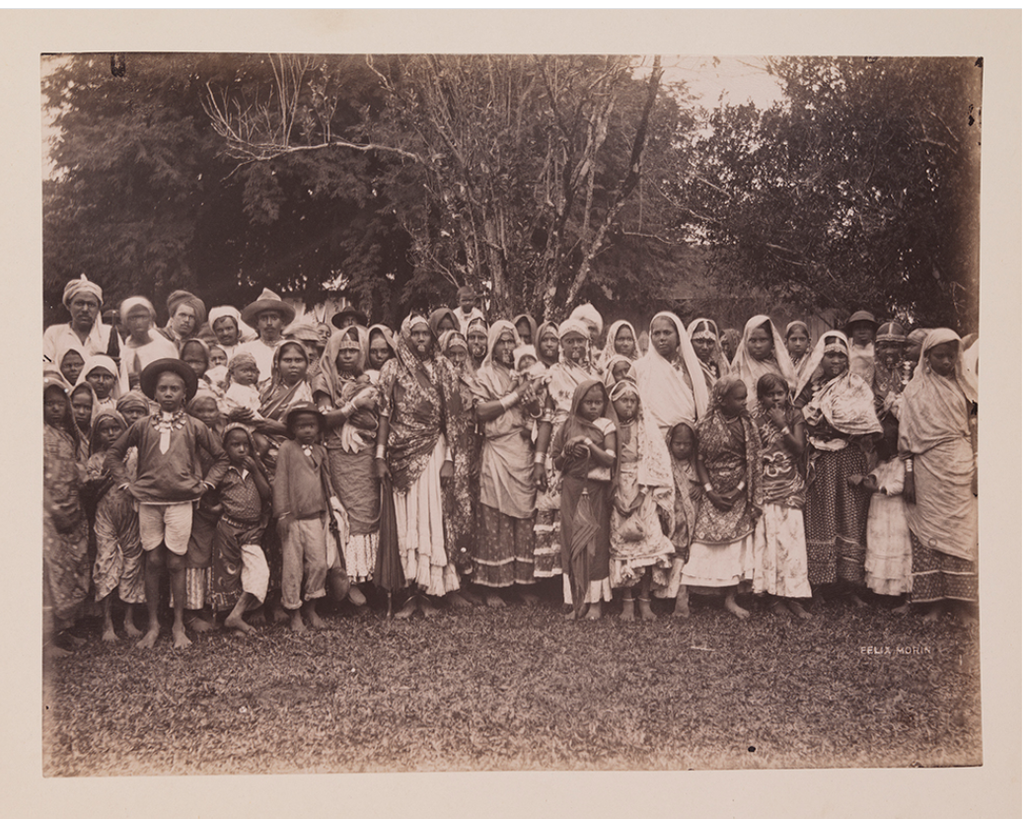
In this third phase, by the late 1830s, Varanasi shifted from an urban battleground to an emotional and spiritual threshold connecting the Ganges to the wider Indian Ocean. Recruited by Arkatis (labour agents/ recruiters), thousands of indentured labourers (Girmitiyas, derived from “Agreement”) gathered along the ghats of Varanasi before being transported downriver to Calcutta’s emigration depots (such as the present-day Suriname Ghat and the Indenture Memorial, both in Kolkata). On the sacred riverbank, they took a final bath, filled small brass amulets with holy Ganges soil, and bade farewell to their motherland.
This transoceanic journey forged an enduring cultural bridge between Varanasi and distant island nations. In her study Banaras in the Indian Ocean (2012), historian Srilata Ravi demonstrates how the memory and sacred geography of Banaras were recreated across the sea. In Hindu-majority Mauritius, indentured workers established Ganga Talao (Grand Bassin)—a sacred crater lake with ghats and Shiva temples designed as an iconic replica of the Ganges and the pilgrimage of Kashi.
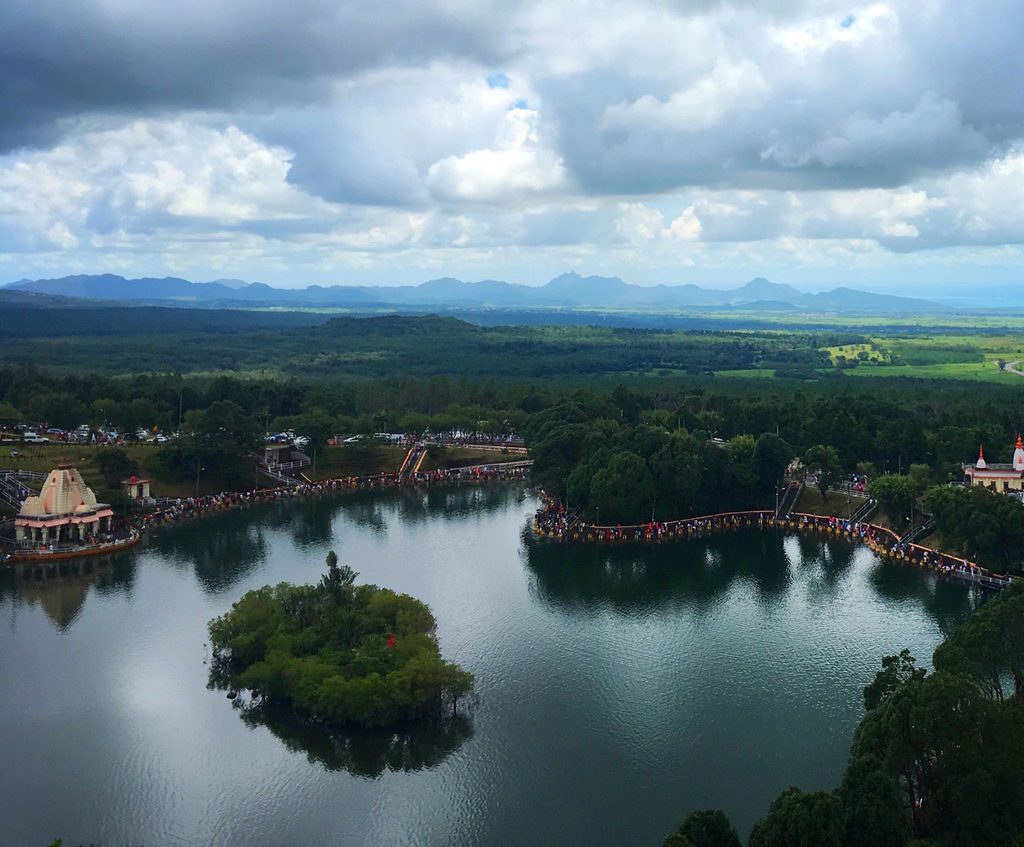
This deep link is vividly captured in modern Indo-Mauritian literature. Mauritian author Barlen Pyamootoo—whose own grandmother migrated directly from Banaras to Mauritius as an indentured sugar worker in the 19th century—immortalised this connection in his novel Bénarès (1999), his travelogue Le tour de Babylone (2002), and his autobiographical work Salogi’s (2008). A real village in southern Mauritius was named Bénarès, where the tall chimney of an abandoned sugar mill still stands as a silent monument to the plantation era.
The descendants of the men who had once chased Warren Hastings from Shivala Ghat carried no weapons across the Kalapani. Instead, they carried their Bhojpuri dialect, their folk songs, and the Ramcharitmanas, building vibrant diaspora communities across the globe.
Conclusion: The Ganges Remembers
Varanasi’s true history is a continuum of Indian resilience. From the royal swords that clashed at Shivala Ghat in 1781 to the desperate pistols fired at Mint House in 1799, and finally to the tearful departures of the Girmitiyas from its shores, the city served as a beating heart of resistance against foreign domination.
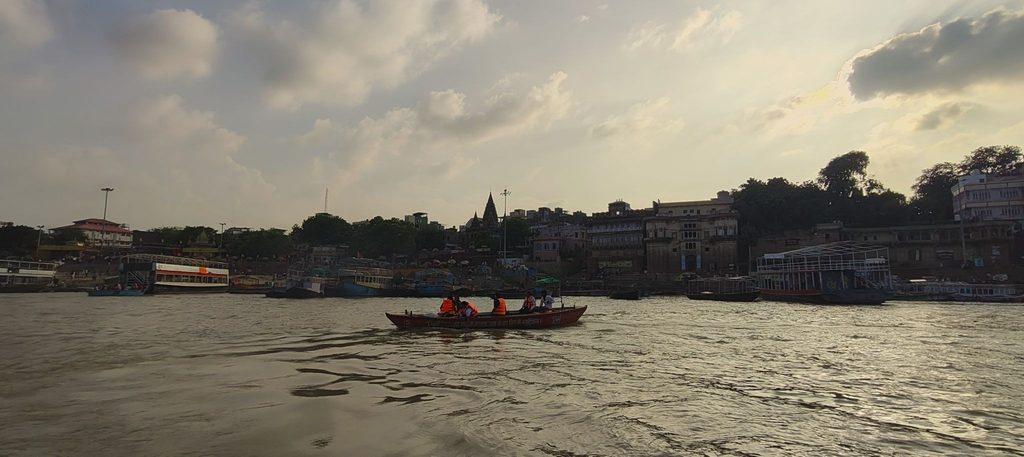
This tradition of rebellion directly fed into the 1824 and 1857 revolts—notably through Bindee Tewary and Mangal Pandey, who were from nearby areas—and later inspired early 20th-century Ghadr revolutionaries like Sachindra Nath Sanyal and Abani Mukherji. The next time you walk past the red walls of Chait Singh Fort or the shaded graves on Makbool Alam Road or even walk along the Ghats, listen closely: beneath the ringing of temple bells, Kashi is still telling the story of those who refused to bow.
Cover Image: Yash Mishra (Author)
References
Amar Ujala. (2016, August 10). 1857 ki kranti ke 58 saal pehle angrezon ke khilaf hui thi Banaras mein bagawat [War against British flamed 58 years ahead of the 1857 revolt in Varanasi]. Amar Ujala Hindi News Live.
Ansari, T. H. (2019). Mughal administration and the zamindars of Bihar. Routledge / Taylor & Francis.
Aris, M. (1982). Views of medieval Bhutan: The diary and drawings of Samuel Davis, 1783. Serindia Publications / Smithsonian Institution Press.
Chakravarty, S. (2020, August 15). Independence Day: Kashi ne ladi thi 1781 mein aazadi ki jang, jajba dekh angrej hue the dang [Independence Day: Kashi fought the 1781 war of independence]. Dainik Jagran.
Chandra, S. (2013, January 19). Neglected monument slipping into oblivion. The Times of India.
Choudhury, M. L. R. (1986). The revolt of Raja Chait Singh of Banaras. Proceedings of the Indian History Congress.
Davis, J. F. (1871). Vizier Ali Khan; or, The massacre of Benares: A chapter in British Indian history. Spottiswoode & Co.
Hand, J. R. (1894). Early English administration of Bihar (1781–85). Bengal Secretariat Press.
Hoey, W. (Trans.). (1885). History of Asafud Daulah, Nawab Wazir of Oudh (Translation of Abu Talib’s Tafzihu’l Ghafilin). North-Western Provinces and Oudh Government Press.
Maharatna, P. (2007). Explaining Chait Singh’s revolt in Bihar (1781): The role of refractory Bihar zamindars. Proceedings of the Indian History Congress, 68, 740–743. https://www.jstor.org/stable/44147866
Markovits, C. (Ed.). (2004). A history of modern India, 1480–1950. Anthem Press.
Paperclip, The. (2026). Robinhood of Kathiawar and other extraordinary stories from India’s freedom movement. HarperCollins India.
Prakash, G. (1990). Bonded histories: Genealogies of labour servitude in colonial India. Cambridge University Press.
Ravi, S. (2012). Banaras in the Indian Ocean: Circulating, connecting and creolising island stories. PORTAL Journal of Multidisciplinary International Studies, 9(1), 1–24.
Saha, D. N. (1978). The revolt of Raja Chait Singh and its repercussions on Oudh and Bihar. Proceedings of the Indian History Congress, 39(2), 740–744.
Shukla, P. K. (1996). The zamindars of North Bihar during the early British rule (1765–1793). Proceedings of the Indian History Congress, 57, 506–514.
Singh, B. S. (1971). Raja Chait Singh of Benares and Warren Hastings. Modern Asian Studies, 5(1), 35–59.
Singh, H. (1991). Raja Nahar Singh of Ballabgarh and the Revolt of 1857. Proceedings of the Indian History Congress, 52, 587–597.
Tuck, P. J. N. (Ed.). (1998). Warfare, expansion and resistance. Routledge.
Verma, N. P. (2005). Repercussions in Bihar of the rebellion of Chait Singh of Banaras. Proceedings of the Indian History Congress, 66, 845–851.
Willasey-Wilsey, T. (2014). Of intelligence, an assassination, East Indiamen and the Great Hurricane of 1808. The Victorian Web.
Yang, A. A. (1989). The Limited Raj: Agrarian relations in colonial India, Saran District, 1793–1920. University of California Press.
Yang, A. A. (1998). Bazaar India: Markets, society, and the colonial state in Bihar. University of California Press.
Follow SouthAsianDesk on X, Instagram and Facebook for insights on business and current affairs from across South Asia.