Can Bangladesh secure trade deals to cushion its LDC graduation?
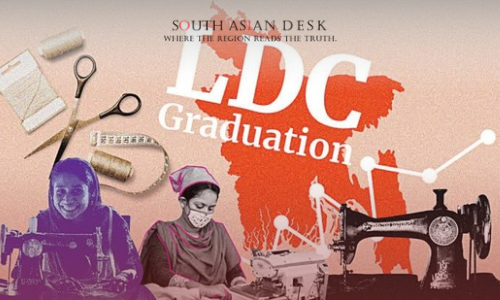
Bangladesh export panel for trade negotiations 2025 will spearhead talks with global partners to secure trade deals before the country’s LDC graduation in November 2026, aiming to preserve economic stability.
Bangladesh’s transition from least developed country (LDC) status is a pivotal moment for South Asia, where its export-driven economy, particularly in garments, influences regional trade dynamics. The Bangladesh export panel trade negotiations 2025 will shape the nation’s ability to maintain market access, impacting jobs and economic growth across the region.
Formation of Expert Panel for Trade Talks
On Sunday, September 7, 2025, Bangladesh announced plans to form an expert panel to lead Bangladesh export panel trade negotiations 2025, as the country prepares to graduate from LDC status in November 2026. The panel, pending approval, will negotiate free trade agreements (FTAs), preferential trade agreements (PTAs), comprehensive economic partnership agreements (CEPAs), and economic partnership agreements (EPAs) to retain preferential trade benefits post-graduation. The initiative was unveiled at an event titled “Building National Capabilities in Trade Negotiations: Reflections & Way Forward” at the InterContinental Dhaka hotel.
According to Commerce Secretary Mahbubur Rahman, “We are trying to form a pool of resources for negotiations to sign the trade agreements.” The panel will include experts from ministries, agencies, and academia to navigate complex global trade landscapes.
Strategic Importance of Trade Negotiations
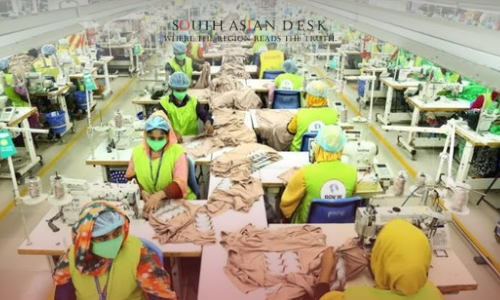
The Bangladesh export panel trade negotiations 2025 are critical as the country faces the loss of duty-free, quota-free access to major markets like the European Union (EU) and the United Kingdom (UK) after LDC graduation. Experts estimate that without new trade deals, exports could drop by USD 7 billion annually, a 14% decline, severely impacting the readymade garments and footwear sectors, which account for 90% of Bangladesh’s exports.
Commerce Adviser Sk. Bashir Uddin stated, “By strengthening policy frameworks and institutional support, the government aims to ensure that this pool evolves as a dynamic force, fully equipped to navigate the complexities of international trade.” The panel’s formation aligns with Bangladesh’s Regional Trade Agreement Policy (RTA) 2022, which prioritises securing market access and diversifying trade partners.
Ongoing and Upcoming Trade Talks
Bangladesh is actively pursuing trade agreements to mitigate the economic fallout of LDC graduation. Negotiations for an EPA with Japan are in their final stages in Tokyo, with a potential signing by December 2025, marking Bangladesh’s first comprehensive trade deal. Talks with South Korea began in Seoul in November 2024, and discussions with Singapore are set to commence soon. According to the Ministry of Commerce, these agreements aim to secure favourable terms for Bangladesh’s exports, particularly in textiles and pharmaceuticals.
The country has conducted 26 feasibility studies for PTAs, FTAs, CEPAs, and EPAs with major trading partners, including the United States, India, and China. However, progress on most talks has stalled since the political transition in August 2024. Economists and business leaders cite rapid geopolitical shifts and reluctance among partner countries—many perceiving elevated risk or political uncertainty—as key reasons for the slowdown. Even joint studies completed with countries like India, China, and Japan have not led to formal negotiations.
Challenges and Concerns
Bangladesh’s export basket, dominated by garments, is narrow, posing challenges for negotiators. Chief Adviser’s Special Envoy on International Affairs Lutfey Siddiqi noted, “Bangladesh’s export basket is very narrow, and negotiators will face many difficulties with different countries.” The country’s economic vulnerabilities, including a 40% currency devaluation, high interest rates, and a challenging investment climate, have prompted business leaders to request a six-year deferral of LDC graduation to 2032.
The EU, a key market, may impose higher tariffs post-graduation, threatening USD 7 billion in exports. The Bangladesh export panel trade negotiations 2025 must address these risks by securing alternative trade routes and diversifying markets to reduce reliance on the EU and UK.
International Support and Commitments
The United Kingdom has pledged continued duty-free market access for Bangladeshi goods post-LDC graduation. British High Commissioner Sarah Cooke stated, “The UK will continue extending duty-free market access to Bangladeshi goods and is interested in sharing expertise on trade negotiations.” The United Nations Development Programme (UNDP), through its Transformative Economic Policy Programme (TEPP), is supporting the panel’s capacity-building efforts, funded by the UK’s Foreign, Commonwealth and Development Office (FCDO).
Background: LDC Graduation Context
Bangladesh met the LDC graduation criteria in 2021, excelling in per capita income, human asset index, and economic vulnerability index. However, the transition, set for November 2026, will end preferential trade benefits under schemes like the EU’s Everything but Arms (EBA). The Bangladesh export panel trade negotiations 2025 aim to secure bilateral and regional agreements to offset these losses, drawing lessons from countries like Vietnam, which successfully used FTAs to boost exports post-LDC status.
What’s Next for Bangladesh’s Trade Strategy?
The Bangladesh export panel trade negotiations 2025 will be pivotal in shaping the country’s economic future. By securing timely trade deals, Bangladesh aims to protect its USD 55 billion export industry, preserve jobs, and ensure a smooth transition from LDC status, fostering resilience in a competitive global market.
Published in SouthAsianDesk, September 8th, 2025
Follow SouthAsianDesk on X, Instagram, and Facebook for insights on business and current affairs from across South Asia.