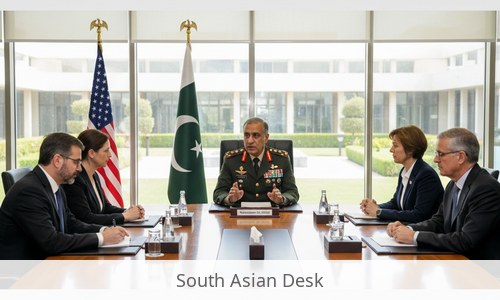
The US Afghanistan War Commission met with Pakistan’s Army Chief, Field Marshal Asim Munir, on September 29, 2026, in Rawalpindi to discuss Pakistan’s role in the Afghanistan conflict. This meeting, part of the commission’s broader review of the US’s two-decade engagement in Afghanistan, focused on military, diplomatic, intelligence, and foreign assistance aspects of the conflict. The development underscores ongoing scrutiny of Pakistan’s influence in the region and its implications for US-Pakistan relations.
US Afghanistan War Commission: Implications for US-Pakistan Relations
The commission, co-chaired by Shamila N. Chaudhary and Dr. Colin F. Jackson, has been examining the full scope of US involvement in Afghanistan. Its findings could shape future US policy toward Pakistan, particularly regarding security cooperation and regional stability. Historical tensions between the two nations—rooted in divergent strategic interests—have often complicated bilateral ties, especially in the context of Afghanistan.
Pakistani officials have not yet publicly commented on the commission’s focus, but the meeting signals a renewed US interest in understanding Islamabad’s role in the conflict. The commission’s review may also influence how the US approaches future engagements with Pakistan, particularly in light of shifting geopolitical dynamics in South Asia.
Stakeholder Perspectives
Pakistani military officials have emphasized the country’s longstanding commitment to regional stability, though they have not provided detailed responses to the commission’s inquiries. Public opinion in Pakistan remains divided on the US’s role in Afghanistan, with some viewing the conflict as a drain on regional resources and others acknowledging the need for continued cooperation on counterterrorism.
Within Pakistan’s political landscape, differing factions have varying views on the commission’s findings. Some see the meeting as an opportunity to clarify misunderstandings, while others caution against perceived US overreach in regional affairs. The commission’s conclusions could thus have significant implications for both domestic and international policy discussions in Pakistan.
Historical Context of US-Pakistan Relations
The Asim Munir meeting highlights the complex interplay between military diplomacy and the Afghanistan conflict. Pakistan’s role in Afghanistan has long been a subject of debate, with its strategic interests often aligning with regional stability goals. The US-Pakistan relations, shaped by decades of cooperation and conflict, are now being reevaluated in light of the commission’s findings.
Historically, the US and Pakistan have maintained a multifaceted relationship, marked by both collaboration and friction. During the Soviet-Afghan War, Pakistan served as a critical ally, facilitating US aid to Afghan mujahideen. However, post-9/11 dynamics shifted, with Pakistan’s role in harboring Taliban elements and its nuclear capabilities becoming points of contention. The US Afghanistan War Commission’s current review seeks to dissect these historical layers to inform contemporary policy.
Pakistan’s Strategic Interests in Afghanistan
Pakistan’s involvement in Afghanistan is deeply intertwined with its national security and regional ambitions. The country has long viewed a stable Afghanistan as essential to its own security, particularly in preventing the spillover of instability into its western regions. This perspective has influenced Pakistan’s military and diplomatic strategies, including its support for various Afghan factions over the years.
The commission’s focus on Pakistan’s role in the Afghanistan conflict also touches on the country’s role in facilitating cross-border movements, including the Taliban’s resurgence. While Pakistan has consistently denied direct involvement in Taliban operations, the US has raised concerns about Islamabad’s influence over Afghan groups. This dynamic remains a key point of contention in US-Pakistan relations.
Implications for Regional Stability
The US Afghanistan War Commission’s engagement with Asim Munir underscores the importance of military diplomacy in addressing the Afghanistan conflict. By engaging directly with Pakistan’s leadership, the commission aims to bridge gaps in understanding and foster cooperation on shared security challenges.
Regional stability in South Asia hinges on the resolution of the Afghanistan conflict, with Pakistan’s role being pivotal. The commission’s findings may lead to renewed dialogue on counterterrorism, border security, and economic cooperation. However, the success of such efforts will depend on mutual trust and alignment of strategic interests between the US and Pakistan.
Future Policy Directions
As the US Afghanistan War Commission continues its review, its conclusions could pave the way for a more structured approach to US-Pakistan relations. This includes potential reforms in security cooperation frameworks, enhanced intelligence sharing, and joint efforts to stabilize Afghanistan.
The commission’s work also highlights the need for a comprehensive understanding of the Afghanistan conflict, including the role of non-state actors, regional dynamics, and the impact of external interventions. By addressing these factors, the commission aims to provide actionable insights for policymakers.
Follow SouthAsianDesk on X, Instagram and Facebook for insights on business and current affairs from across South Asia.