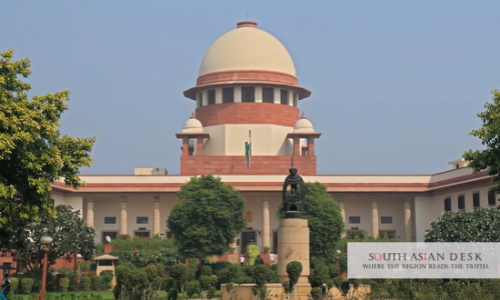
The parliamentary panel’s Supreme Court visit, planned for October 6, will not go ahead, after Opposition objections that the meeting would blur the line between the legislature and the judiciary. The Joint Parliamentary Committee (JPC) examining the One Nation, One Election Bills had listed the programme as a local study visit that would include an informal discussion with the Chief Justice of India and other sitting judges. Committee chairman P.P. Chaudhary said on October 1 that the visit had been shelved.
What the Committee Had Planned
The JPC is reviewing the Constitution (One Hundred and Twenty-Ninth Amendment) Bill, 2024, and the Union Territories Laws (Amendment) Bill, 2024, which were introduced in the Lok Sabha on December 17, 2024. Together, the One Nation, One Election Bills seek to enable simultaneous elections to the Lok Sabha and state legislative assemblies. The committee, headed by Mr. Chaudhary of the Bharatiya Janata Party, has since consulted jurists, economists and former judges, and its tenure has been extended more than once.
According to reports, the committee’s October 6 schedule described an informal discussion with the judges on simultaneous elections. The Supreme Court is also understood to have declined the proposal, although the Court has not been reported to have issued a public statement on the matter.
Why the Parliamentary Panel’s Supreme Court Visit Drew Objections
The objection was led by Rajya Sabha member and senior advocate Kapil Sibal, who described the proposed interaction as unconstitutional and contrary to the separation of powers. His central argument was practical as much as doctrinal. If the Bills are enacted, the amendment could be challenged before the same Supreme Court whose judges would have discussed the proposal with the committee beforehand. Mr. Sibal said he had never encountered, in his legal career, a parliamentary group meeting judges to discuss proposed legislation that could later come before them. At least one Opposition member of the committee is also understood to have written to the chairman seeking cancellation of the visit.
The concern touches a principle that is central to governance in India. The Supreme Court has treated the separation of powers, and the independence of the judiciary in particular, as part of the Constitution’s basic structure. Critics of the visit argued that even an informal exchange could create a perception that judges had been consulted on the policy merits of a measure they may later be asked to test against that structure.
The Case for Dialogue, and Existing Channels
Parliamentary committees routinely seek expert opinion, and the committee has not lacked judicial input. Former Chief Justices of India D.Y. Chandrachud and J.S. Khehar appeared before it in July 2025 and reportedly regarded simultaneous elections as compatible with the Constitution’s basic structure, while questioning certain provisions, particularly the proposed powers of the Election Commission. Former Chief Justice Ranjan Gogoi likewise suggested changes to the Bill, including a caution against giving the Election Commission unrestricted powers over the poll schedule.
That record explains the distinction at the heart of the dispute. Hearing retired judges in a formal committee sitting is an established practice. Meeting serving judges, who may adjudicate a challenge to the resulting law, is a different matter, and it is this difference that made the proposal contentious.
What the Episode Signals for Governance in India
The shelving of the visit leaves the committee’s work on the One Nation, One Election Bills unchanged in substance. Its task remains to examine the constitutional and practical questions raised by synchronising election cycles and to submit a report to Parliament. The episode, however, shows how closely the legislative process is now watched for any sign of encroachment on judicial independence. It also suggests that future consultations between Parliament and the judiciary on contested legislation are likely to be confined to formal and transparent settings.
Sources: LawChakra; The Federal; PTI via Deccan Chronicle; Business Standard; Tribune India; Press Trust of India.
Follow SouthAsianDesk on X, Instagram and Facebook for insights on business and current affairs from across South Asia.