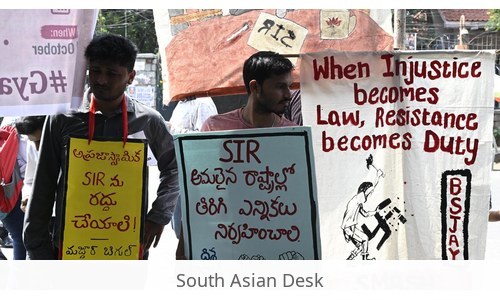
On October 2, 2026, Hyderabad protests intensified as demonstrators called for the resignation of Chief Election Commissioner Gyanesh Kumar and the scrapping of the Special Intensive Resistance (SIR) initiative. The protests, which began with a Hindi rendition of the Italian anti-resistance song Bella Ciao, have drawn attention to growing public dissent over electoral governance in India. Protesters have dubbed the SIR initiative as ‘Special Intensive Resistance,’ framing it as a tool for suppressing voter participation and undermining electoral integrity.
Hyderabad protests: Background of the Protests
The protests are part of a broader movement against perceived electoral mismanagement in India, reflecting tensions between the government and opposition parties. More than 700 people were arrested during protests at Jantar Mantar in Delhi demanding Gyanesh Kumar’s resignation, according to reports from The Hindu. The Cockroach Janata Party (CJP) launched the protest on October 2, 2026, mobilizing public dissent against the Chief Election Commissioner and the SIR initiative. The CJP has positioned itself as a key organizer of the demonstrations, leveraging public frustration with electoral reforms and governance practices. The protests in Hyderabad align with similar actions across the country, highlighting a coordinated effort to challenge the electoral framework.
The SIR initiative has been criticized for its perceived role in limiting voter engagement and transparency in the electoral process. Many protesters argue that such measures disproportionately affect marginalized communities, thereby exacerbating existing inequalities in political representation. This sentiment has fueled the protests, as demonstrators demand not only the resignation of Gyanesh Kumar but also a comprehensive review of the electoral policies that govern voter participation.
Political Reactions and Mobilization
The CJP’s role in organizing the protests underscores the political dimension of the unrest. Opposition parties have leveraged public discontent to challenge the electoral governance framework, framing the SIR initiative as a tool for suppressing voter participation. While the government has not publicly addressed the protests, the scale of arrests indicates a firm stance against dissent. Analysts note that such mobilization reflects broader dissatisfaction with electoral reforms and their implementation. The CJP has accused the Election Commission of favoring certain political entities through the SIR initiative, a claim that has resonated with segments of the population critical of electoral transparency.
The protests have also sparked discussions within political circles about the future of electoral governance in India. Some analysts suggest that the unrest could lead to significant changes in how electoral policies are formulated and implemented, particularly if the demands of the protesters gain traction among the broader public. The opposition parties are expected to continue to capitalize on this unrest, potentially leading to a more organized and sustained challenge to the current electoral framework.
Historical Context of Electoral Protests in India
Electoral governance has long been a flashpoint for public protests in India. Previous instances of dissent include the 2011 protests against electoral malpractice and the 2019 demonstrations over voting irregularities. These historical precedents highlight a recurring theme: public scrutiny of electoral processes and demands for transparency. The current protests against Gyanesh Kumar and the SIR initiative align with this pattern, signaling a potential shift in how electoral governance is perceived and contested.
The 2011 protests, which focused on allegations of vote rigging, and the 2019 demonstrations, which highlighted concerns over voter registration discrepancies, demonstrate a consistent pattern of public engagement with electoral issues. The current movement appears to be a continuation of this legacy, with protesters emphasizing the need for institutional accountability and reform. As the protests unfold, they may contribute to a larger dialogue about the future of democracy in India and the mechanisms that ensure fair and transparent elections.
Follow SouthAsianDesk on X, Instagram and Facebook for insights on business and current affairs from across South Asia.
This report focuses on Hyderabad protests and the verified developments surrounding it.
This report focuses on Hyderabad protests and the verified developments surrounding it.
Sources
- Protesters in Hyderabad demand CEC Gyanesh Kumar’s resignation, scrapping of SIR – thehindu.com
- More than 700 arrested at Jantar Mantar during protest in India – english.onlinekhabar.com
Image: th-i.thgim.com