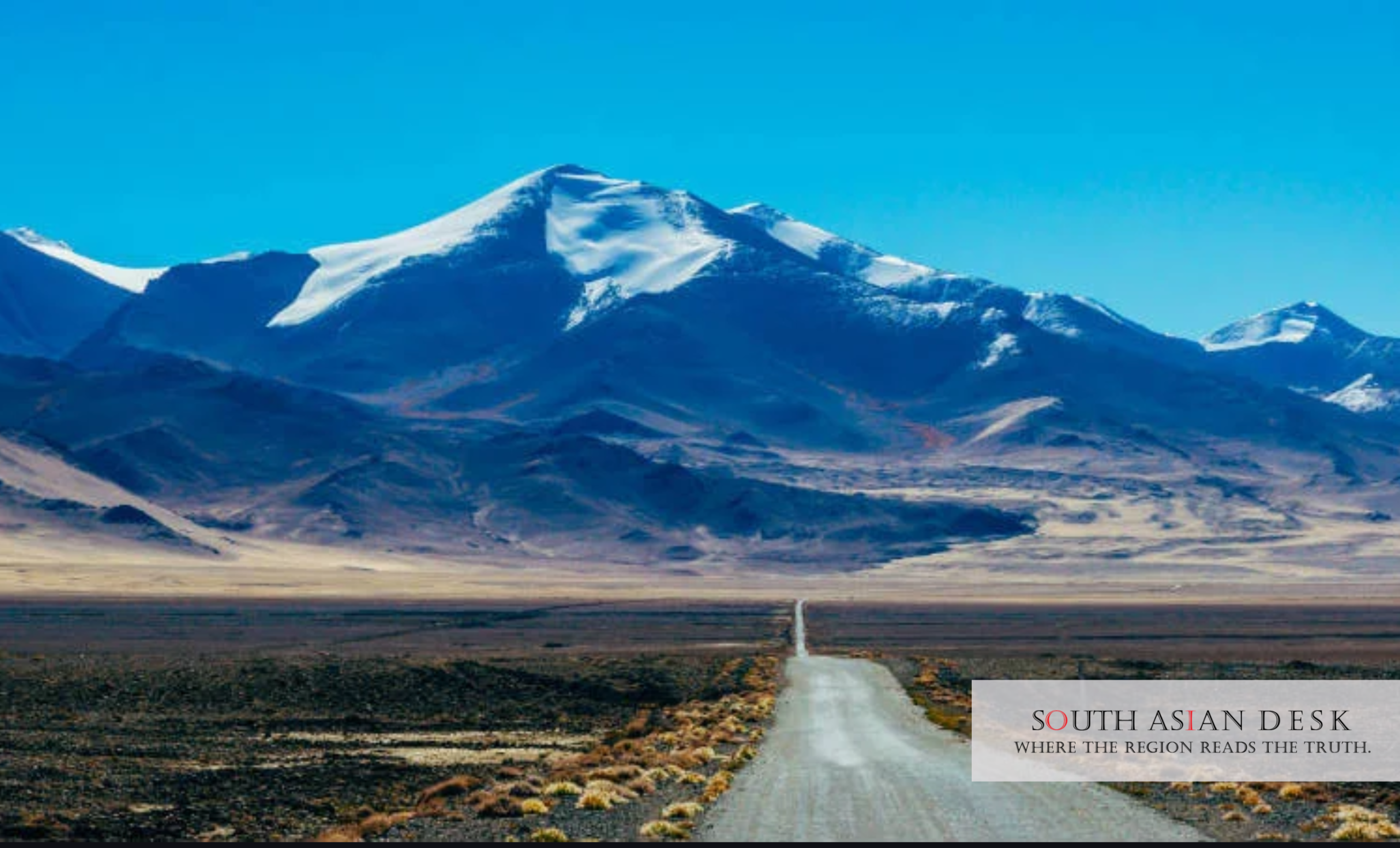
The Wakhan Road in Afghanistan was formally inaugurated on October 4, 2026, when the Taliban administration opened a 121-kilometre gravel road through the Wakhan Corridor in Badakhshan province. The route runs from Sarhad-e Broghil, in the Wakhan district, to the zero point on the Chinese border. Abdul Latif Mansour, the Minister of Rural Rehabilitation and Development, described the project at the inauguration ceremony as strategically, politically and economically important for the country.
What the Wakhan Road in Afghanistan Involves
According to the Ministry of Rural Rehabilitation and Development, the road was built in two phases at a total cost of 365 million afghanis, roughly $5.5 million, financed from the Taliban administration’s development budget. Construction began about two years ago, according to Tolo News. Mansour said the road includes 66 culverts, four major bridges and 3,100 metres of retaining walls. He also stated that no foreign engineers or advisers were involved and that all the engineers were Afghan. Khaama Press notes that the project predates the Taliban’s return to power in 2021.
The Geography of the Wakhan Corridor
The Wakhan Corridor is a narrow strip of Afghan territory that separates Tajikistan from Pakistan’s Gilgit-Baltistan region and shares a short border with China’s Xinjiang region. Its eastern end is the Wakhjir Pass, which stands at an elevation of 4,923 metres and is regarded as the only potentially navigable pass between Afghanistan and China. The new road ends at the zero point near that pass, linking the remote district to the wider Afghan road network.
Local Significance for Badakhshan Province
Officials at the ceremony framed the road primarily as a boost for one of the country’s most isolated areas. Rahmatullah Najib, the governor of Badakhshan, said that after 45 years of war the Afghan people were witnessing the completion of a major project in a remote part of the country. He also stated that security had been ensured across the province. Mawlawi Wajihuddin, the Wakhan district governor, said residents had never imagined that such a road would be built, and he asked the ministry to construct a further road from the Broghil border crossing to Ishkashim district. Officials said the new route would help resolve residents’ problems and strengthen the local economy of Badakhshan province.
Prospects for Afghanistan-China Trade
The administration has described the road as a potential route for expanding trade and transit links with China. Some regional outlets have suggested that it could reduce reliance on traditional trade corridors through Pakistan and Iran, although such assessments remain prospective. Hence the road’s commercial significance depends largely on factors beyond its construction.
In this regard, Khaama Press cautions that the inauguration does not by itself establish a fully operational commercial corridor. Analysts have noted that customs facilities and improved roads would be required for regular commercial traffic. Published accounts also indicate that the Wakhjir Pass had no official border crossing point as of 2025, and that Beijing has appeared reluctant to open the border because of security concerns. Previous Afghan governments had also repeatedly asked China to open the crossing. None of the reports reviewed for this article recorded a Chinese announcement opening the crossing to commercial traffic.
Regional Connectivity and the Road Ahead
For now, the achievement is chiefly one of access. The gravel surface and the absence of a formal crossing mean that the immediate effect on Afghanistan-China trade is likely to be limited, while the benefit to Wakhan’s residents is more tangible. Whether the route contributes to wider regional connectivity will depend on agreement with Chinese authorities, additional infrastructure at the border and continued investment in Badakhshan province. The Wakhan Road in Afghanistan has therefore established the physical link, and the next steps will determine whether it carries significant trade.
Follow SouthAsianDesk on X, Instagram and Facebook for insights on business and current affairs from across South Asia.
Sources
- Afghanistan Opens 121-Kilometer Wakhan Road to China Border – khaama.com
- Afghanistan inaugurates 121 km Wakhan road to China border – ariananews.af