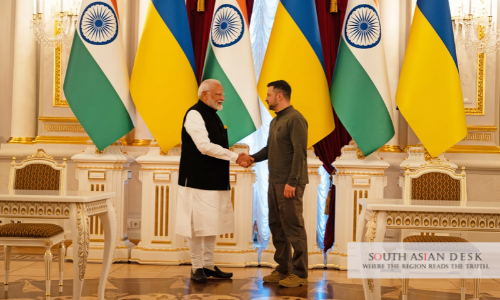
India-Russia-Ukraine grain agreements: India’s External Affairs Minister S. Jaishankar announced discussions with both Russia and Ukraine regarding agreements on grain supplies and maritime safety. The talks, initiated amid the ongoing Russia-Ukraine conflict, highlight India’s diplomatic efforts to address global food security challenges while maintaining its neutral stance in the geopolitical standoff.
India-Russia-Ukraine grain agreements: Implications for Regional Food Security
India’s engagement with both nations could have significant implications for regional food security, particularly for South Asian countries reliant on grain imports. By facilitating dialogue on grain supply chains, India aims to mitigate disruptions caused by the conflict, which has already affected global wheat and cereal markets. These discussions align with India’s broader economic interests, including stabilizing agricultural exports and reinforcing its role as a key player in international trade networks. The focus on regional food security underscores India’s commitment to addressing the cascading effects of the conflict on neighboring economies.
South Asian nations such as Pakistan, Bangladesh, and Nepal depend heavily on wheat and rice imports, with a significant portion sourced from Russia and Ukraine. The conflict has disrupted these supply chains, leading to rising prices and potential shortages. India’s mediation efforts could help restore stability in these markets, ensuring that critical food supplies reach vulnerable populations. Additionally, India’s own agricultural sector, which is a major exporter of pulses and spices, stands to benefit from a more predictable global trade environment.
India’s Strategic Positioning
Jaishankar emphasized the importance of building coalitions beyond traditional superpowers, specifically critiquing the U.S. and China as exclusivist powers. This approach reflects S. Jaishankar’s diplomacy, which seeks to balance India’s relationships with both Russia and Ukraine while advancing its strategic interests. The minister’s remarks also highlight the delicate nature of India Russia relations and India Ukraine relations, as India navigates its role as a mediator in the ongoing conflict. These maritime safety discussions are part of a broader effort to ensure the uninterrupted flow of grain exports through critical shipping lanes.
Jaishankar made these comments during an event at a German think-tank in Delhi, where he underscored the need for multilateral cooperation in resolving global crises. His emphasis on forging alliances beyond the U.S. and China aligns with India’s broader foreign policy goals of reducing dependency on any single power bloc. This strategy is particularly relevant as India seeks to maintain its economic ties with both Russia and Ukraine while avoiding entanglement in the broader geopolitical conflict.
The Role of Diplomacy in Global Trade
India’s involvement in India-Russia-Ukraine grain agreements is not merely symbolic but a strategic move to stabilize global trade networks. The agreements aim to address the logistical challenges posed by the conflict, such as blocked ports and disrupted supply chains. By engaging with both parties, India seeks to create a framework that ensures the safe passage of grain shipments through the Black Sea, a vital artery for global food trade. This initiative aligns with India’s long-standing emphasis on regional food security and its desire to act as a neutral arbiter in complex geopolitical scenarios.
The Black Sea’s strategic importance cannot be overstated. Russia’s Black Sea ports, including Odessa and Mariupol, have been critical for grain exports, but the conflict has rendered them inaccessible. India’s mediation could facilitate the reopening of these ports under international oversight, ensuring that grain shipments proceed without interruption. This would not only benefit South Asia but also contribute to global food security by stabilizing prices and preventing shortages in vulnerable regions.
Balancing Act in International Relations
The discussions also reflect India’s nuanced approach to international relations. While maintaining its non-aligned stance, India has cultivated strong ties with both Russia and Ukraine, recognizing the importance of S. Jaishankar’s diplomacy in fostering multilateral cooperation. This balancing act is crucial for India’s economic stability, as it relies heavily on grain imports and exports. The agreements could also serve as a model for resolving conflicts through dialogue rather than confrontation, reinforcing India’s role as a mediator in global affairs.
Russian President Vladimir Putin recently acknowledged Prime Minister Narendra Modi’s ‘good ideas’ for resolving the conflict, a gesture that underscores the growing influence of India’s diplomatic initiatives. This recognition highlights the potential for India to play a pivotal role in shaping the outcome of the Russia-Ukraine conflict, particularly in areas related to food security and trade.
Conclusion
India’s active participation in the India-Russia-Ukraine grain agreements signals its growing influence in global diplomacy. By addressing both grain supply and maritime safety, India aims to stabilize regional markets and reinforce its neutral stance. As the conflict continues, the outcomes of these discussions will be closely watched, with potential ripple effects on regional food security and international trade dynamics. The success of these agreements will depend on sustained dialogue and cooperation between all parties involved.
Published in SouthAsianDesk, 2023-10-05.
Follow SouthAsianDesk on X, Instagram and Facebook for insights on business and current affairs from across South Asia.
Sources
- India is discussing agreements on grains and maritime safety with Moscow and Kyiv: Jaishankar – thehindu.com
- India In Talks With Both Russia And Ukraine To End War: S Jaishankar – ndtv.com
Image: th-i.thgim.com