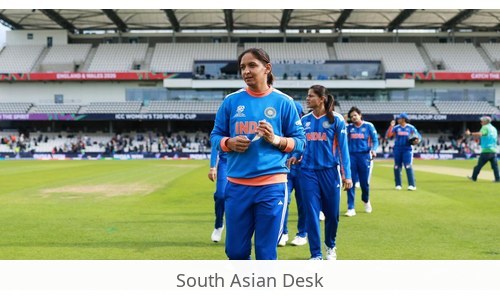
The Harmanpreet Kaur captaincy resignation has marked a pivotal moment in Indian women’s cricket as the 37-year-old veteran announced her decision to step down as captain of the Indian women’s cricket team after a decade of leadership. Kaur, who led the T20 side since 2016 and became all-format captain in 2023, captained India in 155 T20I matches, making her the longest-serving captain in both men’s and women’s cricket. Her tenure included leading the team in five Tests, 51 ODIs, and 155 T20Is, cementing her legacy as a trailblazer for women’s cricket captaincy.
Harmanpreet Kaur captaincy resignation: Impact of Kaur’s Leadership
Kaur’s leadership has been instrumental in raising the profile of the Indian women’s cricket team across the globe. During her tenure, the team achieved significant milestones, including victories in major tournaments and increased domestic participation. Her influence extended beyond the field, inspiring younger players and fostering a culture of resilience and excellence. Kaur’s approach to captaincy emphasized teamwork and strategic adaptability, which contributed to the team’s consistent performance in international competitions. Her achievements—including leading India to the 2022 Women’s T20 World Cup final and a historic Test series win in 2025—have left an indelible mark on shaping the future of women’s cricket.
A Legacy of Leadership and Milestones
Kaur’s tenure as captain coincided with a period of growth for Indian women’s cricket. Under her leadership, the team secured its first-ever Test series victory in 2025 against a top-ranked opponent, a feat that underscored her tactical acumen and ability to motivate her squad under pressure. Her leadership in the 2022 Women’s T20 World Cup final, where India narrowly missed the title, highlighted her composure in high-stakes scenarios. Kaur’s ability to balance aggression with calculated risk management became a hallmark of her captaincy, earning her respect from peers and fans alike. Additionally, her role in nurturing emerging talent, such as Smriti Mandhana and Shafali Verma, ensured a smooth transition of leadership and skill within the team.
Future of the Team
The Indian cricket board is now evaluating potential candidates to succeed Kaur as captain. Among the contenders are Smriti Mandhana, Shafali Verma, and Deepti Sharma, each with distinct leadership styles and experience. The transition could reshape the team’s dynamics, with new leadership potentially altering strategies for upcoming tournaments. Analysts suggest that the team’s performance in the 2027 Women’s Cricket World Cup will be a critical test for the new captain’s ability to maintain the high standards set by Kaur. This shift also raises questions about the future of women’s cricket in India, as the team seeks to build on Kaur’s legacy while adapting to evolving challenges.
Evaluating the Contenders
Smriti Mandhana, a dynamic opener with a strong batting record, brings a blend of aggression and consistency to the table. Her leadership potential is evident from her role as vice-captain in recent campaigns. Shafali Verma, known for her explosive batting and fielding, represents a younger generation of leaders who could infuse fresh energy into the team. Deepti Sharma, a seasoned all-rounder, offers a more balanced approach with her experience in both batting and bowling. The selection process will likely focus on identifying a leader who can unify the squad, maintain the team’s competitive edge, and navigate the pressures of global tournaments.
Conclusion
The Harmanpreet Kaur captaincy resignation marks a significant moment in Indian women’s cricket, reflecting both the achievements of her tenure and the evolving landscape of leadership in the sport. The team now faces a pivotal period as it prepares for future competitions, with the challenge of maintaining momentum while adapting to new leadership. Kaur’s contributions have not only elevated the Indian women’s cricket team but also inspired a generation of players to pursue excellence in women’s cricket captain roles, ensuring her legacy endures in the future of women’s cricket.
A New Chapter for Women’s Cricket in India
Kaur’s decision to step down comes at a time when women’s cricket in India is gaining unprecedented visibility. Her leadership laid the groundwork for a more structured approach to team management, player development, and international competitiveness. As the BCCI transitions to a new captain, the focus will remain on sustaining the momentum Kaur built while addressing emerging challenges, such as balancing domestic and international commitments and expanding grassroots participation. Her legacy will be measured not only by her on-field achievements but also by the institutional frameworks she helped establish for the long-term growth of the sport.
Follow SouthAsianDesk on X, Instagram and Facebook for insights on business and current affairs from across South Asia.
Sources
- Harmanpreet Kaur steps down as captain of India women’s team – thehindu.com
- Harmanpreet Kaur steps down as captain of India’s women’s cricket team – aljazeera.com
- Harmanpreet Kaur steps down as India captain – cricinfo.com
Image: th-i.thgim.com