India’s government has voiced concerns over a sudden US policy imposing a $100,000 fee on new H-1B visas, warning of potential family disruptions amid tight implementation timelines.
The Trump administration announced on Friday, September 19, 2025, a $100,000 payment requirement for new H-1B visa petitions, effective from Sunday, September 21, 2025, at 12:01 a.m. EDT, aiming to curb programme abuses and prioritise American workers; this US India H1B visa 2025 development has prompted swift reactions from New Delhi and Indian industry.
The US India H1B visa 2025 policy shift holds profound implications for South Asia, particularly India, which received 71 per cent of all approved H-1B visas in the previous fiscal year. This visa category is vital for the Indian information technology sector, enabling the deployment of skilled professionals to US firms and contributing billions to bilateral trade and remittances. Disruptions could exacerbate talent shortages, inflate operational costs for Indian outsourcing giants like Tata Consultancy Services and Infosys, and strain family reunifications, underscoring the interdependence of US innovation and South Asian expertise. As global tech races intensify, the H1B visa increase India impact may ripple through regional economies, potentially redirecting skilled migration towards Europe or domestic upskilling initiatives.
US India H1B Visa 2025: Policy Announcement and Details
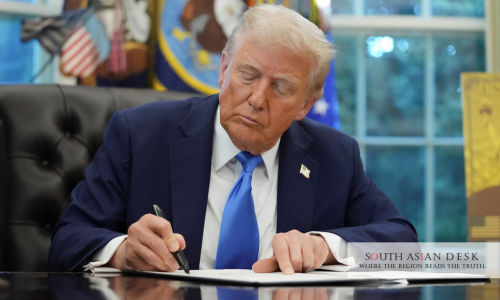
President Donald Trump signed a presidential proclamation on Friday, September 19, 2025, introducing the $100,000 fee as part of broader immigration reforms. The measure targets H-1B nonimmigrant visas, designed for foreign workers in specialty occupations such as engineering and computer programming, with an annual cap of 85,000 visas allocated via lottery.
Under the new rules, employers must submit proof of the $100,000 payment alongside petitions for aliens seeking entry from outside the United States. This fee applies exclusively to new applications and does not affect existing visa holders, renewals, or those already in the country, according to a White House clarification issued on Saturday, September 20, 2025. The administration justified the policy by citing abuses in the programme, including the displacement of US workers with lower-paid foreign labour and threats to national security through wage suppression and visa fraud.
US Commerce Secretary Howard Lutnick defended the initiative, stating that “all the big companies are on board” and emphasising the need to “train Americans” rather than import talent. The proclamation also directs the Departments of Labour and Homeland Security to revise prevailing wage levels and prioritise high-skilled, high-paid applicants, with rulemaking processes to follow.
Exceptions are possible on a case-by-case basis if the Secretary of Homeland Security deems the hiring in the national interest, though no specific criteria were outlined in the initial document. The policy expires in 12 months unless extended, aligning with the Trump administration’s pledge to “put American workers first.”
H1B Visa Increase India Impact: Reactions from New Delhi
India’s Ministry of External Affairs (MEA) responded promptly on Saturday, September 20, 2025, expressing hope that the “disruptions can be addressed suitably by the US authorities.” In an official statement, the MEA highlighted the humanitarian consequences, noting that the measure “is likely to have humanitarian consequences by way of the disruption caused for families.” The government is studying the full implications in consultation with Indian industry, which has provided initial analyses clarifying misconceptions about the H-1B programme.
The MEA underscored the mutual benefits of skilled talent mobility, stating that it “has contributed enormously to technology development, innovation, economic growth, competitiveness and wealth creation in the United States and India.” Officials anticipate consultations between industries in both nations and assessments by policymakers to safeguard people-to-people ties.
This US India H1B visa 2025 move arrives amid robust bilateral relations, yet it risks straining cooperation in critical sectors like semiconductors and artificial intelligence, where Indian professionals play a pivotal role.
Nasscom Warns of Operational Disruptions
The National Association of Software and Service Companies (Nasscom), India’s premier IT trade body, issued an initial statement on Saturday, September 20, 2025, labelling the one-day implementation timeline as a major concern. Nasscom described the abrupt change as creating “considerable uncertainty for businesses, professionals, and students across the world,” warning that it could trigger “ripple effects” on the US innovation ecosystem and global job markets.
The body noted that the additional costs would necessitate adjustments for companies, potentially halting ongoing projects and affecting thousands of Indian IT professionals. Nasscom advocated for “adequate transition periods” to allow organisations and individuals to plan effectively and minimise disruption, echoing broader industry apprehensions about the H1B visa increase India impact.
With Indian firms sponsoring a significant share of H-1B visas—top recipients including Tata Consultancy Services, Infosys, and Wipro—the policy could elevate expenses by hundreds of thousands of dollars per employee, prompting some to urge immediate repatriation of staff before the deadline.
Background
The H-1B programme, established in 1990, has long been a cornerstone of US-India talent exchange, facilitating the entry of over 300,000 Indian workers in the past decade. California hosts the highest concentration of H-1B employees, per US Citizenship and Immigration Services data, with the sector driving $200 billion in annual bilateral IT services trade. Previous Trump-era restrictions, such as heightened scrutiny in 2017-2019, led to rejection rates tripling for Indian applicants, underscoring recurring tensions in US India H1B visa 2025 dynamics.
What’s Next for US India H1B visa 2025
As the US India H1B visa 2025 fee takes effect today, legal challenges from tech lobbies like the US Chamber of Commerce are anticipated, alongside diplomatic dialogues to mitigate the H1B visa increase India impact. Indian firms may accelerate domestic hiring or explore alternatives like the UK’s Skilled Worker visa, while Washington refines enforcement guidelines, potentially reshaping global talent flows for years ahead.
Published in SouthAsianDesk, September 21st, 2025
Follow SouthAsianDesk on X, Instagram, and Facebook for insights on business and current affairs from across South Asia.