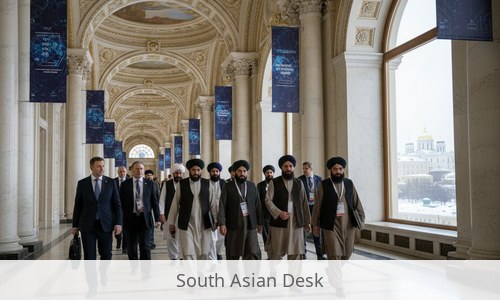
CSTO conference on Afghanistan: Moscow is set to host a significant conference focusing on security issues in Afghanistan and Central Asia on October 15–16, 2026. The event, part of broader Central Asia security talks, aims to address regional security cooperation amid escalating geopolitical tensions in Central Asia.
The Collective Security Treaty Organization (CSTO), a military alliance comprising Armenia, Belarus, Kazakhstan, Kyrgyzstan, Russia, and Tajikistan, has emphasized the need for coordinated strategies to counter transnational threats. This gathering follows a series of high-level dialogues between regional powers, including the Shanghai Cooperation Organization (SCO) and the Commonwealth of Independent States (CIS), to stabilize the volatile security landscape.
CSTO conference on Afghanistan: Regional Security Dynamics
The CSTO will convene a joint conference on October 15–16, 2026, in Moscow to address security challenges in Afghanistan and Central Asia. The event will bring together representatives from the CSTO, the Commonwealth of Independent States (CIS), and the Shanghai Cooperation Organization (SCO) to discuss regional security cooperation. This gathering comes amid heightened geopolitical tensions and evolving security dynamics in the region.
The conference will focus on expanding collaboration among member states to address threats such as cross-border terrorism, organized crime, and instability in Afghanistan. With Afghanistan’s security situation remaining volatile, the CSTO aims to strengthen its role as a regional security mechanism.
Central Asian nations, including Kazakhstan, Kyrgyzstan, Tajikistan, and Uzbekistan, are expected to participate, emphasizing the need for coordinated responses to shared challenges. The discussions will also explore the implications of the Taliban’s governance on regional stability, including the potential for spillover effects into Central Asia.
Russia’s Role as Mediator
Russia, as a key CSTO member and a historically influential power in Central Asia, is poised to play a central role in the conference. The Russian government has long positioned itself as a mediator in regional security affairs, leveraging its historical ties with Central Asian states and its strategic interests in Afghanistan.
The CSTO’s decision to host the conference in Moscow underscores Russia’s continued influence in shaping regional security policies. The discussions are likely to focus on Russia’s efforts to maintain stability in Afghanistan through diplomatic engagement and security cooperation. This includes addressing the impact of the Taliban’s governance on regional security and exploring ways to prevent the spillover of instability into Central Asia.
Russia’s role as a mediator is expected to be a key topic of discussion, with CSTO members seeking to align their security strategies with Moscow’s priorities. The Moscow security conference will also highlight Russia’s ongoing mediation in Afghanistan, particularly in managing cross-border threats such as drug trafficking and extremist movements.
Impact on CSTO Member States
The outcomes of the conference could have significant implications for the relationships among CSTO member states. The CSTO has faced challenges in maintaining unity and coherence in its security policies, particularly as some member states have pursued independent foreign policies.
The conference may provide an opportunity to reaffirm collective security commitments and address internal divisions. Central Asian nations, which have historically relied on Russia for security guarantees, may seek to balance their dependence on Moscow with efforts to diversify their security partnerships.
The conference could also highlight the growing influence of other regional organizations, such as the SCO, in shaping security dynamics in the region. The responses of CSTO members to the evolving security landscape will be critical in determining the effectiveness of the organization’s initiatives. For instance, Kazakhstan and Uzbekistan have recently strengthened ties with China and other regional actors, signaling a potential shift in their strategic priorities.
The conference may also address how CSTO members can harmonize their approaches to counterterrorism and border security while navigating competing geopolitical interests.
Follow SouthAsianDesk on X, Instagram and Facebook for insights on business and current affairs from across South Asia.
This report focuses on CSTO conference on Afghanistan and the verified developments surrounding it.