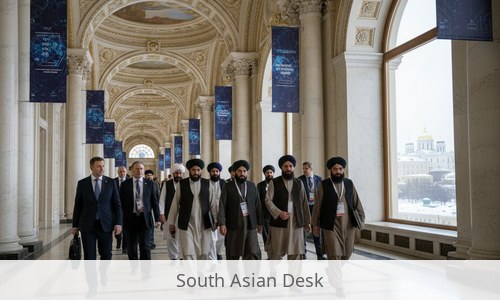
Afghan delegation Global Digital Forum: On October 8, 2026, a delegation from the Islamic Emirate of Afghanistan traveled to Moscow for the Second Global Digital Forum, marking the country’s participation in international discussions on digital governance. The Afghan delegation Global Digital Forum, led by Mohammad Amin Jan Omari, Deputy Minister for Finance and Administration at the Ministry of Communications and Information Technology, includes Abdul Rahman Safi, Director General of the Digital Governance Directorate. This event underscores Afghanistan’s growing engagement with global technological and governance frameworks, despite the country’s complex geopolitical context.
Afghan delegation Global Digital Forum: Implications for Afghanistan’s Diplomatic Relations
Afghanistan’s participation in the Global Digital Forum represents a strategic move to reposition itself within international diplomatic and technological networks. By engaging in dialogues on digital governance, the Islamic Emirate seeks to align its policies with global standards, potentially enhancing its standing in multilateral forums. The forum, hosted by Russia, brings together representatives from over 50 countries to discuss issues such as cybersecurity, data privacy, and the regulation of emerging technologies. Afghanistan’s presence here signals a willingness to collaborate on cross-border initiatives, particularly in areas like e-governance and digital infrastructure development.
Potential collaborations could involve partnerships with nations and organizations that prioritize digital governance, including Russia, China, and regional actors. For instance, Afghanistan’s participation may facilitate knowledge-sharing on digital policy frameworks, which could help the country modernize its telecommunications sector and improve access to digital services. Such engagement could also open avenues for investment in Afghanistan’s technology sector, particularly in rural areas where internet penetration remains low. The inclusion of Mohammad Amin Jan Omari and Abdul Rahman Safi in the delegation highlights the regime’s commitment to leveraging international platforms for national development.
Digital Governance and Development Strategy
Digital governance is a cornerstone of Afghanistan’s technological advancement under the current regime. The Islamic Emirate has emphasized modernization through digital frameworks as part of its broader development strategy, recognizing that robust digital infrastructure is essential for economic growth and administrative efficiency. The Global Digital Forum provides a platform for Afghanistan to showcase its priorities and learn from global best practices in areas such as digital identity systems, e-commerce regulations, and public service digitization.
The regime’s focus on digital governance aligns with global trends where digital infrastructure is increasingly viewed as a cornerstone of national development. For Afghanistan, this includes addressing challenges such as limited internet access, cybersecurity vulnerabilities, and the need for regulatory frameworks to support digital innovation. The participation of Abdul Rahman Safi, who oversees the Digital Governance Directorate, underscores the government’s prioritization of these issues. His role in the delegation suggests that Afghanistan is seeking to establish partnerships for capacity-building in digital policy implementation.
Influence of International Forums on Afghanistan
International forums like the Global Digital Forum serve as critical platforms for knowledge exchange and technological collaboration. Afghanistan’s participation could lead to investments in digital infrastructure, partnerships with countries and organizations that share interests in digital governance, and alignment with global technological standards. Such engagement may also help Afghanistan navigate complex geopolitical dynamics by positioning itself as a cooperative actor in the digital domain.
The Afghanistan international relations landscape is evolving as the country seeks to re-engage with global institutions, particularly in areas like Moscow digital governance and digital policy alignment. By participating in the forum, Afghanistan may gain access to technical expertise, funding opportunities, and collaborative projects that could bolster its digital transformation. For example, partnerships with Russian entities could focus on improving Afghanistan’s cybersecurity capabilities or expanding broadband connectivity through joint ventures.
The forum also provides an opportunity for Afghanistan to address its unique challenges, such as the need for digital literacy programs and the integration of technology into public services. These efforts could be supported by international stakeholders interested in promoting digital inclusion and sustainable development in the region. The Moscow digital governance initiatives, which emphasize cross-border cooperation on emerging technologies, may offer a model for Afghanistan to adopt as it seeks to modernize its digital landscape.
Conclusion
Afghanistan’s participation in the Global Digital Forum marks a significant step in its diplomatic engagement and technological development. By engaging with global stakeholders on digital governance, the Islamic Emirate aims to strengthen its international relations, attract investment, and modernize its digital infrastructure. The delegation’s focus on collaboration with countries and organizations that prioritize digital governance highlights the regime’s strategic approach to leveraging international platforms for national advancement.
Follow SouthAsianDesk on X, Instagram and Facebook for insights on business and current affairs from across South Asia.