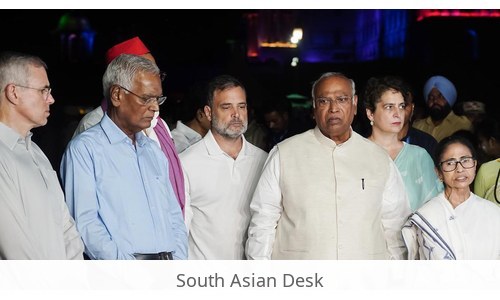
The INDIA bloc march, planned for October 12, 2026, has become a focal point in India’s political landscape as opposition leaders rally for political unity in India. On this date, Indian Congress leader Rahul Gandhi urged citizens to participate in the march to the Supreme Court, emphasizing the need for unity beyond party affiliations. The event comes amid rising political tensions and accusations of an “undeclared emergency” against Prime Minister Narendra Modi and Home Minister Amit Shah.
INDIA bloc march: Political Context
The INDIA bloc, a coalition of opposition parties, has organized the march to challenge perceived government overreach in India. Congress leader K.C. Venugopal confirmed coordination with other bloc members regarding the event, highlighting the bloc’s efforts to unify diverse political entities under a common cause. The movement reflects growing unrest over allegations of executive overreach, with participants demanding transparency and accountability. This INDIA bloc march is seen as a significant step toward political unity in India, uniting diverse parties under a common cause. The bloc’s decision to target the Supreme Court underscores the symbolic weight of the institution in India’s democratic framework, as it represents the final arbiter of constitutional disputes. Critics argue that the government’s recent policies have eroded judicial independence, a claim that has fueled the momentum behind the October 12 protest.
Judicial Response
Chief Justice Surya Kant stated that the Supreme Court cannot meet with political party delegations at the administrative level, according to NDTV. This stance underscores the judiciary’s commitment to maintaining neutrality in political matters, despite the bloc’s call for direct engagement. The Supreme Court protests, including the INDIA bloc march, have drawn attention to the delicate balance between judicial independence and political activism. While the court has historically avoided entanglement in partisan disputes, the scale of the upcoming demonstration has raised questions about its role in mediating political conflicts. Legal experts suggest that the judiciary’s refusal to engage with the bloc may inadvertently amplify public frustration, potentially leading to more confrontational tactics from opposition groups. The Supreme Court’s adherence to procedural norms has been a point of contention, with some arguing that its strict adherence to protocol risks alienating citizens seeking constitutional remedies.
Security Measures
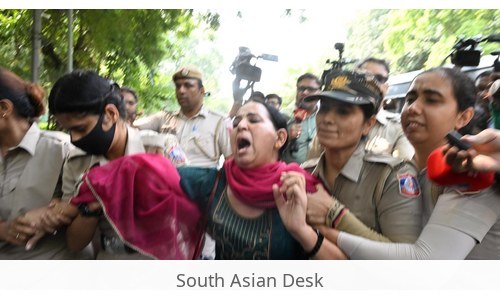
Indian authorities have deployed tens of thousands of police and security personnel in New Delhi ahead of the protests. Reports indicate hundreds of protesters were detained prior to the rally by the youth-led Cockroach Janta Party, signaling heightened security concerns. The October 12 protest has prompted a significant security response, reflecting the government’s apprehension about the scale of the INDIA bloc march. Analysts note that the crackdown on dissent, including the detention of activists, has only intensified public grievances, framing the event as a broader struggle against perceived authoritarianism. The government’s emphasis on maintaining order has sparked debates about the limits of free expression in a democracy, with advocates for political unity in India arguing that such measures undermine the very principles of the nation’s constitution. Security protocols have included road closures, surveillance, and coordination with intelligence agencies to prevent disruptions.
Broader Implications
The result is not merely a protest but a reflection of deepening ideological divides in Indian politics. Rahul Gandhi’s call for unity through the Supreme Court highlights the bloc’s strategy to frame the issue as a constitutional crisis rather than a partisan conflict. The event also coincides with a national conversation about the role of the Supreme Court in safeguarding democratic institutions, with many citizens viewing the October 12 protest as a test of the judiciary’s resilience in the face of political pressure. The march has also drawn international attention, with analysts noting its potential to influence India’s domestic political dynamics and its implications for the country’s democratic processes. The bloc’s emphasis on constitutional principles has resonated with segments of the population concerned about the erosion of democratic norms.
Follow SouthAsianDesk on X, Instagram and Facebook for insights on business and current affairs from across South Asia.
Sources
- Rahul urges citizens to join INDIA bloc march to Supreme Court ‘as Indians’, irrespective of party affiliations – thehindu.com
- Day Before INDIA Bloc March, Chief Justice Surya Kant Says No To Meeting: Sources – ndtv.com
- India Detains Hundreds, Locks Down Delhi Ahead of Protest Against Election Chief – khaama.com
Image: th-i.thgim.com