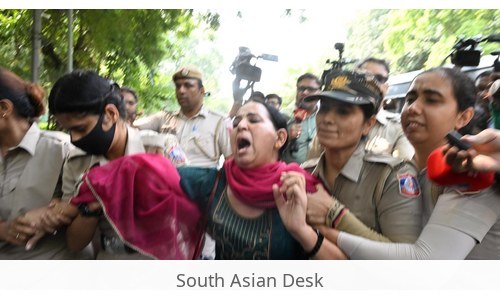
Illegal detention allegations: The Indian government is addressing allegations of illegal detention as the Supreme Court extends the deadline for filing a reply affidavit to October 15, 2026. This development follows ongoing pleas related to protests and curbs that occurred on October 10, 2026, highlighting tensions surrounding civil liberties in India and government accountability in the context of public protests in India. The Supreme Court of India, led by Chief Justice Surya Kant, has emphasized the need for a balanced approach to ensure both security and the protection of individual rights.
Indian Government Response to Illegal Detention Allegations
The Indian government is preparing a detailed response to allegations of illegal detention, indicating a clampdown that requires further fine-tuning. According to The Hindu, the government has acknowledged the need to address these allegations while ensuring that its actions remain within legal parameters. This response comes amid heightened scrutiny of public dissent and the balance between security measures and civil rights. The Indian government’s response has been closely watched by legal experts and civil society groups, who emphasize the importance of transparency in addressing such claims. Critics argue that the government’s approach risks undermining civil liberties in India, particularly in regions where protests have been met with heightened security measures.
Implications for Civil Liberties in India
The Supreme Court’s decision to extend the deadline has significant implications for civil liberties in India. Legal experts suggest that this move allows for a more thorough examination of the illegal detention allegations, potentially strengthening the judiciary’s role in safeguarding individual rights. However, critics argue that the delay could be perceived as an attempt to manage the narrative around the protests, raising concerns about transparency and accountability. The Supreme Court of India’s handling of this case is seen as a critical test of its commitment to upholding civil liberties in the face of government actions. This case has also sparked broader discussions about the role of the judiciary in protecting democratic values and ensuring that government accountability is maintained during times of public unrest.
Public Protests in India and Legal Scrutiny
The protests on October 10, 2026, have drawn significant attention from both the public and legal experts. These demonstrations, which were met with curbs and heightened security, have raised questions about the proportionality of the government’s response. Legal scholars have pointed out that while the government has a mandate to maintain public order, the measures taken must be proportionate and in line with constitutional protections. The Supreme Court of India has been tasked with evaluating whether the actions taken by authorities were justified under the law, a process that has become a focal point for debates on civil liberties in India.
Government Accountability and the Rule of Law
The case has also underscored the importance of government accountability in democratic governance. Civil society groups have called for greater transparency in the decision-making process, emphasizing that the government must be held to account for any actions that may infringe on individual rights. The Indian government’s response to these allegations has been scrutinized not only for its legal validity but also for its adherence to the principles of the rule of law. This scrutiny is particularly important in the context of public protests in India, where the balance between security and civil rights is often tested.
Historical Precedents and Legal Framework
While the current case is unique in its timing and context, it echoes historical precedents where the Indian judiciary has intervened to balance state authority with individual freedoms. Legal experts note that past instances, such as the 2012 Delhi gang rape case and the 2014 protests against the Citizenship Amendment Act, saw the Supreme Court playing a pivotal role in ensuring that government actions did not overstep constitutional boundaries. These cases established a framework for judicial review of security measures during public unrest, a precedent that may inform the current proceedings.
Civil Society and Legal Advocacy
Civil society organizations and legal advocacy groups have been vocal in their calls for transparency and adherence to legal norms. Groups such as the Centre for Justice and Peace (CJP) and the Indian Legal Forum have urged the government to provide detailed justifications for its actions, emphasizing that any curbs on public dissent must be proportionate and evidence-based. These groups argue that the current situation highlights the need for a robust legal framework to prevent the misuse of security laws to suppress legitimate dissent.
International Perspectives and Regional Context
While the focus remains on domestic legal processes, international observers have noted the significance of this case in the broader context of South Asian governance. Analysts from regional think tanks, such as the South Asia Institute in New Delhi, have highlighted the importance of judicial independence in maintaining democratic norms. They caution that the outcome of this case could influence similar legal challenges in neighboring countries, where governments are also grappling with the balance between security and civil liberties.
Published in SouthAsianDesk, October 13, 2026.
Follow SouthAsianDesk on X, Instagram and Facebook for insights on business and current affairs from across South Asia.
This report focuses on illegal detention allegations and the verified developments surrounding it.
Sources
- Response to allegations of illegal detention, clampdown ready, but needs fine-tuning: Government – thehindu.com
- Supreme Court Defers Hearing Pleas Related To October 10 Protests, Curbs – ndtv.com
Image: th-i.thgim.com