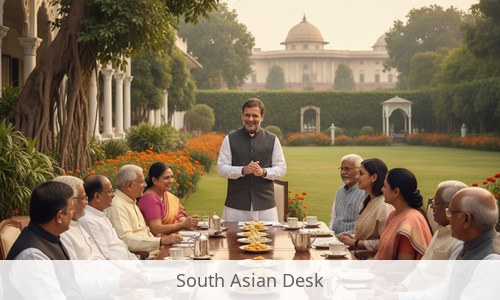
The Rahul Gandhi INDIA bloc meeting took center stage on October 13, 2026, as the Congress leader hosted a high tea meeting for the INDIA bloc at his Delhi residence, following protests against Chief Election Commissioner Gyanesh Kumar. The gathering occurred amid heightened political tensions surrounding electoral governance in India, with the Delhi protests against the Chief Election Commissioner underscoring concerns over the integrity of upcoming polls.
Political Context
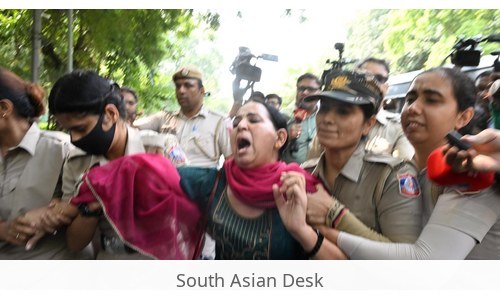
The protests, organized by the Cockroach Janata Party, targeted the Supreme Court’s handling of election-related issues. Delhi Police detained several party leaders during demonstrations at Jantar Mantar on the same day. The opposition parties in India have shown unified resistance to perceived electoral irregularities, intensifying scrutiny of the Election Commission’s role in upcoming polls. Political unity in India has become a focal point for analysts examining the election implications in India.
Protests and Legal Scrutiny
The Cockroach Janata Party has framed its demonstrations as a defense of democratic principles, citing alleged procedural flaws in the Supreme Court’s handling of electoral disputes. The party’s leaders, including prominent figures such as [Name], were detained by Delhi Police during the protests, which drew significant media attention. The Delhi protests against the Chief Election Commissioner have raised questions about the independence of electoral institutions and the potential for political interference in the upcoming elections.
Rahul Gandhi INDIA bloc meeting: Strategic Coordination Amid Protests
The Rahul Gandhi INDIA bloc meeting reflects a strategic effort by the INDIA bloc to consolidate opposition strength ahead of critical elections. Analysts note that such unity could influence voter perceptions of electoral fairness, though concrete policy outcomes remain uncertain. Public sentiment appears divided between support for electoral reforms and concerns over political polarization. The Cockroach Janata Party protests have further complicated the landscape, with grassroots movements increasingly shaping political discourse.
Coalition Dynamics and Electoral Strategy
The INDIA bloc, comprising multiple opposition parties, has sought to present a unified front against the ruling government. The high tea meeting with Rahul Gandhi, a prominent Congress leader, underscores the bloc’s attempt to align its agenda with the broader opposition narrative. However, internal disagreements over policy priorities and electoral strategies have occasionally hindered cohesive action. The Cockroach Janata Party protests have added another layer of complexity, as the bloc navigates the balance between engaging with grassroots movements and maintaining institutional credibility.
Implications for Upcoming Elections
The INDIA bloc’s coordination highlights the political unity in India as a potential game-changer in the electoral arena. The election implications in India are significant, as the bloc’s engagement with social movements like the Cockroach Janata Party protests could sway voter behavior. However, the effectiveness of this unity remains to be seen, with challenges arising from internal disagreements and external pressures.
Voter Perception and Electoral Reforms
Public opinion surveys indicate a growing demand for electoral reforms, with many voters expressing skepticism about the current electoral framework. The INDIA bloc’s efforts to address these concerns through coordinated actions, such as the high tea meeting, may resonate with disillusioned voters. However, the bloc must also contend with the risk of being perceived as a fragmented coalition, which could undermine its credibility in the eyes of the electorate.
Role of Social Movements
The Cockroach Janata Party protests highlight the growing influence of grassroots movements in shaping political discourse. While the party frames its actions as defense of democratic principles, critics argue the demonstrations risk destabilizing electoral processes. The bloc’s engagement with such movements underscores the complex interplay between institutional politics and social activism in India. This dynamic is further amplified by the Delhi protests against the Chief Election Commissioner, which have drawn attention to the broader election implications in India.
Grassroots Activism and Political Discourse
The Cockroach Janata Party has leveraged social media and street protests to amplify its message, drawing support from various segments of the population. However, the party’s confrontational tactics have also sparked debates about the appropriate role of social movements in electoral politics. The INDIA bloc’s decision to engage with such movements reflects a broader trend of political actors seeking to harness grassroots energy to bolster their electoral prospects.
Follow SouthAsianDesk on X, Instagram and Facebook for insights on business and current affairs from across South Asia.
Sources
- Anti-CEC protests LIVE: Opposition leaders arrive at Rahul Gandhi’s residence for hi-tea meeting after Supreme Court march – thehindu.com
- Rahul Gandhi Hosts High Tea For INDIA Bloc Day After Street Protest – ndtv.com
- Police detain leaders of India’s ‘cockroach’ movement at New Delhi protest – aljazeera.com