The NCCIA child exploitation case, announced on Sunday, centres on allegations that a father produced and sold abusive videos of his own young children, and that a separate network in Karachi used minors to create illegal content for foreign clients. Officials of the National Cyber Crime Investigation Agency (NCCIA) disclosed the findings at a press conference in Islamabad. All individuals mentioned are suspects, and none has been convicted.
What the NCCIA Said About the Father
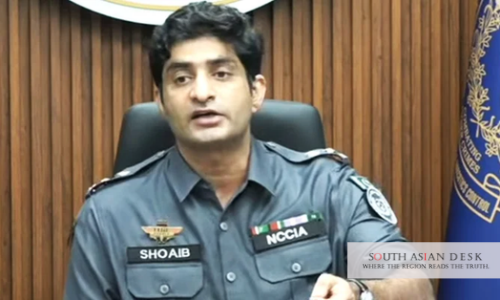
NCCIA Additional Director Shoaib Khan told reporters that the arrested father had made videos of his own children for financial gain. He said the children were aged between five and six, and that the material was produced and sold through the messaging app Telegram. According to Khan, a group had formed around circulating and selling such content.
Khan described the case as unusual and said nothing of the kind had previously surfaced in Pakistan. That characterisation is the official’s own. Earlier investigations by the agency have also involved alleged child exploitation networks, including a case in southern Punjab, so readers should treat the claim as his assessment rather than an established fact.
The main suspect belongs to Skardu, Khan said, while investigations were under way in Multan, Islamabad and southern Punjab. He added that the identities of those involved in such cases were not disclosed, a practice commonly followed to protect child victims.
Karachi Companies and 42 Detentions
In a separate strand of the NCCIA child exploitation case, the agency said it had uncovered three companies in Karachi that allegedly produced animated sexual content using children. NCCIA Deputy Director Shehzad Akbar said the companies operated in three stages, with a single person allegedly behind all of them.
According to Akbar, the firms created social media accounts in the names of girls and young women to find clients in the United States and Germany. Minors were allegedly used to produce material depicting real people. The companies reportedly sold content from existing libraries and also produced material to clients’ orders, with children allegedly made to fulfil specific requests.
NCCIA Director Tariq Nawaz told Geo News that 42 people had been detained, including 13 who were formally arrested and remanded in custody by a court. He added that the companies allegedly blackmailed clients after selling them the material. These accounts come from the agency, and the suspects have not yet had their cases heard at trial.
Warning to Parents and an Awareness Campaign
Shoaib Khan said action would also be taken against parents who became aware of crimes involving their children but failed to report them. He said the agency was launching an awareness campaign at universities and would educate parents on how to monitor what their children view on mobile phones. He added that he would personally visit schools in Islamabad and that the campaign would later be expanded nationwide.
The agency had also arrested a suspect in an online sexual harassment case a day earlier, following a complaint from Karachi.
Wider Crackdown on Cybercrime
The press conference covered other areas of the agency’s work. Khan said the NCCIA in Islamabad had carried out crackdowns on call centres and identified a large number of such facilities in the capital. Seven FIRs had recently been registered, and between 13,000 and 14,000 devices had been recovered, he said.
He urged the public not to share one-time passwords or PINs, warning that fake banking websites can appear identical to genuine ones. He also said Chinese nationals arrested in Pakistan would face punishment under Pakistani law, after which their visas would be cancelled and they would be deported.
Why Child Protection Experts Urge Vigilance
Child safety organisations generally advise that online abuse is most effectively countered through a mix of law enforcement, platform cooperation and family awareness. Parents are often encouraged to talk openly with children about online safety, to use device controls and to report suspicious activity. Anyone with information about child abuse material should contact the NCCIA or local police rather than sharing or forwarding it, since circulation can itself be a criminal offence.
What Happens Next
Investigators are still working in several cities, and further arrests are possible. Court proceedings will determine whether the allegations can be proven. For the children involved, the priority is their safety and care, which falls to the courts and child protection authorities. The NCCIA child exploitation case also raises questions about monitoring on messaging platforms and the resources available to investigators, issues officials are likely to face as the inquiry widens.
Follow SouthAsianDesk on X, Instagram and Facebook for insights on business and current affairs from across South Asia.
Read More: