

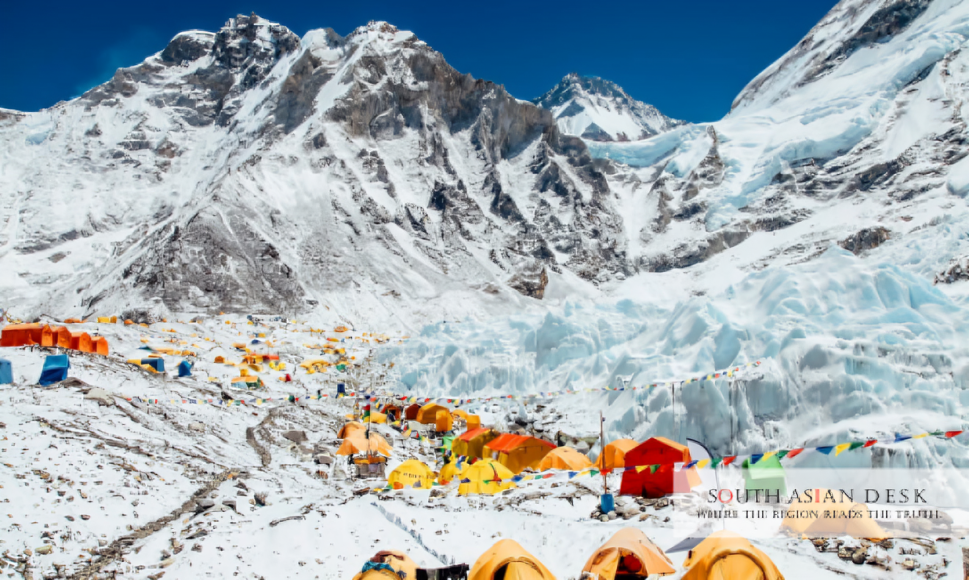
KATHMANDU, Nepal (South Asian Desk) – A severe Everest blizzard trapped nearly 1,000 trekkers and support staff on Tibet’s eastern slopes of Mount Everest starting Friday evening, October 3, 2025, with rescuers evacuating 350 by Sunday afternoon while over 200 face ongoing hypothermia threats in remote camps above 4,900 metres.
This Everest blizzard exposes the fragility of South Asia’s high-altitude tourism, an industry worth USD 2 billion annually that employs over 1 million people across Nepal and border regions, now battered by climate-driven weather shifts that disrupt treks and endanger lives.
Rescue Operations Surge in Everest Blizzard
Teams from China’s Ministry of Emergency Management deployed hundreds of local villagers and heavy machinery to clear snow-choked paths in Tibet’s Tingri region. The storm hit the Karma valley, a popular route to Everest’s Kangshung face, during China’s National Day holiday, catching visitors off guard with thunder, lightning and relentless snow.
By 4:35 PM on Sunday, October 5, 2025, 350 individuals reached Qudang township, a staging area for evacuations. State broadcaster CCTV confirmed contact with the remaining 200-plus trekkers, who huddle in collapsed tents amid sub-zero gusts. “Rescuers organised by the local government guide the remaining trekkers to safety in stages,” CCTV reported.
Snow accumulation blocked roads above 4,900 metres, forcing reliance on manual shovelling and yak transports for supplies. Tibet’s Blue Sky Rescue team responded to distress calls noting tent failures and early hypothermia signs. No fatalities emerged, but medical checks await arrivals in Qudang.
Authorities suspended all entry to the Everest Scenic Area late Saturday, October 4, 2025, via official notices from the Tingri County Tourism Company. This closure halts access on both north and east routes, stranding potential tourists at checkpoints.
Mount Everest Snowstorm Rescue Nepal Side: Floods Compound Crisis
Nepal’s southern approach to Mount Everest dodged direct snow but suffered heavy rains from the same Himalayan low-pressure system. Flash floods and landslides since October 3 killed 47 people, with 35 deaths in eastern Ilam district near India. Nine remain missing after rivers swelled.
Nepal’s Tourism Board issued an update Sunday, October 5, 2025, stating search and rescue operations continue as skies clear in Kathmandu and eastern zones. “Search and rescue operations are ongoing after the weather improved significantly,” the board announced, focusing on flood zones rather than high camps.
The Nepal Army mobilised helicopters for Ilam extractions, where bridges washed out and roads crumbled. Three additional deaths came from lightning strikes in lowlands. These events block trails from Lukla airport, Everest’s Nepal gateway, delaying autumn treks.
Meteorologists at the Nepal Department of Hydrology and Meteorology attribute the chaos to erratic monsoon tails, with October precipitation up 15% over decade averages. No confirmed Everest blizzard impacts hit Nepal’s high camps, but lower elevations saw trail closures.
Human Toll in the Everest Blizzard
Trekkers endured 24 hours of blizzard fury, with wet snow soaking gear and winds piercing at 4,200 metres average elevation. Chen Geshuang, from an 18-member group now safe in Qudang, described the ordeal. “It was so wet and cold in the mountains, and hypothermia was a real risk,” Chen told Reuters. “The weather this year is not normal. The guide said he had never encountered such weather in October. And it happened all too suddenly.”
Groups clustered without shelter after tents buckled under metres of accumulation. Satellite phones relayed positions, enabling phased descents. The operation echoes Nepal’s 2014 avalanche response, which claimed 16 Sherpa lives on the south face.
China’s Ministry of Emergency Management data, via Jimu News, pegs total affected at nearly 1,000, including Chinese, European and South Asian nationals. Nepal hosts 30,000 climbers yearly, per Tourism Board figures, fuelling USD 400 million in revenue. Tibet’s north face draws crowds via paved roads, amplifying holiday risks.
Background: Himalayan Weather Patterns Evolve
Mount Everest spans Nepal and Tibet, luring 50,000 trekkers annually for post-monsoon views. The Tibetan east route via Karma valley offers rugged appeal but isolation. October peaks with clear skies, yet climate shifts bring anomalies.
Nepal’s hydrology department logs 20% more October snow events since 2010, linked to jet stream wobbles. A 2024 ICIMOD report flags intensified storms, threatening the USD 2 billion regional economy. Past crises include Nepal’s 2019 south-face blizzard, which stranded 100 and killed one guide.
Sherpa communities adapt, but gear standards lag. Insurance covers few for erratic forecasts.
Economic Ripples from Mount Everest Snowstorm
The Everest blizzard disrupts Nepal’s tourism backbone, where porters, lodges and flights sustain 1 million jobs. Cancellations may cut October earnings by 10-15%, industry sources estimate. Indian visitors, 25% of total, receive advisories, shifting crowds to Bhutan or Pakistan peaks.
Nepal budgeted NPR 500 million for disaster aid this year, but analysts urge weather apps and cross-border drills. SAARC forums could harmonise alerts for shared ranges like Kanchenjunga.
Tibet’s closure idles guides, with China’s holiday influx amplifying losses. Broader South Asia floods, including Pakistan’s 4 million affected, strain resources.
What’s Next: Clearing Paths Post-Everest Blizzard
Evacuations target completion by Tuesday, October 7, 2025, as forecasts show tapering snow and rising fog. Nepal plans trekker debriefs on acclimatisation. Long-term, experts push satellite monitoring and resilient infrastructure.
The Everest blizzard demands faster Himalayan safeguards, blending tradition with tech to protect adventurers and locals alike.
Published in SouthAsianDesk, October 6th, 2025
Follow SouthAsianDesk on X, Instagram, and Facebook for insights on business and current affairs from across South Asia.
