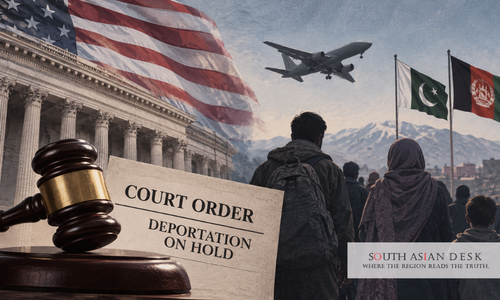
The deportation of Afghans from the United States to Pakistan and onward to Afghanistan has been put on hold by a federal court, after lawyers for the detainees warned that their clients could face grave danger if returned. The emergency order, issued in New York on Tuesday, offers only a short reprieve, but it has drawn attention from rights groups, lawmakers, the United Nations refugee agency and the authorities in Kabul.
What Judge Valerie Caproni Ordered
US District Judge Valerie Caproni issued the order at the request of attorneys representing Afghan nationals who were scheduled to be deported to Pakistan and then sent to Afghanistan. Tolo News reported that the individuals cannot be deported to either country until at least Sunday, while other outlets say the order runs through Saturday, November 7. The difference appears to be one of reporting, and the order is in any case limited to the coming days.
The measure takes the form of a temporary restraining order. It followed assurances from government lawyers that Immigration and Customs Enforcement had no planned or confirmed chartered or commercial flights to carry Afghan deportees to Afghanistan or Pakistan through the end of the week. Judge Caproni directed the administration to adhere to those assurances for the duration of the order. The government also told the court that arranging such flights takes weeks. Reports indicate that the administration has been given a deadline of Thursday morning to file its formal response to the emergency motion.
Why Lawyers Warned of Danger
The case arose after reports of plans to fly detained Afghans from Louisiana to Pakistan, with onward transportation into Afghanistan. According to reports, more than 150 Afghan immigrants face possible deportation by this route, including relatives of people who assisted the United States. Several outlets reported that more than 80 detainees had contacted human rights groups and immigration lawyers after receiving notices from ICE indicating they could be removed via Pakistan.
Lawyers argued that their clients could face persecution, torture or even death in Taliban-controlled Afghanistan. Members of Congress raised similar fears and urged Secretary of State Marco Rubio and Homeland Security Secretary Markwayne Mullin to intervene. Lawmaker Scott Peters said Congress would keep seeking answers about Pakistan’s role in the plans and would pursue legislation to protect Afghans from deportation. Rights groups welcomed the ruling as a temporary reprieve, though the order does not resolve the detainees’ immigration cases or permanently bar their removal.
UNHCR Says It Was Not Consulted
The United Nations High Commissioner for Refugees (UNHCR) in Pakistan told Tolo News that the planned deportation of 150 Afghan migrants from the United States to Pakistan had not been coordinated with the agency. Spokesperson Qaiser Khan Afridi said the agency’s position was clear: people who were forced to leave their homeland should not be forcibly deported, and should instead be protected in other countries. UNHCR stressed that forced deportations of Afghan migrants must be prevented.
Migrant rights activist Mohammad Khan Mohammadzai said any deportation must rest on a legal decision and an individual assessment of each person’s case, rather than breaching immigration and international law. His comments reflect a widely held principle in refugee law that people should not be returned to places where they face a real risk of serious harm.
Reaction From Kabul
The authorities in Kabul have also responded. The Islamic Emirate’s Minister of Information and Culture criticised the possible deportations, saying the United States had failed to remain loyal to those who worked with it. The Ministry of Foreign Affairs called for respect for the migrants’ rights and human dignity and urged coordination with Kabul on decisions affecting their future. Its deputy spokesperson, Zia Ahmad Takal, had earlier expressed serious concern over reports of the planned transfers to Pakistan.
Naser Shafiq, a university lecturer who spoke to Tolo News, offered a sharper reading, arguing that Washington was moving Afghans to Pakistan to pressure the Islamic Emirate. That view is one commentator’s interpretation, and the court filings and reports reviewed do not establish such a motive.
Pakistan’s Role Under Scrutiny
The plans place Pakistan in a delicate position. Islamabad would serve as a transit point in the removals, a role that has prompted questions from American lawmakers. The issue also unfolds against a backdrop of strained relations between Pakistan and Afghanistan and continuing deportations of Afghans from within Pakistan itself, which UN agencies have repeatedly flagged.
Deportation of Afghans: What Happens Next
For now, the order means the immediate threat of removal flights has receded. Whether it becomes a longer pause will depend on the court’s handling of the emergency motion and on any further assurances from the government. For the Afghans in detention, many of whom have connections to the US presence in Afghanistan, the central question remains unchanged. Until the courts or the administration settle it, the deportation of Afghans to Pakistan and Afghanistan stays suspended but not resolved.
Follow SouthAsianDesk on X, Instagram and Facebook for insights on business and current affairs from across South Asia.