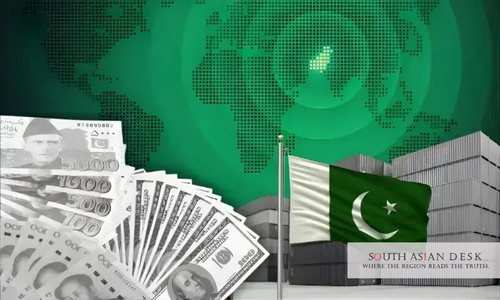
Pakistan’s external debt almost doubled over the ten years ending in 2025, climbing from $68.67 billion to $135.11 billion, according to the World Bank International Debt Report 2026, as reported by Dawn on November 6. The findings show how heavily the country has leaned on foreign financing, even as official lenders and the International Monetary Fund (IMF) continued to provide support to keep the economy stable.
How Pakistan’s External Debt Is Composed
The World Bank’s figures give a detailed picture of what makes up the stock of foreign obligations. The largest portion is public and publicly guaranteed debt, which stood at $107.08 billion at the end of 2025. Private non-guaranteed debt accounted for $17.58 billion, while short-term debt made up a further $10.45 billion.
Within the public and publicly guaranteed category, multilateral institutions held the biggest share, with $56.83 billion owed to them. Bilateral creditors were owed $42.43 billion, and private creditors a comparatively small $7.8 billion. This mix matters because it determines the terms on which the country repays its obligations.
China remains the largest single creditor, with $22.4 billion outstanding. The World Bank follows with $19.2 billion, and the Asian Development Bank with $16.83 billion. In 2025, China also extended the maturities on $2 billion in loans to Pakistan, while the IMF disbursed $2.3 billion under the Extended Fund Facility and the Resilience and Sustainability Facility.
Official Lending Remains Far Cheaper Than Private Credit
The report highlights a wide gap in borrowing terms. Loans from official creditors carried an average maturity of 16 years, with a four-year grace period and an average interest rate of 3.6 per cent. Private credit, by contrast, came with an average rate of 8.6 per cent, a three-year repayment period and only a one-year grace period.
The difference explains why the structure of Pakistan’s external debt is as significant as its size. A debt stock weighted towards concessional and multilateral lenders is considerably easier to service than one dominated by commercial borrowing. Pakistan’s profile leans towards the former, although private obligations remain costly where they exist.
A Regional Trend of Rising Indebtedness
Pakistan is part of the Middle East, North Africa, Afghanistan and Pakistan region, which the report places under particular scrutiny. The region recorded improvements in its debt service and interest ratios. However, its ratio of external debt to gross national income rose from 26.7 per cent to 29.4 per cent in 2025, the largest single-year increase recorded by any region. The report interprets this as evidence of continued debt accumulation.
Developing Countries Face Record Borrowing
The picture in Pakistan reflects a wider global pattern. According to the World Bank International Debt Report 2026, the external debt of low and middle-income countries rose 5.5 per cent to a record $9.4 trillion in 2025. This was the sharpest increase in four years, and it coincided with a strong return of private creditors to developing country markets as bond issuance rebounded.
Borrowing costs weighed most heavily on the poorest nations. Countries eligible for concessional financing from the International Development Association faced an average interest rate of 8.2 per cent on new commitments, the highest since the late 1980s. The weakening of the US dollar during the year also accounted for 28.2 per cent of the increase in the external public and publicly guaranteed debt of low and middle-income countries, since many obligations are denominated in other currencies.
Debt service payments rose for a fifth consecutive year, increasing 1.9 per cent to $1.4 trillion. Between 2022 and 2025, these countries paid roughly $436.1 billion more in debt service than they received in new financing. That trend eased in 2025, when long-term debt flows turned from a net outflow of $118.4 billion in 2024 to a net inflow of $45.4 billion.
What the Numbers Mean for Policymakers
The report does not suggest that Pakistan’s external debt is unmanageable, and stronger growth across developing economies helped steady some debt ratios last year. Even so, the near doubling of the stock in a decade underlines the importance of lengthening maturities, favouring concessional sources and limiting reliance on expensive private borrowing.
Sustained access to multilateral and bilateral financing will remain critical in the coming years. So will the pace of economic growth and export earnings, which ultimately determine how comfortably obligations of this scale can be met.
Follow SouthAsianDesk on X, Instagram and Facebook for insights on business and current affairs from across South Asia.