Garment unrest in Bangladesh eased on Thursday as production resumed across the major industrial belts around Dhaka, ending a stretch of protests, clashes and factory closures that had disrupted the country’s largest export-earning industry. Dhaka Tribune reported that workers resumed production in Savar, Gazipur and Narayanganj after eight days of unrest over the minimum wage, although sporadic protests in Ashulia forced 70 factories to suspend operations. dhakatribune
The return to work brought relief to factory managements, but the underlying dispute over pay remains to be settled.
What Sparked the Garment Unrest in Bangladesh
The protests centred on pay. Workers have been demanding a monthly minimum wage of Tk30,000, equivalent to about $240, which would be a 140 per cent increase on the current Tk12,500. In Gazipur, demands went beyond the wage figure. Workers also called for the reinstatement of laid-off colleagues and an end to the blacklisting of those who took part in the demonstrations. bangkokpostdhakatribune
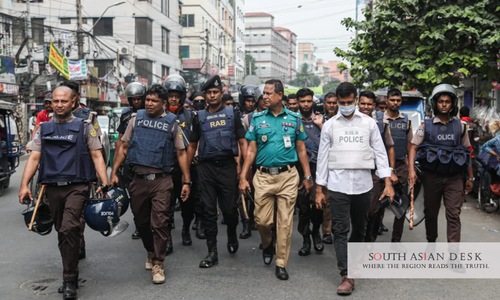
The disturbances turned violent in several places. In Gazipur, repeated blockades of the Dhaka-Tangail and Dhaka-Mymensingh highways escalated into confrontations with security forces, including arson attacks on a police box, law enforcement vehicles and a factory warehouse, as well as injuries and detentions. observerbd
Factories Reopen Across Industrial Belts
Thursday brought a marked improvement. Factories in Savar and the Dhaka Export Processing Zone resumed production in the morning, and workers joined their shifts without major disruption. In Gazipur, workers returned peacefully to areas including Kaliakair, Konabari, Kashimpur and Salna. Gazipur’s Industrial Police Superintendent said most factories in the district were operating, apart from eight to ten that declared holidays for the day. dhakatribunedailywaadaa
The picture was similar in Narayanganj. A local official told AFP that more than 95 per cent of garment factories there had resumed operations, though isolated protests occurred in Gazipur and Ashulia. Ashulia, one of the largest garment hubs, remained the main area of concern, with some workers leaving factories soon after arriving. bangkokpost
Security Remains Tight
Authorities kept a heavy presence in industrial areas to prevent a relapse. In Gazipur, 25 platoons of security personnel remained deployed, supported by 25 executive magistrates. The deployment included Border Guard Bangladesh, the Special Reserve Battalion and Ansar members. dhakatribune
Law enforcement action also continued after the clashes. The Detective Branch arrested eight more people in connection with Tuesday’s attack on police during garment workers’ demonstrations in Mirpur-11. The arrests suggest that the legal aftermath of the unrest will continue even as production returns to normal. dhakatribune
The Wage Board and the Road Ahead
The government’s response has centred on a negotiating body. A six-member wage board was formed on Sunday following the unrest. It held its first meeting on Wednesday at its Segunbagicha office in Dhaka to begin reviewing the wage structure for readymade garment workers. thedailystardailywaadaa
A timetable has now been given. The board, which includes representatives of employers and workers, said the new minimum wage would be announced in December and take effect in January. That announcement is consistent with the Prime Minister’s remarks during his Khulna visit that the board would set a new wage within one to two months. yahoo
For workers, the outcome will determine whether Thursday’s calm holds. A figure well below the Tk30,000 demanded could renew tensions, particularly in areas such as Ashulia where protests have not fully subsided. For employers, the cost of any increase must be weighed against the disruption already suffered, since closures and clashes interrupt export orders in an industry on which the national economy depends heavily.
Why Stability Matters
The recovery in production is welcome, but it rests on a fragile understanding that a negotiated settlement is coming. Both sides now have until December to reach an outcome that can be implemented in January. If the wage board delivers a figure that workers regard as credible, the return to the assembly lines may prove lasting. If it does not, the eight days that have just ended may be remembered as an early phase of a longer dispute, and garment unrest in Bangladesh could return.
Follow SouthAsianDesk on X, Instagram and Facebook for insights on business and current affairs from across South Asia.