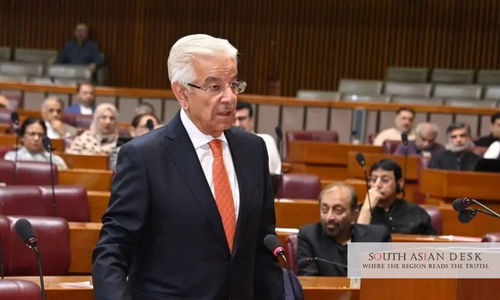
Pakistan’s 12 provinces proposal has gained renewed political attention after Defence Minister Khawaja Asif expressed support for expanding the country’s existing provincial structure to as many as 12 administrative units. Speaking to Geo News, the minister argued that Pakistan’s growing population and concentration of authority in provincial capitals had made administrative restructuring increasingly necessary. However, he cautioned that any new provinces should be established on administrative grounds rather than along linguistic, ethnic or political lines.
The proposal comes amid a wider debate over governance, resource distribution and the effectiveness of Pakistan’s existing administrative arrangements. While supporters argue that smaller provinces could improve public service delivery and bring government institutions closer to citizens, questions remain about the political, constitutional and financial implications of such a significant restructuring.
Asif’s remarks also coincide with renewed demands from the Muttahida Qaumi Movement-Pakistan (MQM-P) for new administrative units in Sindh, particularly in response to longstanding concerns about the distribution of resources and political representation in urban centres.
Khawaja Asif Supports the Creation of New Provinces in Pakistan
Defence Minister Khawaja Asif reiterated his support for creating additional provinces, suggesting that Pakistan could function with as many as 12 administrative units. He maintained that the country’s existing provincial structure concentrated too much decision-making authority in major provincial capitals, including Lahore, Karachi, Quetta and Peshawar.
According to Asif, this centralisation prevents government resources and public services from reaching communities effectively. He argued that smaller administrative units could make governance more responsive by reducing the distance between decision-makers and the populations they serve.
The minister also questioned the existing system of financial distribution, particularly the extent to which provincial governments retain control over funds transferred by the federal government. He maintained that local government institutions, which are expected to provide essential municipal services, frequently lack the financial independence and administrative authority required to perform their functions effectively.
Asif further emphasised that political representatives should recognise that their authority originates from the public and should be exercised in the interest of citizens rather than concentrated within political leadership.
Importantly, the defence minister distinguished between administrative restructuring and the creation of provinces based on ethnic, linguistic or political considerations. His position suggests that the proposed changes should primarily address governance deficiencies rather than reinforce existing political or regional divisions.
Pakistan’s 12 Provinces Proposal and the Debate Over Administrative Restructuring
The discussion surrounding Pakistan’s 12 provinces proposal reflects a longstanding debate about whether the country’s existing provincial boundaries remain suitable for its administrative and demographic realities.
Pakistan currently has four provinces: Punjab, Sindh, Khyber Pakhtunkhwa and Balochistan. Over time, population growth, urbanisation and unequal access to public services have intensified discussions about creating additional administrative units. Supporters of the idea argue that governing large and diverse populations through relatively centralised provincial administrations can make the delivery of public services inefficient, particularly in geographically distant or densely populated areas.
Media reports cited in Dawn’s coverage suggest that one proposed arrangement could divide Punjab into four provinces, while Khyber Pakhtunkhwa and Balochistan could each be divided into three. Sindh, meanwhile, could be reorganised into two provinces. These figures form part of reported proposals and should not be treated as an officially approved government plan.
The possibility of a 28th Constitutional Amendment and a nationwide referendum has also featured in media discussions surrounding the proposed restructuring. However, the precise scope, legislative status and implementation arrangements of such a proposal remain unclear.
Constitutional and Political Challenges to Creating New Provinces
Despite growing political support for administrative restructuring, the creation of new provinces would require substantial constitutional and political agreement. Under Article 239 of the Constitution of Pakistan, a constitutional amendment must secure the support of at least two-thirds of the total membership of each House of Parliament. Furthermore, Article 239(4) specifically requires approval by at least two-thirds of the total membership of the provincial assembly concerned if an amendment would alter the boundaries of a province.
This requirement makes the creation of new provinces a politically demanding process, particularly where provincial governments or political parties oppose changes to existing boundaries. Consequently, support from federal ministers alone would not be sufficient to translate the proposal into reality. Any restructuring would require negotiations between political stakeholders and the relevant provincial assemblies. Pakistan Atomic Energy Commission+1
There are also questions about whether creating additional provinces would necessarily resolve the governance problems identified by proponents. Smaller administrative units could potentially improve access to government institutions, but their effectiveness would depend on the distribution of financial resources, institutional capacity and the establishment of accountable local administrations.
In this context, Article 140A of the Constitution is particularly relevant. It requires each province to establish a local government system and devolve political, administrative and financial responsibility and authority to elected local representatives. The provision establishes a constitutional basis for decentralisation without necessarily requiring the creation of additional provinces. National Assembly of Pakistan+1
Asif’s emphasis on transferring authority from provincial capitals to local institutions therefore raises a broader question: whether Pakistan’s administrative shortcomings can be addressed through new provincial boundaries, or whether meaningful devolution within the existing provincial framework should receive greater attention.
MQM-P Renews Demand for New Administrative Units in Sindh
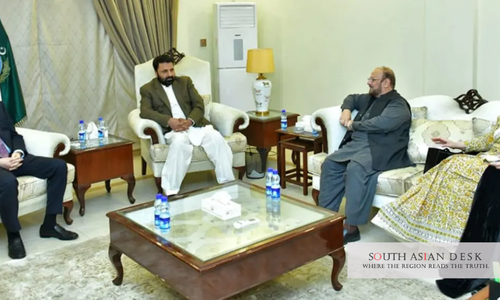
Alongside the federal minister’s remarks, MQM-P has renewed its demand for the creation of new administrative units in Sindh. The party’s political and administrative leadership discussed the issue at a meeting chaired by its convener, Federal Minister Dr Khalid Maqbool Siddiqui, at its Bahadurabad headquarters in Karachi.
According to the party’s press release, the meeting focused on addressing the longstanding grievances of urban Sindh, accelerating Karachi’s development and preparing for upcoming local government elections. The leadership maintained that establishing additional administrative units would help transfer authority and resources to grassroots institutions while improving the delivery of essential municipal services.
MQM-P also pledged to mobilise its organisational network and parliamentary leadership ahead of the local government elections, with the party seeking what it described as a historic electoral victory. Siddiqui identified addressing the deprivation of urban Sindh, establishing new administrative units and strengthening local governance as key political priorities.
The party’s renewed position places the debate over new provinces within the wider political tensions surrounding resource allocation and representation in Sindh. Karachi, as the country’s largest city and a major economic centre, has frequently featured in discussions about municipal governance, fiscal distribution and the relationship between provincial and local authorities.
Although MQM-P’s demands and Asif’s support overlap on the question of decentralisation, the broader political debate involves different regional interests and competing ideas about how administrative authority should be organised.
Lessons from the One Unit Scheme and Afghanistan’s Administrative Structure
In explaining his position, Asif referred to Pakistan’s historical experience with the One Unit scheme, under which the provinces of West Pakistan were merged into a single administrative unit in 1955. The arrangement was introduced to create administrative parity between East and West Pakistan, but it remained controversial and was eventually abolished in 1970, restoring the former provincial structure.
The minister also referred to Afghanistan, noting that the country had expanded its provincial structure from approximately eight or 10 provinces to more than 30. The comparison was intended to illustrate how administrative boundaries can evolve in response to changing governance requirements. However, the experiences of other countries do not necessarily establish that increasing the number of provinces would produce similar results in Pakistan.
The historical reference to One Unit also highlights the importance of political consensus when undertaking major administrative changes. Pakistan’s experience demonstrates that restructuring cannot be assessed solely in terms of administrative convenience. Questions of representation, regional identity and the distribution of political authority remain equally significant.
Will Pakistan Move Towards a New Provincial Structure?
The renewed discussion surrounding Pakistan’s 12 provinces proposal reflects growing political recognition that the country’s existing administrative arrangements face significant challenges. Khawaja Asif’s endorsement, alongside MQM-P’s renewed demands for administrative units in Sindh, has brought the question of provincial restructuring back into the national political debate.
Nevertheless, the proposal remains at the discussion stage, and the reported plans for a 28th Constitutional Amendment and a possible nationwide referendum should not be confused with formally approved government measures. The constitutional requirements for altering provincial boundaries also mean that any practical move towards creating new provinces would require considerable political negotiation.
Ultimately, the debate extends beyond the number of provinces Pakistan should have. Its central concern is whether government authority, financial resources and public services can reach citizens more effectively. Creating smaller provinces may offer one possible approach, but meaningful local government, institutional accountability and equitable resource distribution will remain essential regardless of the country’s administrative structure.
Whether Pakistan eventually moves towards 12 provinces or retains its existing provincial boundaries, the effectiveness of any reform will depend on its ability to address the governance problems that have brought this debate back into national attention.
Follow SouthAsianDesk on X, Instagram and Facebook for insights on business and current affairs from across South Asia.
Read More: