The war involving Iran has transformed the strategic environment surrounding Pakistan in ways that extend far beyond conventional questions of military escalation. For Islamabad, the confrontation is not simply another Middle Eastern crisis requiring diplomatic statements or expressions of concern. It represents a direct challenge to Pakistan’s regional security calculations, economic resilience, energy sustainability and foreign policy autonomy. Sharing a long border with Iran, maintaining significant strategic and economic relationships with Saudi Arabia, and navigating consequential partnerships with China and the United States, Pakistan occupies a position in which developments in West Asia can rapidly become matters of national interest. The central question is no longer whether the conflict will affect Pakistan, but how prepared the country is for the regional political and economic consequences that may follow.
The historical experience of Iraq provides an important framework for examining this situation. The 2003 US-led invasion of Iraq demonstrated that removing an established government does not necessarily produce a stable political order. The dismantling of state institutions, dissolution of the Iraqi military, institutional exclusion and subsequent insurgency created conditions that fundamentally transformed the country’s political and security architecture. The consequences extended across the Middle East, altering regional power relationships and creating opportunities for competing external actors. The weakening of Iraq also removed an important counterweight to Iranian influence, contributing to a substantial reconfiguration of regional politics.
The comparison between Iraq and Iran, however, requires analytical caution. Their political systems, military structures, geographical positions and strategic capabilities are different. Iran is a much larger country with established state institutions, significant military capabilities and a complex network of regional relationships. Nevertheless, the underlying strategic lesson remains relevant: the weakening of a major regional state can produce consequences that extend well beyond the original objectives of military intervention. The destruction of infrastructure, disruption of institutional authority and prolonged political uncertainty can create security vacuums that neighbouring countries are subsequently forced to manage.
The confrontation that began with US and Israeli strikes against Iran on February 28, 2026, has demonstrated the limitations of viewing military operations as isolated events. The killing of Supreme Leader Ali Khamenei and attacks against Iranian nuclear and military infrastructure initiated a conflict that rapidly acquired wider regional dimensions. Iran’s retaliatory actions, the confrontation over maritime access and the subsequent restrictions affecting the Strait of Hormuz transformed the conflict into an international economic and security concern. Pakistan’s diplomatic involvement contributed to the June Islamabad Memorandum of Understanding, but the arrangement failed to establish a durable settlement. Subsequent military exchanges and disagreements over sanctions, maritime restrictions and nuclear negotiations have kept the regional environment unstable. The Council on Foreign Relations continues to classify the confrontation as a worsening interstate conflict, while the British House of Commons Library has documented the continuing consequences for regional security and shipping.
By November 2026, the conflict had entered a particularly consequential phase. Diplomatic contacts involving Pakistan, Iran and other regional governments indicated renewed efforts to prevent further escalation. On November 5, Pakistan’s Deputy Prime Minister and Foreign Minister Ishaq Dar held discussions with his Iranian counterpart Abbas Araghchi, emphasising sustained diplomatic engagement. Yet reports of further military activity around Qeshm Island and renewed maritime incidents in early November demonstrated how fragile the situation remained. The distinction between diplomatic progress and an actual political settlement is therefore essential. A temporary reduction in hostilities cannot guarantee the restoration of regional stability.
For Pakistan, the first strategic implication concerns its western security environment. Its border with Iran extends across Balochistan, a province where security, economic development, border administration and cross-border movement are closely interconnected. Any prolonged weakening of Iranian state capacity could create additional pressure on this sensitive frontier. Displacement, disruption of commercial activity, increased informal movement and opportunities for armed non-state groups could complicate Pakistan’s existing security responsibilities. The consequences would be particularly serious if instability on the Iranian side coincided with continuing security challenges along the Afghan frontier.
Iraq offers a significant warning in this regard. Following the 2003 invasion, the collapse of established security institutions created opportunities for insurgent organisations and competing armed networks. The subsequent emergence of the Islamic State in Iraq and Syria was not an automatic or inevitable consequence of the invasion, but institutional breakdown, political exclusion and prolonged violence contributed to the environment in which the organisation expanded. Pakistan should understand that the consequences of regional instability are not determined exclusively by the intensity of military operations. They also depend on whether state institutions retain the capacity to maintain territorial control, provide public services and prevent armed groups from exploiting political uncertainty.
Pakistan’s national security planning must therefore extend beyond conventional border surveillance. Intelligence coordination, humanitarian preparedness, customs administration, local development and communication with Iranian authorities should form part of an integrated border-security framework. The objective should be to prevent an external confrontation from generating additional vulnerabilities inside Pakistan. Balochistan must not be treated merely as a geographical buffer between competing regional interests. Its economic participation, institutional capacity and public confidence are essential components of national resilience.
A second implication concerns the regional balance of power. Iraq’s weakening after 2003 changed the strategic environment in which Iran operated. Tehran expanded its political and security relationships within Iraq and developed influence through a wider network of regional partners. Saudi Arabia, Israel, Türkiye and other regional actors consequently adjusted their policies to a transformed distribution of power. The invasion did not simply alter the domestic political structure of Iraq; it changed the calculations of states across the region.
The current confrontation raises a related question: what regional arrangement could emerge if Iran experiences prolonged military, economic or institutional weakening? Such an outcome would not necessarily produce a more stable Middle East. It could intensify competition over influence, security arrangements and access to strategic resources. Gulf states might reconsider their defence partnerships, external powers could seek to consolidate their positions, and regional actors could compete to fill political and security spaces created by prolonged instability.
For Pakistan, this possibility creates a difficult diplomatic calculation. Its relationship with Iran is grounded in geography, border security, trade and historical connections. Its relationship with Saudi Arabia carries considerable economic, diplomatic and security significance. Pakistan also maintains important relationships with Türkiye, China, the United States and other Gulf countries. These relationships cannot be managed through a simplistic division between competing regional camps. Pakistan’s foreign policy must preserve the capacity to engage different actors according to clearly defined national interests.
The Saudi-Pakistan defence relationship illustrates the importance of this distinction. Bilateral security cooperation should not automatically be interpreted as an obligation to participate in every regional military confrontation. Equally, Pakistan’s geographical proximity and diplomatic engagement with Iran should not undermine its other international relationships. Defence commitments, bilateral cooperation and the political circumstances of an interstate conflict require separate and careful assessment. The national interest must remain the determining consideration.
There is also a domestic dimension to this diplomatic challenge. The Iraq experience demonstrated how prolonged regional competition could become intertwined with sectarian mobilisation and internal political fragmentation. Pakistan has its own complex sectarian landscape, making responsible political communication particularly important during a conflict involving Iran and several regional powers. External developments should not become instruments of domestic polarisation. The government, political parties, religious leadership and media institutions have a responsibility to prevent geopolitical disagreements from developing into internal communal tensions. Pakistan’s stability requires a distinction between foreign policy analysis, religious identity and domestic political mobilisation.
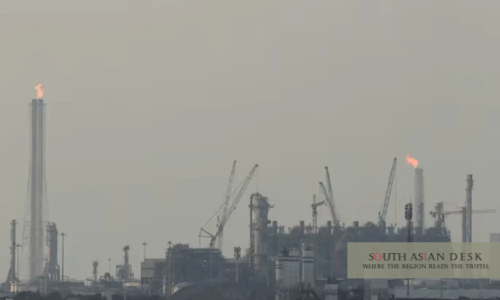
The third implication concerns energy security, arguably one of the most immediate economic vulnerabilities exposed by the conflict. The Strait of Hormuz is a critical maritime passage connecting the Persian Gulf with international markets. A substantial proportion of global petroleum and liquefied natural gas supplies moves through this narrow waterway. Its disruption affects not only the Gulf producers but also import-dependent economies across Asia. The conflict has demonstrated that maritime insecurity can become an economic instrument with international consequences.
Pakistan is particularly exposed because its energy system depends significantly on imported petroleum and liquefied natural gas. The Center for Strategic and International Studies, in its August 2026 assessment of Pakistan’s LNG exposure, highlighted the country’s dependence on Qatari supplies and the consequences of disruption around the Strait of Hormuz. Reduced LNG availability, higher procurement costs and pressure on electricity generation illustrate the relationship between regional military developments and domestic economic stability.
An extended disruption in Gulf shipping can affect Pakistan through several channels. Higher petroleum prices increase the import bill, place pressure on foreign exchange reserves and raise transportation and production costs. Expensive LNG affects electricity generation and industrial operations, while rising energy costs contribute to inflationary pressure on households. Agriculture, fertiliser production and manufacturing can also experience indirect consequences. The resulting economic pressures may restrict the government’s fiscal capacity and complicate efforts to maintain economic recovery.
Pakistan must therefore move beyond treating energy security as an issue of short-term procurement. Diversification of energy sources, renewable electricity generation, improved storage infrastructure, energy efficiency and a more resilient import strategy should become central elements of national economic planning. This does not mean that Pakistan can immediately replace its Gulf energy relationships. Rather, it must reduce the degree to which a single maritime chokepoint can threaten the functioning of its economy.
The proposed Pakistan-Iran gas pipeline also illustrates the complexity of regional energy cooperation. The project reflects the geographical and economic logic of strengthening bilateral energy connectivity, but international sanctions, financing constraints and geopolitical considerations have complicated implementation. The current confrontation makes the issue more sensitive. Pakistan must balance its energy requirements with international legal obligations, financial exposure and the consequences of sanctions. Strategic geography can create economic opportunities, but it cannot independently resolve the legal and financial obstacles associated with cross-border energy projects.
The fourth lesson concerns the relationship between military power and political outcomes. Iraq demonstrated that military superiority does not automatically translate into sustainable political arrangements. The destruction of military infrastructure and the removal of political leadership can produce immediate operational advantages, but long-term stability requires legitimate institutions, administrative continuity and an inclusive political framework. Without these foundations, the post-conflict environment can become more difficult to manage than the original confrontation.
The Iranian situation should be examined through this distinction. Even if military operations significantly damage infrastructure and defence capabilities, the long-term political consequences will depend on the continuity of state institutions, the management of internal political transitions and the capacity of the country to preserve territorial and administrative authority. A prolonged confrontation could generate economic hardship, institutional pressure and political uncertainty. However, it would be analytically premature to assume that military damage will automatically produce state collapse or a particular political outcome.
Pakistan should be particularly attentive to the implications of an unstable Iranian state environment. A breakdown in border administration or prolonged disruption of public institutions could create security and humanitarian challenges for neighbouring countries. The appropriate response is not to anticipate or welcome institutional weakening but to support conditions that preserve regional stability. A functioning Iranian state, capable of maintaining its territory and managing its borders, is directly relevant to Pakistan’s security interests.
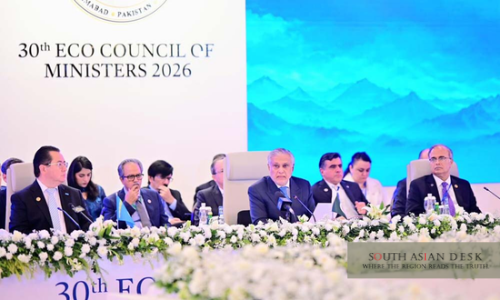
A fifth implication concerns Pakistan’s diplomatic role. Its contribution to facilitating US-Iran engagement and the June Islamabad understanding demonstrated the potential value of its diplomatic relationships. Pakistan’s geographical position, defence relationships and communication channels with competing capitals can provide opportunities for constructive engagement. However, mediation is not an end in itself. Its value depends on whether diplomatic efforts contribute to a durable settlement and reduce the risks of renewed military confrontation.
Pakistan should continue engaging Tehran, Washington, Riyadh, Beijing, Ankara and other relevant capitals through sustained diplomatic channels. China’s economic and strategic interests in regional stability, the United States’ influence in Gulf security arrangements, Türkiye’s regional interests and Saudi Arabia’s position in the Arab world all make these relationships important to the wider diplomatic environment. Pakistan should use its bilateral access to encourage dialogue, protect maritime commerce and support internationally recognised mechanisms for conflict resolution.
Nevertheless, diplomatic engagement must be accompanied by strategic clarity. Pakistan cannot allow the pursuit of international recognition as a mediator to overshadow its own economic and security priorities. Its diplomacy should be directed towards practical outcomes: de-escalation, safe maritime navigation, protection of regional trade, respect for sovereignty and a negotiated framework addressing the underlying disputes. The purpose should be to reduce the probability of a wider regional confrontation, not to secure symbolic diplomatic visibility.
The sixth lesson concerns the limits of strategic dependence. Iraq’s experience illustrated how external intervention and competing international interests can reshape domestic political arrangements. Iran’s present confrontation similarly demonstrates the extent to which regional security can become entangled with the strategic calculations of major powers. For Pakistan, this is a reminder that international partnerships are important but cannot substitute for independent national planning.
Strategic autonomy does not mean diplomatic isolation or equidistance on every international question. It means retaining the institutional and political capacity to evaluate external developments according to national priorities. Pakistan needs constructive relationships with the United States and China, stable relations with Gulf countries and a workable relationship with its immediate neighbours. These objectives require diplomatic consistency, economic capacity and a clearly articulated understanding of national interests.
This also calls for a stronger domestic policy framework. Parliament, the Foreign Office, economic ministries, security institutions and research organisations should develop a coordinated assessment of the conflict’s possible consequences. Scenario planning should consider prolonged maritime restrictions, energy-price volatility, renewed escalation, humanitarian displacement and changes in regional security arrangements. Universities and independent policy research institutions can contribute through evidence-based assessments of Pakistan’s exposure and available policy options. Such planning would reduce dependence on improvised responses during periods of crisis.
Ultimately, the Iraq experience and the Iran confrontation raise a common question about the relationship between military intervention, state sovereignty and regional stability. Iraq’s post-2003 trajectory demonstrated that removing a government without establishing a sustainable political order can generate consequences far beyond the original battlefield. Iran’s war presents a different set of circumstances, but the potential implications of prolonged institutional and economic disruption deserve equally serious attention.
Pakistan cannot determine the military decisions of external powers or the political future of Iran. It can, however, strengthen its own institutions, diversify its energy arrangements, secure its borders, maintain social cohesion and use diplomacy to protect its regional interests. These are not separate policy objectives. Together, they constitute the foundations of national resilience.
The most consequential lesson for Islamabad is that the stability of neighbouring states is inseparable from Pakistan’s own security and economic future. A weakened Iran could produce a regional environment marked by competing influences, disrupted trade and additional security pressures. Conversely, a negotiated settlement that preserves sovereignty and restores predictable regional relations would create opportunities for economic cooperation and diplomatic engagement.
Pakistan must therefore look beyond the immediate military trajectory of the Iran conflict and prepare for the political order that follows it. The question is not simply which regional power will gain influence or which external actor will secure a strategic advantage. It is whether Pakistan can protect its sovereignty, economic resilience and diplomatic independence in an increasingly contested neighbourhood. The lessons of Iraq suggest that the consequences of war are rarely confined to the moment of military victory or defeat. They endure through institutions weakened, economies disrupted and regional relationships transformed. Pakistan’s responsibility is to ensure that it does not become an unprepared stakeholder in the consequences of another country’s war.
Follow SouthAsianDesk on X, Instagram and Facebook for insights on business and current affairs from across South Asia.
More By the Author: