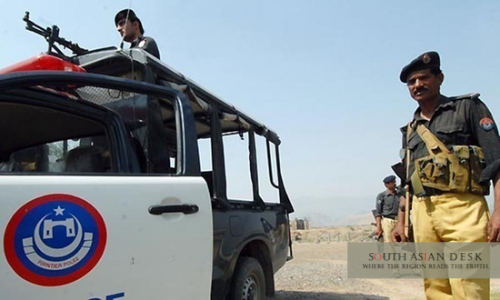
A Peshawar counter-terrorism operation carried out late on Saturday night ended with the deaths of three militants in Passani village on the outskirts of the city, according to a statement issued by the Counter-Terrorism Department (CTD) on Sunday. The operation was conducted jointly by the CTD and personnel of the Pakistan Army, and officials said it foiled a plan to attack government installations.
How the Operation Unfolded
According to the CTD, intelligence reports indicated the presence of a group of terrorists on Passani Road, an area falling within the jurisdiction of the Mattani police station and located about 23 miles south of Peshawar. The department said the group belonged to Fitna-al-Khawarij, a term the state uses for members of the banned Tehreek-i-Taliban Pakistan (TTP).
Acting on the confirmed information, the CTD’s Special Weapons and Tactics teams, accompanied by army personnel, reached the area with the aim of arresting the suspects. The statement said the militants opened fire as soon as they saw the law enforcement and security personnel, and the teams responded in self-defence. A search operation followed the exchange of fire, and the bodies of three men were found.
Identities and Recoveries in the Peshawar Counter-Terrorism Operation
The CTD identified the dead as Abdul Rashid, Saeedullah and Saeed Nawab, and described all three as members of the banned TTP. These TTP-linked terrorists were found with a significant cache of weapons and documents, according to the department. The recovered items included two Kalashnikov rifles, a pistol, three hand grenades, five magazines and computerised national identity cards.
The CTD added that other militants present at the site managed to flee during the confrontation. A search operation was under way on Sunday to track down and arrest the escaped suspects, though no further details about their number or identities were shared.
Official Reaction From Khyber Pakhtunkhwa and Islamabad
The statement said Khyber Pakhtunkhwa Inspector General of Police Zulfiqar Hameed and Additional Inspector General of the Counter-Terrorism Department Jawad Qamar vowed that terrorists would never be allowed to succeed. Prime Minister Shehbaz Sharif also praised the security forces for the operation, according to state-run APP. He observed that timely and decisive action had thwarted a major threat, and said the efforts of the security forces reflected the national resolve and morale in the fight against terrorism.
Wider Security Picture in Khyber Pakhtunkhwa
The latest Peshawar counter-terrorism operation comes at a time when the province continues to face active militant threats. Last week, the military’s media wing said 43 terrorists were killed in operations across Khyber Pakhtunkhwa, including 35 in Mir Ali in North Waziristan district and eight in Orakzai district.
Independent monitoring offers a mixed but partly encouraging picture. The Pakistan Institute for Conflict and Security Studies (PICSS), an Islamabad-based think tank that tracks conflict and security developments, reported improving trends in its monthly assessment for October. In mainland Khyber Pakhtunkhwa, the think tank recorded 40 attacks in October compared with 58 in September, a reduction of 31 per cent. Deaths resulting from these attacks fell from 90 to 38, a decline of roughly 58 per cent, while injuries dropped from 165 to 19, a reduction of 88 per cent.
The picture in the merged districts was less uniform. PICSS recorded 30 attacks there in October, down from 34 in September, and deaths fell from 33 to 25. Injuries, however, rose slightly from 11 to 13.
What Lies Ahead
With some of the militants still at large, the focus for security agencies will remain on locating those who escaped from Passani. The CTD has indicated that its search operation is continuing, and further arrests or clashes cannot be ruled out. The operation also highlights the growing role of intelligence-led action, in which the Counter-Terrorism Department works alongside the army to pre-empt attacks rather than respond after the fact.
While the October figures point to a decline in violence, officials and analysts alike acknowledge that the threat has not disappeared. Sustained operations of this kind, combined with continued monitoring of militant activity, will determine whether the recent improvement in Khyber Pakhtunkhwa’s security situation can be maintained.
Follow SouthAsianDesk on X, Instagram and Facebook for insights on business and current affairs from across South Asia.