Hathazari sweet red chilli, a traditional variety grown along the Halda River in northern Chattogram, has reached buyers in several Middle Eastern countries, according to a report by BSS. The report also describes growing concern among local officials and farmers that the variety is declining, as growers shift to hybrid crops and the original seed quality weakens.
What Makes Hathazari Sweet Red Chilli Distinctive
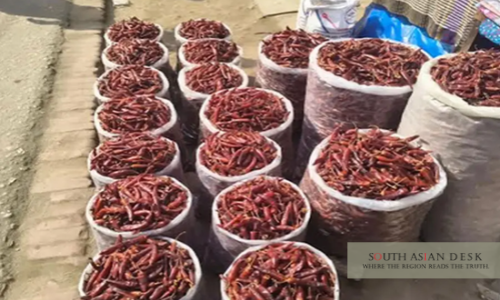
The chilli, also known as the Halda chilli, is named for its sweet-scented aroma, not its taste. It is mildly pungent, with a deep red colour when dried, and cooks and homemakers in Bangladesh have valued it since the British colonial era, according to the report. It is especially popular in chutneys and salads.
The plants grow 3.5 to 4 feet tall and produce 50 to 80 chillies each, which are plump, thin-skinned and 2.5 to 4 inches long. The crop matures in 120 to 130 days and yields 1.5 to 2 metric tons per hectare in the winter dry season. Farmers say the sandy-loam soil and climate of Hathazari suit it well, and the variety is also grown in the neighbouring upazilas of Raozan and Fatikchhari. Hathazari chillies are the most highly valued, even though the same seeds are used in all three areas.
Prices, Costs and Farmer Earnings
Growing one crop costs roughly Tk20,000 to Tk30,000, and farmers can earn Tk40,000 to Tk60,000 per season in favourable conditions, which is about double their investment. Depending on demand, the chillies sell for Tk350 to Tk600 per kilogram. According to the Upazila Agriculture Office, they usually earn a premium of Tk50 to Tk100 per kilogram over other local varieties.
Accounts of the premium differ. A seller quoted in the report said prices in Hathazari are Tk500 to Tk550 per kilogram, and a local resident said the chillies cost at least Tk200 more than those from other districts. The report did not reconcile these figures. The chillies are sold on Sundays and Thursdays in a market lane known as Morichhata on Kachari Road in Hathazari town.
Export Claims and What the Report Does Not Show
The report’s headline says the chilli has gone global, and its introduction says it has found markets in several Middle Eastern countries. The body of the report does not give export volumes, values, buyers or the names of the importing countries. The only overseas example is personal, a resident of Mekhal Union who has the chillies ground and sent to relatives abroad. That shows the product’s appeal among Bangladeshis overseas, but it does not describe commercial exports. How large the overseas trade is therefore remains unclear.
Concerns Over Seeds, Hybrids and Labelling
The Upazila Agriculture Office warns that traditional practices of cultivation, seed production and storage have weakened the variety’s original genetic traits and its natural resistance to pests and diseases. As a result, farmers are losing interest and moving to hybrid chilli varieties, which puts the indigenous Halda chilli at risk, according to the report.
A seller in the market raised a separate concern about authenticity. He said many companies across the country sell their products as Hathazari chillies even though they do not buy from local farmers, and it is questionable how those products are being sold as genuine. The report did not check that claim with the companies concerned.
The Push for Geographical Indication Status
The Agriculture Office has recommended funded research to collect Halda chilli germplasm and develop a high-yielding variety, training in pure seed production and storage and pest management, and incentives for organic fertiliser use alongside balanced chemical fertiliser based on soil tests. It also wants the chilli branded and registered for Geographical Indication status, and the government is helping farmers form producer groups, according to the report.
Mohammad Mezbah Uddin, the Hathazari Agriculture Officer, said the Department of Agricultural Extension has started work on 22 bighas of land and aims to secure GI status in the near future. GI protection is available under Bangladesh’s Geographical Indication of Goods (Registration and Protection) Act, 2013, and Jamdani became the first registered product in 2016. The Financial Express has reported that 28 products have now been registered.
Registration does not automatically bring commercial benefits, however. The Daily Star has reported that businesses have yet to profit from some GI products, such as hilsa, because the labels have not been used in marketing, according to the officials it quoted.
What Comes Next
The next steps are the research and seed programmes the Agriculture Office has proposed, and a decision on the GI application. Whether those efforts reverse the shift toward hybrids will depend on whether farmers see a clear price advantage, since growers are weighing the Halda chilli’s premium against the yields and disease resistance of other varieties.
For now, Hathazari sweet red chilli is a well-regarded local crop with a price premium, uncertain export figures and a preservation effort that is still at an early stage.
Follow SouthAsianDesk on X, Instagram and Facebook for insights on business and current affairs from across South Asia.
Read more: https://southasiandesk.com/ginger-farming-in-logchina-gewog/