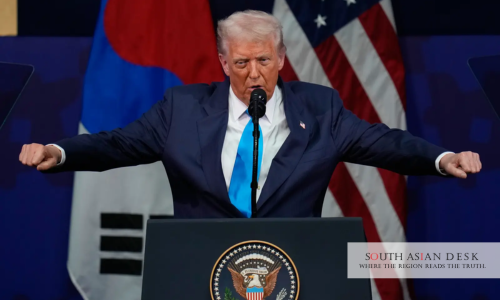
US President Donald Trump stated on Wednesday that Trump 250% tariffs stopped India Pakistan war by forcing a ceasefire during a May flare-up that saw seven planes shot down. Speaking at the Asia-Pacific Economic Cooperation summit in Gyeongju, South Korea, Trump detailed phone calls to leaders in New Delhi and Islamabad. The claim revives his narrative on using trade as a tool for peace.
This assertion underscores the role of economic pressure in South Asian security. With India and Pakistan as nuclear powers, any escalation risks regional instability. Trump’s remarks highlight how US tariff threat India Pakistan peace could reshape bilateral ties and global trade dynamics. For South Asia, where Indo-Pak tensions often disrupt economies, such interventions raise questions on sovereignty versus interdependence.
Trump Claims Averted Indo-Pak Conflict Tariffs in Dramatic Speech
Donald Trump reiterated his diplomatic playbook during the APEC event. He described the May 2025 incident as nations “going at it” with intense aerial combat. “Seven planes were shot down. They were really starting to go,” Trump said. He then phoned Indian Prime Minister Narendra Modi and Pakistani leaders, warning of 250% tariffs on both economies. “I said I was going to put 250% on each country, which means you’ll never do business,” Trump recounted. “That’s a nice way of saying we don’t want to do business with you.”
The US leader added that initial resistance gave way after two days. “They both said, ‘No, no, no, you should let us fight.’ After literally two days, they called up and said, ‘We understand’, and they stopped fighting.” This marks the highest tariff rate Trump has publicly cited for any nation, exceeding prior threats.
Trump’s comments align with his broader tariff strategy. Since May, Washington imposed up to 50% duties on select Indian goods, including a 25% levy from 27 August over Russian oil imports. Pakistan saw tariffs drop to 19% from 29%, signalling selective relief. These moves occur amid ongoing US-India trade talks.
India’s foreign ministry offered no immediate response to the latest claim. Past statements, however, reject third-party roles. In June, Foreign Secretary Vikram Misri clarified that Modi told Trump no mediation discussions occurred during the conflict. “Talks for ceasing military action happened directly between India and Pakistan through existing military channels, and on the insistence of Pakistan,” Misri said. Modi emphasised India’s firm stance: “India has not accepted mediation in the past and will never do.”
Pakistan, conversely, has praised Trump’s efforts. In June, the government nominated him for the Nobel Peace Prize, citing “great strategic foresight and stellar statesmanship through robust diplomatic engagement with both Islamabad and New Delhi.” This de-escalated “a rapidly deteriorating situation,” the statement noted, positioning Trump as “a genuine peacemaker.”
US Tariff Threat India Pakistan Peace: Economic Stakes
The tariff threat underscores Trump’s belief in trade as deterrence. In May, as hostilities peaked, Trump announced the ceasefire on social media: “After a long night of talks mediated by the United States, I am pleased to announce that India and Pakistan have agreed to a FULL AND IMMEDIATE CEASEFIRE. Congratulations to both Countries on using Common Sense and Great Intelligence.” US officials, including Secretary of State Marco Rubio, engaged counterparts over 48 hours, with three dozen nations aiding facilitation.
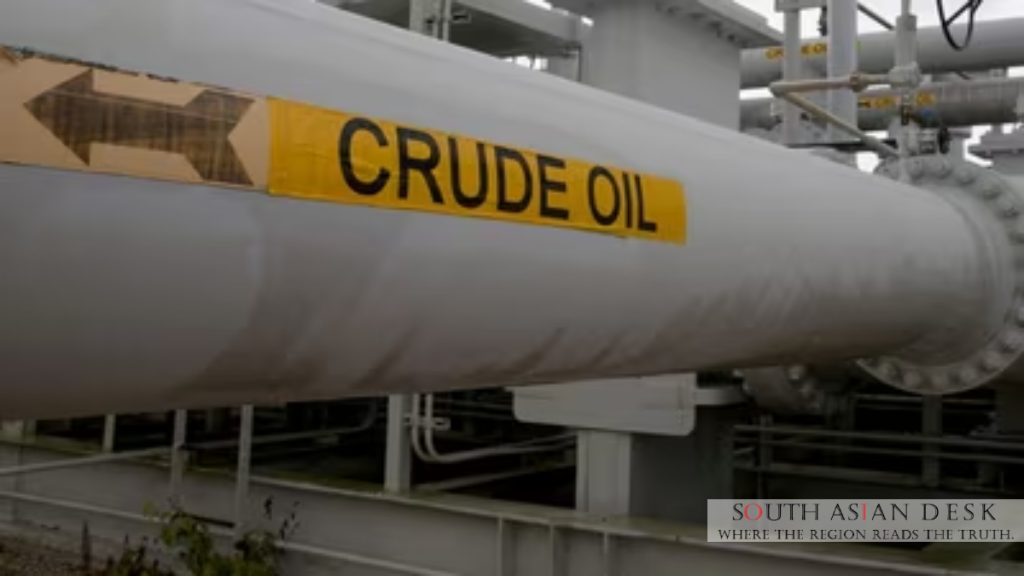
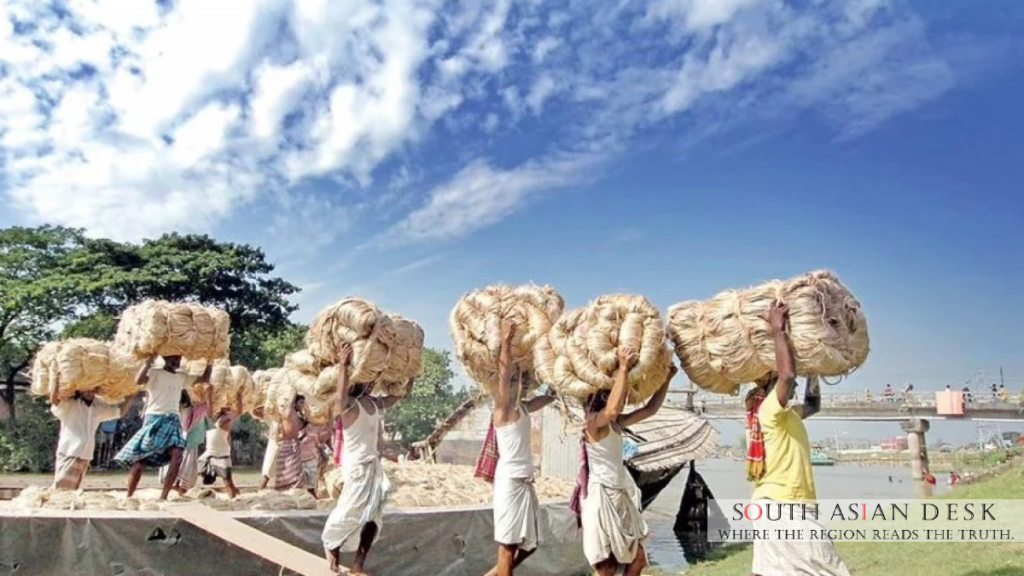
Economically, the stakes were high. India’s exports to the US totalled USD 78 billion in 2024, while Pakistan’s reached USD 5 billion. A 250% hike could cripple sectors like textiles and pharmaceuticals. Trump’s claim ties Trump 250% tariffs stopped India Pakistan war to this leverage, suggesting economic isolation forced restraint.
Pakistan’s Foreign Minister Ishaq Dar welcomed the May truce: “Pakistan and India have agreed to a ceasefire with immediate effect. Pakistan has always strived for peace and security in the region, without compromising on its sovereignty and territorial integrity!” Yet, violations followed hours later, with explosions in Jammu and Kashmir prompting Indian forces to “deal strongly” with breaches, per Foreign Secretary Misri.
For South Asia, Trump claims averted Indo-Pak conflict tariffs illustrate a shift. Traditional diplomacy relies on UN channels, but economic tools gain prominence. This approach bolsters US influence but irks nations wary of coercion. Analysts note it echoes Trump’s first-term tactics, like steel tariffs on allies.
Details of the May 2025 Flare-Up
The conflict erupted on 7 May after an attack on Hindu tourists in Indian Kashmir killed 26. India struck “terrorist infrastructure” in Pakistani Kashmir and beyond, suspending the 1960 Indus Waters Treaty. Pakistan retaliated with shelling, drones and missiles targeting three air bases, per its reports. Civilian deaths reached 66, with fears of nuclear escalation as Pakistan referenced its arsenal oversight body.
The four-day clash, worst since 1999, involved cross-border fire in Jammu and Kashmir. Blackouts hit border towns amid artillery duels. Ceasefire took effect at 5pm Indian time on 10 May, but explosions persisted in Srinagar and Jammu. Punitive steps lingered: trade halts, visa bans and water treaty suspension.
Trump’s intervention, per his account, centred on tariff warnings amid these strikes. This blends diplomacy with commerce, where US tariff threat India Pakistan peace averted broader fallout.
Background: Patterns in Indo-Pak Tensions
India-Pakistan rivalries trace to 1947 partition, fuelling four wars and Kashmir disputes. The May incident followed a Kashmir assault, mirroring 2019’s Pulwama crisis. Then, Trump offered mediation, which India rebuffed.
Post-May, ties strained further. India imposed 50% tariffs on US goods in retaliation, though talks progress. Pakistan, facing economic woes, views US engagement positively, as seen in army chief Asim Munir’s White House visit.
Trump’s repeated claims, first in June, now October amplify his record. He has touted averting “seven wars” via tariffs, including this case. Critics question accuracy, given India’s bilateral emphasis.
What’s Next: Trade Talks and Regional Stability
Ongoing US-India negotiations could test Trump’s leverage. A deal might ease duties, but Russian oil rows persist. For Pakistan, lower tariffs aid recovery, yet
In South Asia, Trump 250% tariffs stopped India Pakistan war narrative may influence future crises. As APEC wraps, eyes turn to bilateral channels. Sustained US tariff threat India Pakistan peace could foster dialogue, but risks alienating partners. Ultimately, economic interdependence may prove the strongest deterrent.
Published in SouthAsianDesk, October 30th, 2025
Follow SouthAsianDesk on X, Instagram, and Facebook for insights on business and current affairs from across South Asia.