

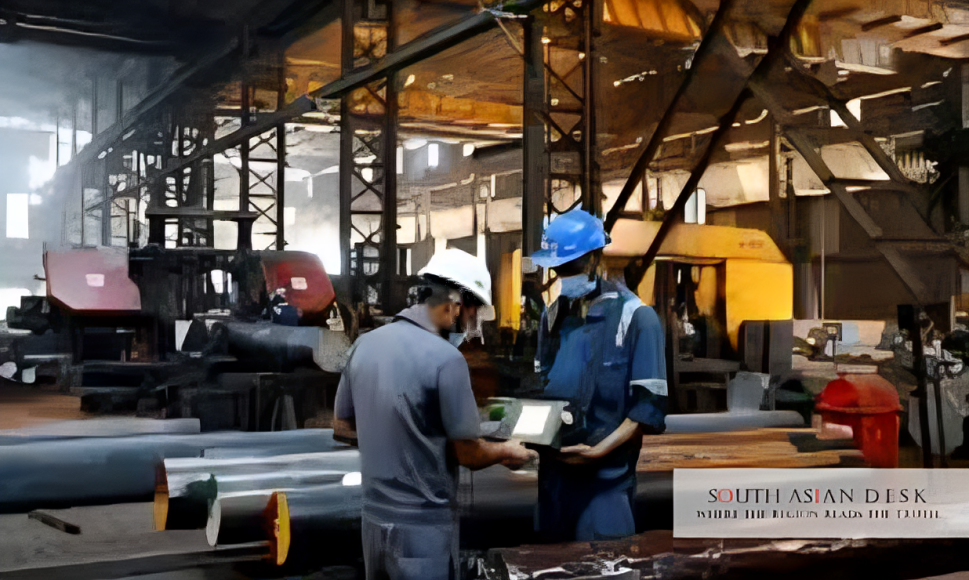
India’s manufacturing sector posted its strongest expansion in five years in October 2025, with the HSBC India Manufacturing PMI (Purchasing Managers’ Index) climbing to 59.2 from 57.7 in September. Released on Monday, November 3, 2025, the data from S&P Global highlights strengthened domestic demand as the key driver. This uptick beat the flash estimate of 58.4 and underscores resilience in the world’s fastest-growing major economy.
Surge Signals Economic Resilience
The rise in India manufacturing PMI October 2025 to 59.2 marks a clear acceleration in operating conditions. Surveyed firms reported sharper increases in output and new orders. Domestic demand led the charge, offsetting softer export growth. This development arrives at 1:45 PM UTC, or around 7:15 PM IST, providing fresh insights into industrial health.
For South Asia, this matters deeply. India, the region’s economic anchor, drives trade, investment, and supply chains across neighbours like Pakistan, Bangladesh, and Sri Lanka. Stronger factory output could stabilise regional commodity flows and boost remittances through job creation. It also eases pressure on global supply lines, benefiting export-dependent economies. Amid geopolitical tensions, such data reinforces India’s role as a stabilising force, potentially drawing more foreign direct investment to the subcontinent.
India Factory Output Growth Domestic Demand Takes Centre Stage
India factory output growth hit a joint five-year high in October 2025, matching August’s pace. Manufacturers ramped up production to meet surging orders. The output sub-index reflected this vigour, with firms citing efficiency gains and new client wins.
Domestic demand emerged as the standout factor. New orders rose at the quickest rate in months, propelled by healthy end-user spending. Survey respondents pointed to robust internal markets as the backbone of expansion. This shift compensated for weaker international sales, where new export orders grew at the slowest clip in 10 months.
HSBC India PMI Festive Boost GST Relief in Focus
The HSBC India PMI captured optimism tied to seasonal and policy factors. which typically spikes consumer purchases during Diwali and other holidays. This seasonal lift aligned with stronger domestic demand, helping push orders higher.
Policy support amplified the trend. Expectations around GST reforms, including rate cuts, bolstered business confidence. The flash PMI survey noted that GST relief curbed input costs while stimulating spending. “The HSBC flash manufacturing PMI picked up a tad, likely on the back of GST rate cuts which are buoying domestic demand and curbing cost pressures,” said Pranjul Bhandari, chief India economist at HSBC.
This HSBC India PMI festive boost GST relief narrative fits broader patterns. Input price inflation eased to an eight-month low, thanks in part to lower taxes on raw materials. Firms passed on some costs via higher selling prices, which hit a near-12-year peak for the second month running. Freight and labour expenses rose, but overall pressures moderated.
Employment Gains Sustain Momentum
Job creation continued for the 20th consecutive month. Manufacturers hired at a moderate pace to manage workloads, keeping payrolls steady with September levels. This sustained hiring supports household incomes, feeding back into domestic demand.
The employment sub-index showed resilience, with no signs of slowdown. Firms in consumer goods and capital equipment sectors led the additions. This trend aligns with India’s push for skilling and labour reforms, aiming to absorb a young workforce.
Cost Dynamics and Pricing Power
Input costs climbed less sharply, offering relief after months of elevation. The sub-index for purchase prices dropped, reflecting softer commodity trends and GST adjustments. Suppliers delivered inputs faster, aiding inventory management.
Output charges, however, remained elevated. Manufacturers leveraged strong demand to maintain high prices, with the inflation rate unchanged from September’s multi-year peak. This pricing power signals healthy margins, though it risks fuelling retail inflation if prolonged.
Sectoral Breakdowns Reveal Nuances
Consumer and intermediate goods sectors drove the uptick. Durable goods output surged on order backlogs. Investment goods lagged slightly, tied to project delays. Across the board, technology investments and process tweaks boosted capacity.
Export challenges persisted. New foreign orders rose, but at a subdued rate amid global slowdowns. US tariff concerns lingered, as noted in the flash survey. Still, overall activity stayed well above the 50 expansion threshold.
Historical Context Underscores Strength
The 59.2 reading tops the long-run average and signals sustained recovery post-pandemic. Compared to 2024’s October figure of 56.8, growth has deepened. September’s dip to 57.7 now appears as a blip, with October reclaiming upward trajectory.
This builds on quarterly trends. Third-quarter output averaged robust levels, supported by monsoon recovery and policy easing. The HSBC India PMI thus paints a picture of entrenched expansion.
Background: Understanding the PMI Metric
The Purchasing Managers’ Index surveys over 400 Indian manufacturers on orders, output, employment, and costs. Compiled by S&P Global for HSBC, it offers a forward-looking snapshot. Readings above 50 indicate growth; 59.2 reflects strong health. Seasonal adjustments ensure comparability.
India’s manufacturing share in GDP hovers at 17 per cent, but its multiplier effects ripple widely. Recent reforms, including production-linked incentives, have lifted the sector’s profile.
What’s Next: Festive Tailwinds and Policy Watch
Looking ahead, the HSBC India PMI festive boost could extend into November, with year-end sales in play. Firms expressed robust optimism, though slightly off September’s seven-month high. GST implementation details will shape Q4 trajectories.
Economists eye inflation data this week for rate cut clues from the Reserve Bank of India. Sustained India manufacturing PMI October 2025 rises to 59.2 levels could anchor 7 per cent GDP growth forecasts. Regional spillovers may follow, as stronger Indian demand lifts South Asian exports.
In sum, October’s data cements manufacturing as a growth engine. Domestic resilience, tempered by global headwinds, positions India for steady progress.
Published in SouthAsianDesk, November 3rd, 2025
Follow SouthAsianDesk on X, Instagram, and Facebook for insights on business and current affairs from across South Asia.
